Oman and Iran Hold Urgent Talks to Restore Strait of Hormuz Stability
Synopsis
Omani and Iranian foreign ministers discuss restoring navigation in the Strait of Hormuz to ensure maritime safety. Meanwhile, multiple oil tankers were damaged by naval mines in the region amidst heightened geopolitical tensions.
Diplomatic Talks on Strait of Hormuz Security
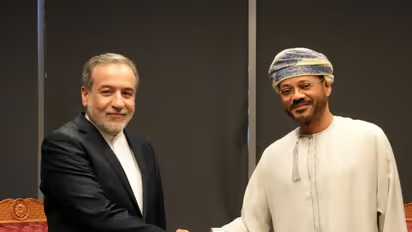
Oman and Iran discussed efforts to resume navigation through the Strait of Hormuz without obstacles during a telephone conversation between their Foreign Ministers on Thursday, with both sides emphasising the need for sustainable understandings to ensure maritime safety, facilitate international trade and energy flows, and prevent further confrontations in the region. In a post on X, Oman's Ministry of Foreign Affairs said that Omani Foreign Minister Badr bin Hamad bin Hamoud Al-Busaidi held a telephone conversation with Iranian Foreign Minister Abbas Araghchi.
"During the call, they reviewed the latest developments in communications and discussions aimed at reaching practical, political, and technical understandings that would lead to resuming navigation through the Strait of Hormuz without obstacles," the ministry said. The two Foreign Ministers "affirmed the importance of transitioning from a phase of de-escalating tensions to a phase of consolidating sustainable understandings," based on practical arrangements to ensure the safety of maritime passages and shared technical mechanisms to secure the smooth flow of international trade and energy. The ministry further stated that these understandings were aimed at "ending the state of war and preventing the resurgence of confrontations in the region." The two sides also emphasised that the proposed understandings must be grounded in respect for the sovereignty of states, consideration of the legitimate interests of all parties, and the creation of favourable conditions for resuming channels of dialogue and negotiations to address outstanding issues behind the escalation. "The two sides agreed to continue consultation and coordination, and to support all diplomatic efforts aimed at entrenching regional security and stability," the ministry added.
Regional Diplomatic Engagements
Meanwhile, according to Iranian state broadcaster IRIB, Araghchi held separate telephone conversations with Saudi Foreign Minister Faisal bin Farhan and Qatar's Foreign Minister Mohammed bin Abdulrahman. During the separate calls, Araghchi discussed regional developments and the latest diplomatic efforts aimed at establishing stability in the region, IRIB reported. The diplomatic engagements came as Iran's Navy reported that an oil tanker caught fire after hitting a naval mine in waters east of the Strait of Hormuz on Thursday morning.
Naval Incidents and Rising Tensions
According to IRIB, the Iranian Navy Public Relations Office said that an "offending oil tanker" travelling through what it termed an "unsafe area" east of the Strait of Hormuz caught fire and stopped after "hitting a naval mine". The Navy further claimed that the tanker, like other tankers that had hit naval mines and caught fire in recent days, had switched off its detection and navigation systems. The Navy Public Relations Department said that the incident highlighted the risks of attempting to navigate through the area without coordination. "The war with Iran will only result in defeat," the department said, adding, "We are announcing to ship owners for the umpteenth time that the Strait of Hormuz is unsafe and closed to illegal vessels that intend to transit without coordination." Later in the afternoon, Iran's Navy reported that two more oil tankers had caught fire after hitting naval mines in the unsafe area east of the Strait of Hormuz. According to IRIB, the Army Navy Public Relations Department said, "This afternoon, two more offending oil tankers hit naval mines and caught fire in the unsafe area east of the Strait of Hormuz." It further claimed that ignoring maritime warnings and entering prohibited areas without coordination were among the causes of the fires on the two tankers.
US Political Fallout and Conflict Developments
The diplomatic contacts between Oman, Iran, Saudi Arabia and Qatar come amid continuing regional efforts to establish stability and address tensions surrounding the Strait of Hormuz. Meanwhile, as Washington navigates the fallout from a sweeping Republican electoral defeat in the US midterms, Iran's chief negotiator in talks with the US, pressure is also mounting rapidly on President Donald Trump to dismiss Secretary of War Pete Hegseth over the administration's handling of the war in Iran. Despite growing calls for Hegseth's departure from both sides of the aisle, President Trump doubled down on his Secretary of War on Thursday, insisting he intends to keep him in office. "I have every intention to keep him. I get these calls, you know, about him. I don't understand why," President Trump told ABC News, the outlet's chief Washington correspondent Jonathan Karl wrote in a post on X. The scrutiny of Hegseth coincided with stark admissions from within the White House regarding the political cost of the Iran war. As per CBS, beyond cabinet-level evaluations, White House aides indicate that top senior military officials may also encounter mounting pressure following the election outcome. Sources noted that Adm. Brad Cooper, commander of US Central Command, and Gen. Dan Caine, chairman of the Joint Chiefs of Staff, could face legislative and public oversight due to their advisory roles concerning the Iran war. (ANI)