New Era of India Nepal Ties Focuses on Growth Innovation and Youth
Synopsis
Nepal PM Balendra Shah's India visit establishes a 10-pillar vision for bilateral cooperation. The partnership emphasizes youth aspirations, technological growth, infrastructure development, and expanded connectivity between the nations.
New Era of India Nepal Ties Focuses on Growth Innovation and Youth
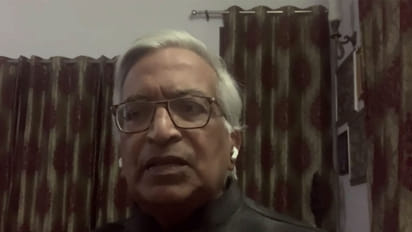
India's renewed focus on youth aspirations, economic growth, technological cooperation and connectivity has opened a new chapter in its relationship with Nepal, former Indian diplomat Suresh K Goel said, describing Nepal Prime Minister Balendra Shah's state visit to India as a significant step towards reshaping bilateral ties. Goel said the visit reflected a shared desire by both countries to move beyond traditional aspects of their relationship and build a forward-looking partnership centred on development, innovation and the aspirations of younger generations.
Speaking to ANI, Goel said, "I think the most important development in the relationship is a clear desire on the part of both India and Nepal to look to the future, to underline that the relationship between the two is important, in terms of economic growth and development, technological changes, and most importantly, youth aspirations. Both countries have underlined the need to engage youth in the relationship between the two countries, and that I think is the most important part of the visit."
Highlighting the importance of India's decision to provide Nepal access to Paradip and Kandla ports, Goel said the initiative would significantly improve Nepal's export connectivity and provide additional avenues for its products to access international markets. "Again very, very important because Nepal has been looking for exit for its exports. And we had provided connectivity before. I think Kandla was being used even if not on a permanent basis. Therefore, providing Paradip and Kandla both to Nepal as the connectivity and the exit for the Nepali products is again an indication of our desire to connect to further strengthen the links between the two countries and highly useful for Nepal," he said.
On India's development assistance commitment worth Rs 15,000 crore to Nepal, the former diplomat said the announcement was significant but stressed that the success of the initiative would depend on the timely execution of projects rather than the financial allocation alone. He noted that disaster reconstruction, cross-border railway connectivity and hydropower infrastructure required substantial investments, making effective implementation essential to achieving the intended development outcomes. "The most important point in this case would be not just the amount but timely delivery in terms of development of the project and development of the infrastructure," Goel said.
He also described Shah's visit as particularly significant because of the Nepalese Prime Minister's background and his emergence as a representative of the country's younger generation. "Balen Shah represents the youth of Nepal. He is the first young Prime Minister of Nepal in his 30s who had a different background. He was not even a politician before he became the Prime Minister. He became Prime Minister at the time when there was a great upheaval going on in Nepal and Nepali youth had completely discredited all the traditional older leadership of the country," he said.
Goel further observed that Shah's decision to visit India first, apart from his engagement at the United Nations, demonstrated the importance he attached to relations with New Delhi. He cited the proposed establishment of an Indian Institute of Technology (IIT) in Nepal, innovation initiatives and startup cooperation as examples of the emerging areas of engagement between the two countries. "Clearly you see a different energy in the relationship there. And I hope it works out," he added.
Echoing Goel's assessment, former Vice-Chairman of Nepal's National Planning Commission (NPC), Govinda Raj Pokharel, described Shah's visit as successful from the perspective of Nepal's development priorities, particularly in infrastructure, connectivity, energy and investment. Speaking to ANI, Pokharel said India's commitments across several sectors would provide important support to Nepal's development ambitions and strengthen economic cooperation between the two neighbouring countries. "Prime Minister Balen's visit was successful from a development perspective because India has extended a helping hand to support Nepal in connectivity, providing an enhanced financial grant that is larger than what was offered during the 2015 earthquake. There is also support for air connectivity, a petroleum pipeline, energy, capacity building for Nepali bureaucrats, and startup backing," Pokharel said.
He said Nepal could benefit from India's economic growth by strengthening trade and investment relations, adding that attracting Indian private-sector investment would be crucial to expanding the country's industrial and energy potential. Pokharel particularly highlighted the hydropower sector, describing energy as one of Nepal's few major exportable commodities and an important source of future revenue. "Nepal has only a few exportable commodities, and energy is one of them. We have a policy to export surplus energy: we use what we need for industry and domestic consumption, and when we produce more, we export it to India, generating significant revenue in the future," he said. He added that Nepal had already received considerable investment from public-sector entities and other companies, while efforts were underway to attract more private players, particularly from India. "I hope that Balen's message, along with the Finance Minister's message to attract Indian investment, was loud and clear. Once they return, they will also need to carry out reforms so that foreign investors--especially Indian investors--feel welcome in Nepal, strengthening economic linkages and connectivity, as both prime ministers noted," Pokharel said.
The former NPC Vice-Chairman also appreciated Shah's decision to prioritise development cooperation during the visit, noting that the two countries had an opportunity to strengthen their relationship by focusing on shared economic interests. "One important aspect of this visit is that Prime Minister Balen set aside sensitive issues raised in the past and focused mainly on development. It was a successful visit, and India has done a great service to Nepal, the Nepali people, and the Nepalese government," he said.
The remarks come after India and Nepal on Monday adopted a comprehensive 10-pillar Joint Vision document titled 'Viksit Bharat and Samunnat Nepal: Re-imagining the Partnership', outlining a roadmap for strengthening cooperation across trade, connectivity, energy, technology, education, healthcare, agriculture, sports and cultural exchanges. The document was adopted during Shah's two-day state visit to India from November 22-23 at the invitation of Prime Minister Narendra Modi. The two leaders held cordial and forward-looking discussions in New Delhi, reviewing the entire spectrum of bilateral relations and reaffirming their commitment to cooperation based on mutual respect, shared interests and people-to-people ties.
According to the Ministry of External Affairs (MEA), the framework seeks to transform the longstanding relationship between the two neighbouring countries into a modern, results-oriented partnership, taking into account contemporary political, economic and technological realities, with particular emphasis on the aspirations of their youth. Addressing a special briefing on the visit, Foreign Secretary Vikram Misri said the two Prime Ministers had adopted an extensive framework outlining a positive pathway for bilateral relations in the coming years. Under the economic and development partnership pillar, India committed assistance worth Rs 15,000 crore (NPR 24,000 crore) to Nepal, comprising Rs 3,500 crore in grants for post-disaster reconstruction and new infrastructure projects and Rs 11,500 crore in concessional lines of credit, primarily for energy-sector projects. The two countries will also explore reviewing existing trade and investment frameworks, establishing cross-border special economic zones and industrial parks, strengthening manufacturing supply chains and encouraging Indian investments in Nepal's priority sectors.
Connectivity emerged as another major pillar, with the leaders welcoming the launch of the direct express rail service between Ayodhya and Janakpur and the inauguration of a motorable bridge across the Mahakali River connecting Dharchula in India with Darchula in Nepal. The framework also envisages expediting the construction of Integrated Check Posts at Bhairahawa, Sunauli, Banbasa and Dodhara Chandani, completing pending sections of the Jayanagar-Bardibas and Jogbani-Biratnagar railway lines and advancing the proposed Raxaul-Kathmandu electrified broad-gauge railway link. In the energy sector, the two sides agreed to accelerate cooperation in hydropower, electricity transmission, petroleum infrastructure and disaster resilience, alongside efforts to expand mutually beneficial electricity trade. The two countries also agreed to advance multipurpose projects, including Pancheshwar and Saptakoshi-Sunkoshi, while strengthening flood management, early warning systems and the exchange of hydrometeorological data.
The technology and innovation pillar includes cooperation in artificial intelligence, satellite development, telecommunications and digital infrastructure. Proposals include developing a Nepali-language Large Language Model through collaboration with India's Bhashini initiative, establishing digital parks and data centres in Nepal and expanding the India-Nepal Startup Partnership Network. In education, the two sides agreed to explore opening branches of reputed Indian higher educational institutions in Nepal, beginning with an IIT, while expanding scholarships and training opportunities for Nepali students in emerging disciplines such as law, technology and artificial intelligence. Healthcare, agriculture, sports and cultural exchanges have also been incorporated into the framework, with initiatives including an Agro-Industrial Park in Chitwan, a national cricket coaching and training academy in Nepal and religious tourism circuits connecting Janakpur and Ayodhya, as well as Lumbini and prominent Buddhist destinations in India. To ensure effective implementation, the two Prime Ministers decided to activate a High-Level Monitoring Group led by Nepal's Foreign Secretary and India's Ambassador to Nepal. The group will meet at least once every six months and submit its findings to the India-Nepal Joint Commission, whose next meeting is scheduled for 2027. The two leaders expressed confidence that the Joint Vision would provide a framework for an aspirational, modern and mutually beneficial partnership, directing officials from both countries to work towards its implementation.