Iran Threatens to ‘Set Region’s Oil and Gas on Fire’ Amid US-Israel Strikes
Synopsis
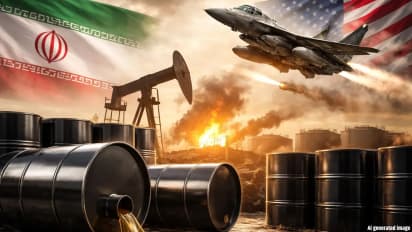
Amid escalating regional conflict, Iran has threatened to attack all US-allied oil and gas infrastructure across the Middle East if its own energy facilities are targeted. The warning from the Islamic Revolutionary Guard Corps follows over 5,500 US strikes on Iranian targets.
Iran has issued a stark warning to the United States and Israel, threatening to target oil and gas infrastructure across the Middle East if its own energy facilities come under attack. The latest escalation comes amid an intensifying regional conflict marked by sustained military strikes and mounting geopolitical tensions.
According to statements carried by Iranian state media, a spokesperson for the Islamic Revolutionary Guard Corps’ central operational command said even limited attacks on Iranian energy assets or ports would trigger a severe and far-reaching response.
“We warn the aggressor government and all its allies that the slightest attack on the energy infrastructure and ports of the Islamic Republic of Iran will be met with a crushing and devastating response from us,” the spokesperson said.
The official further cautioned that Iran’s retaliation would extend beyond its borders. “In the event of such aggression, all the region’s oil and gas infrastructure in which the United States and its Western allies have a vested interest will be set on fire and destroyed,” the statement added, underlining Tehran’s readiness to widen the conflict if provoked.
The warning follows continued military action in the region since the conflict escalated after strikes by US and Israeli forces earlier this year. Reports indicate that thousands of targets inside Iran have been hit during the campaign, including attacks on vessels linked to the country’s maritime and energy sectors.
According to US Central Command, American forces have struck more than 5,500 targets inside Iran since the war began, including attacks on more than 60 vessels.
Senior Iranian officials have also sounded alarms over the potential regional fallout of further escalation. Ali Larijani, secretary of Iran’s Supreme National Security Council, warned that attacks on Iran’s power infrastructure could disrupt electricity supply across the Middle East, creating widespread instability and security risks. He said such a scenario could plunge large parts of the region into darkness within minutes, highlighting the vulnerability of critical infrastructure during wartime.
“If they do that, the whole region will go dark in less than half an hour and darkness provides ample opportunity to hunt down US servicemen running for safety,” Larijani said in a post on X on Thursday.
The tensions have been compounded by remarks from US leadership claiming that Iranian military capabilities have been significantly weakened. In response, Iranian officials have vowed to continue resisting pressure and warned that military confrontation could spiral into a broader regional crisis with economic and humanitarian consequences.
Iran’s leadership has also called for national unity as the conflict intensifies. The country’s new Supreme Leader, Mojtaba Khamenei, emphasised the strategic importance of maintaining leverage over the Strait of Hormuz — a key global shipping route for oil and gas — to counter adversaries. Continued disruption to maritime traffic through the strait has already heightened concerns about global energy supplies and price volatility.
Also Read: Iran Sets 3 Conditions To End War: Accept Rights, Pay Reparations, Prevent Attacks
Iran’s Deputy Foreign Minister Majid Takht-Ravanchi told AFP that Tehran’s primary objective is to prevent the recurrence of armed conflict. “We want to see that war is not going to be imposed again on Iran,” he said, adding that previous hostilities had resumed after a temporary pause in fighting.
Takht-Ravanchi also revealed that neighbouring countries had been warned in advance about potential repercussions if the United States became directly involved in military operations against Iran. He stressed that American military bases and assets in the region could be considered legitimate targets in the event of further escalation.
The current crisis, which erupted following coordinated strikes that killed Iran’s former supreme leader Ayatollah Ali Khamenei, has evolved into a broader regional confrontation involving multiple fronts. With both sides signalling readiness to continue military operations, analysts warn that the conflict could disrupt energy markets, threaten maritime security and intensify geopolitical instability across the Middle East.