Iran says no plans for new US talks as ceasefire deadline looms
Synopsis
Iran's Foreign Ministry has stated there are no plans for new negotiations with the US ahead of a looming ceasefire deadline. A top official likened talks to the 'battlefield,' demanding preconditions be met before any further dialogue.
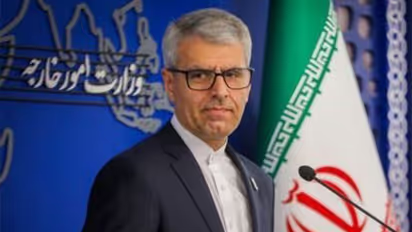
The Iranian Foreign Ministry on Monday stated that Tehran currently has no plans for a subsequent round of negotiations with the United States, according to the state media Tasnim news agency.
The announcement comes at a critical time as international mediators had hoped for a follow-up to the Islamabad talks before the looming ceasefire deadline.
Foreign Ministry spokesman Esmaeil Baqaei stated on Monday that "Tehran currently has no plans for a subsequent round of negotiations." The spokesperson's remarks underscore the growing diplomatic stalemate, with officials indicating that the current atmosphere is not conducive to fruitful dialogue.
Iran's Hardening Stance on Negotiations
Providing further context on this hardening stance, Ebrahim Azizi, the head of the Iranian Parliament's National Security Committee, asserted in an interview with Al Jazeera that Tehran's engagement in diplomatic talks is strictly governed by national interest and security.
Addressing the prospect of participating in upcoming negotiations in Islamabad, Azizi stated that "Iran acts based on national interests" and remains prepared to do whatever is necessary to "secure the country's interests and security".
The senior lawmaker, a former IRGC commander, described the diplomatic process as a direct extension of the country's military efforts. He noted, "We see the current negotiations as a continuation of the battlefield, and we see nothing other than the battlefield in this."
Azizi further explained that the negotiation arena is considered an opportunity only "if it yields achievements that sustain those of the battlefield", warning that this would not be the case "if the Americans intend to turn this into a field of excessive demands, based on their bullying approach."
Red Lines and Preconditions for Dialogue
While confirming that a decision has been reached to maintain dialogue with Washington, the committee head clarified that this "does not mean to negotiate at any cost". He emphasised that Iran has established red lines which "must be observed," suggesting that dispatching a diplomatic team to Islamabad depends on receiving "constructive feedback" and a "positive signal" from the American side.
Azizi reiterated that Iran continues to stand firm on its established preconditions, specifically highlighting that the "issue of Lebanon has been very important for us" and the "release of frozen assets" remains a key requirement. He issued a warning that if actions are taken "contrary to the interests of the resistance front", it would signal a rejection of Iran's preconditions and carry natural consequences.
Ceasefire Deadline Nears Amid Diplomatic Stalemate
These remarks come at a critical juncture as the current ceasefire is set to end on April 22.
The first round of negotiations ended in a gridlock between Tehran and Washington over the energy artery, the Strait of Hormuz, and Iran's nuclear capacities. With the ceasefire set to lapse on Wednesday, the Islamabad talks represent the final diplomatic off-ramp before a potential escalation into full-scale infrastructure warfare.
While the US maintains that a "fair and reasonable" deal is on the table, the Iranian leadership's refusal to negotiate under the "shadow of a blockade" suggests that the 21-hour marathon of the previous round may have been just a prelude to a much darker confrontation. (ANI)
(Except for the headline, this story has not been edited by Asianet Newsable English staff and is published from a syndicated feed.)