India's development models lauded at UNHRC for South-South growth
Synopsis
At a UNHRC side event, India's development models, particularly Ayushman Bharat and digital infrastructure, were highlighted as examples for the Global South. Experts called for stronger South-South cooperation to accelerate the SDGs.
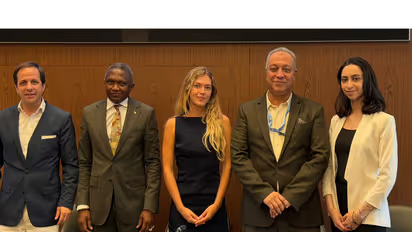
India's inclusive development initiatives, particularly in healthcare and digital public infrastructure, received significant attention at a side event during the 62nd Session of the United Nations Human Rights Council (UNHRC) in Geneva, where global policymakers, academics and civil society leaders called for stronger South-South cooperation to accelerate the Sustainable Development Goals (SDGs).
The discussion, titled "Development in the Global South", brought together representatives from international organisations, youth groups and development experts, who emphasised that developing nations are emerging as engines of innovation and practical solutions for sustainable development.
India's Development Model Praised
A major focus of the event was India's rights-based approach to development, with speakers presenting flagship initiatives such as Ayushman Bharat as a successful model of Universal Health Coverage aligned with the United Nations' Right to Development framework. Speaking at the forum, Nidal Salim, Director General of the Global Institute for Water, Environment and Health (GIWEH), highlighted India's achievements in digital public infrastructure, universal healthcare, renewable energy, agricultural development and climate resilience. He said India's experience demonstrates how locally driven innovation and community-based development can deliver large-scale transformation while addressing the unique needs of developing countries.
Ayushman Bharat: A Universal Healthcare Success
Representing the youth perspective, Meyssan Soliman of GIWEH and Sorbonne University-Paris described Ayushman Bharat as one of the world's largest publicly funded healthcare programmes, providing financial protection to millions of vulnerable families while expanding access to quality healthcare services. She also highlighted India's rapid progress in digital health through the Ayushman Bharat Digital Mission, telemedicine platforms and electronic health records, noting that technology-driven governance has improved transparency, expanded healthcare access and reduced inequalities.
Strengthening Global Health via South-South Cooperation
The forum further acknowledged India's contribution to global health through the production of affordable generic medicines and vaccines, describing it as a strong example of how South-South cooperation can strengthen healthcare systems across the developing world.
Speakers noted that with less than five years remaining to achieve the 2030 Sustainable Development Goals, countries of the Global South must work together by sharing successful development models, technological innovations and policy experiences.
Global South: From Aid Recipient to Innovation Driver
Participants also underlined the continued relevance of the principles of sovereignty, equality and mutual respect first articulated during the Bandung Conference, calling for stronger partnerships among developing nations.
Concluding the discussions, delegates said the Global South should no longer be viewed merely as a recipient of international assistance but as an increasingly influential driver of innovation and sustainable development, with India's development experience serving as an important example of inclusive and people-centric growth.