CTA remembers monk Jamyang Palden on self-immolation anniversary
Synopsis
The Central Tibetan Administration commemorates monk Jamyang Palden's 2012 self-immolation. He protested Chinese repression, sparking demonstrations calling for the Dalai Lama's return. The CTA continues to raise awareness of such protests.
The Central Tibetan Administration remembered Tibetan monk Jamyang Palden on the anniversary of his self-immolation protest, highlighting the continued calls among Tibetans for religious freedom and the preservation of their cultural identity.
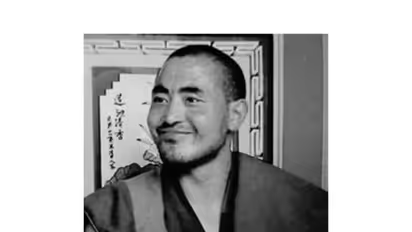
In a post shared on social media platform X, the Tibetan government-in-exile paid tribute to Jamyang Palden, a 34-year-old monk who carried out a self-immolation protest on 14 March 2012 in Rebgong, in the traditional Tibetan region of Amdo. https://x.com/CTA_TibetdotNet/status/2032696299640992135?s=20
According to the statement, Jamyang Palden set himself on fire near Rongpo Monastery to protest what Tibetans describe as repression by the Chinese authorities in Tibet. He initially survived the act and was taken to hospital by monks and local residents before being brought back to his monastery. Jamyang Palden later succumbed to his injuries on 29 September 2012.
Aftermath and Local Response
Following the incident, reports indicated that Chinese authorities increased military deployment in the Rebgong area, with heightened surveillance and security measures. The move reportedly led to concerns among local Tibetans about their safety and freedom of movement.
The statement said that despite the heavy presence of security forces, local residents gathered near the site of the protest to offer prayers. The gathering later turned into a peaceful demonstration, with participants calling for the return of Tenzin Gyatso, the 14th Dalai Lama, to Tibet.
Context of Protests and Advocacy
The tribute was shared by the Tibet Advocacy Section of the CTA's Department of Information and International Relations as part of ongoing efforts to remember Tibetan self-immolators and raise awareness about the Tibetan cause.
Self-immolation is an extreme form of protest in which a person sets themselves on fire to express strong political or religious opposition. In Tibet, the wave of such protests began in 2009, largely involving monks, nuns and lay Tibetans who say they are protesting restrictions on religious freedom, cultural expression and language under Chinese rule. Many demonstrators have also called for the return of Tenzin Gyatso, the 14th Dalai Lama, who has lived in exile in Dharamshala, India, since 1959 following the 1959 Tibetan Uprising. (ANI)