‘Can You Hit Moscow?’: Trump Dares Zelenskyy, Promises Weapons as Putin Gets Ultimatum
Synopsis
Trump’s blunt question to Zelenskyy and a major shift in U.S. strategy has stunned Washington and rattled the Kremlin. The deadline for Putin is on.
US President Donald Trump has issued his strongest warning yet to Russian President Vladimir Putin, giving Moscow 50 days to halt its war in Ukraine or face “100 percent sanctions.” While once cautious about U.S. involvement, Trump is now pushing for a more aggressive military approach, even encouraging Ukraine to carry out strikes deep inside Russian territory.
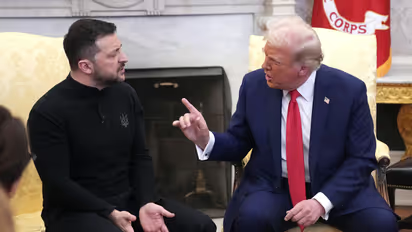
In a July 4 phone call with Ukrainian President Volodymyr Zelenskyy, Trump reportedly asked, “Volodymyr, can you hit Moscow? Can you hit St Petersburg too?” According to a Financial Times report, Zelenskyy responded, “Absolutely. We can if you give us the weapons.”
The exchange, described as tense and direct, marks a dramatic shift in Trump’s posture. Despite previously advocating for scaling down aid, he is now supporting a NATO-backed weapons deal for Ukraine, with NATO members footing the bill. The U.S. will also be sending Patriot missile defense systems, which Trump insists are “necessary to defend the country because Putin talks nice, but then he bombs everybody in the evening.”

This new stance comes after a private call between Trump and Putin reportedly ended with the U.S. President concluding that Russia had no real interest in a ceasefire. Sources say Trump is now focused on forcing Moscow to the table by ramping up the pain, economically and militarily.
“Disappointed but not done,” Trump said when asked if he still sees a deal with Putin. He now wants NATO to stand united and put the squeeze on the Kremlin, leveraging both arms and sanctions.
But the Kremlin isn’t taking it lightly. Spokesperson Dmitry Peskov lashed out at the change in tone from Washington. He warned that Trump’s new tactics could encourage Kyiv, further escalating the war instead of ending it.
“It seems that such a decision made in Washington and in NATO countries and directly in Brussels will be perceived by Kyiv not as a signal for peace but for the continuation of the war,” Peskov said. He added that the Kremlin needs time to analyze what was said in Washington before responding officially.
With the threat of deeper NATO involvement and long-range strikes now on the table, the tension has sharply escalated. The coming days could determine whether this is the lead-up to diplomacy, or a new, deadlier phase in the war.