Bangladesh Cuts Office Hours, Turns Off Wedding Lights To Save Energy
Synopsis
Bangladesh cut office and shop hours and banned decorative lighting at weddings starting on Friday as it seeks to conserve energy stocks after global price hikes due to the Middle East war.
Bangladesh cut office and shop hours and banned decorative lighting at weddings starting on Friday as it seeks to conserve energy stocks after global price hikes due to the Middle East war. Bangladesh imports 95 percent of its oil and gas needs, mostly from the Middle East and said that, while there are adequate stocks of petrol and diesel, it hopes to mitigate the effects of "unsecured" supply lines.
About 60 percent of its electricity is generated using imported gas, while diesel is primarily used for farming in the region.
Dhaka ordered all government, private offices and banks to shut an hour earlier each day starting Friday until further notice.
"The fuel supply line is unsecured... both government and private offices will run from 9 AM to 4 PM, while banks will remain open from 9 AM to 3 PM," top government secretary Nasimul Gani told reporters at a news briefing late Thursday.
Shopping centres, which normally stay open late, will now shut by 6 pm, although stores selling food supplies are expected to keep their usual hours.
Decorative lighting, which was initially banned at malls, has now been extended to include weddings.
Weddings in Bangladesh are celebrations that entertain hundreds of guests at brightly decorated venues and can often co-opt large parts of a neighbourhood.
The government has also asked departments to refrain from purchasing vehicles and computers and to limit money being spent on hospitality costs for work events.
Foreign training missions for government officials have also been suspended, while domestic training will be cut by half.
The measures will reduce at least 30 percent of total fuel consumption, officials estimated.
Schools and colleges could also see schedule changes as the government considers purchasing electric buses for student transport.
Bangladesh has said it is seeking loans of around $2 billion from multilateral donors to tackle energy worries.
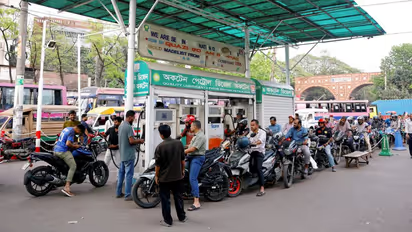
Apart from the latest measures, the government has also set limits on fuel purchases, halted production at most fertiliser factories and deployed police to patrol filling stations that have recently been packed with motorists.
The government conducted around 5,000 raids and confiscated about 400,000 litres of illegally acquired fuel between March 3 and April 1, a spokesperson for the Fuel and Energy Division said.
(Except for the headline, this story has not been edited by Asianet Newsable English staff and is published from a syndicated feed)