Karnataka’s Hoysala Belur Temple Carving Linked to Louis Vuitton Logo? Viral Video Sparks Debate (Watch)
Synopsis
A viral video has sparked debate after a carving at Karnataka’s Hoysala-era Chennakeshava Temple was compared to the Louis Vuitton logo. Social media users are divided over whether the resemblance reflects ancient Indian art influence or coincidence.
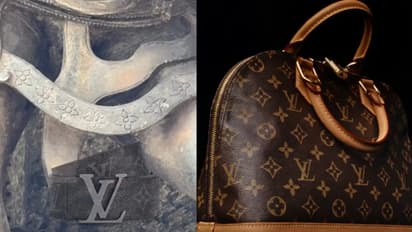
A viral video has sparked a global debate after an Australian influencer claimed that the iconic logo of luxury fashion house Louis Vuitton bears a striking resemblance to a centuries-old carving at Karnataka’s historic Belur temple. The claim has generated widespread discussion on social media about the possible influence of ancient Indian art on modern global design.
A 12th-Century Masterpiece In Focus
The carving in question is located at the renowned Chennakeshava Temple in Hassan district. Built in the 12th century during the reign of the Hoysala dynasty, the temple is celebrated for its intricate stone architecture and detailed sculptural work.
While exploring the monument, Australian influencer Liam Richards pointed out a four-petalled floral carving that appears remarkably similar to Louis Vuitton’s well-known “monogram flower”.
The symmetrical, rounded petal motif seen on the temple walls closely resembles the luxury brand’s signature emblem, a design that dates back more than a century.
Viral Video Triggers Online Debate
The video has since gone viral, with social media users expressing astonishment at the similarity. Many have suggested that the resemblance highlights the richness and global influence of ancient Indian art traditions. Others, however, argue that floral motifs are common across cultures and historical periods, and that the similarity could simply be coincidental.
History Of the Louis Vuitton Monogram
According to Louis Vuitton, its iconic monogram was created in 1896 by Georges Vuitton, the son of the brand’s founder. The design was introduced primarily to prevent counterfeiting and establish a distinctive brand identity. The company states that the monogram drew inspiration from the 19th-century Art Nouveau movement, Japanese decorative art and Victorian-era aesthetics.
Inspiration Or Coincidence?
There is no official evidence to suggest that the Louis Vuitton monogram was directly inspired by the temple carving in Belur. However, the debate underscores how artistic motifs, particularly floral and geometric patterns, have travelled across cultures for centuries.
Floral designs have historically symbolised beauty, harmony and spirituality in civilisations across India, Europe and Asia. Whether the similarity is intentional or merely coincidental, the discussion has renewed global interest in India’s rich architectural heritage.
Explore the latest Lifestyle NewsFood and RecipesHealth NewsAsianet News Official App