8 Best Indoor Plants For Home: Low-Maintenance Greens That Make Your Interiors Look Beautiful!
Synopsis
Looking to add greenery to your home? From low-maintenance snake plants and ZZ plants to decorative peace lilies and areca palms, explore eight indoor plants that can brighten interiors and bring a refreshing natural touch to your living spaces.
Adding plants to your interiors is one of the simplest ways to make a home feel more lively. A little greenery near the window, a leafy corner in the living room or a hanging plant above a shelf can change the appearance of an otherwise ordinary space. Beyond their decorative appeal, indoor plants can also support a connection with nature and make everyday surroundings feel more relaxing.
Although houseplants cannot significantly increase oxygen levels or replace proper ventilation, they remain a popular choice for creating greener interiors. If you are planning to introduce some greenery into your home, here are eight plants worth considering.
1. Money Plant: An Easy Way To Green Up Empty Spaces
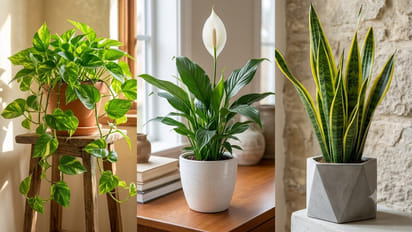
An empty shelf or an ordinary window corner can become an attractive feature with a money plant. Its vines grow outward and downward, making it ideal for hanging planters, wall-mounted pots and decorative bottles. The plant is also suitable for beginners because it adapts to different growing conditions and can be propagated easily.
You can grow it in water or soil, depending on your preference. Regular trimming helps control its growth and keeps the plant looking neat.
World Kindness Day 2026: 10 Small Everyday Gestures That Can Make Someone's Day!
2. Peace Lily: A Flowering Plant For Elegant Interiors
If you want something beyond ordinary green foliage, peace lily is a beautiful option. Its white flowers stand out against deep green leaves, giving it a sophisticated appearance without requiring elaborate decoration.
The plant prefers indirect sunlight and soil that remains slightly moist. It can be placed near a bright window or in a corner receiving filtered daylight. However, households with cats or dogs should exercise caution, as peace lilies are toxic to pets if ingested.
From Rajasthan To Kerala: 8 Gorgeous Places In India That Make Wedding Dreams Come True!
3. Snake Plant: Greenery Without Constant Attention
For people who frequently forget to water their plants, snake plant is a convenient choice. Its stiff, upright leaves create a striking silhouette and occupy very little floor space. This makes it particularly useful in smaller apartments and bedrooms.
The plant tolerates low light and does not require frequent watering. Allowing its soil to dry between watering sessions helps prevent root rot.
4. Areca Palm: Create A Tropical Corner At Home
Areca palm can instantly make a room feel more tropical with its abundant, arching leaves. A larger planter placed beside a sofa, near a window or in an unused corner can become a natural focal point.
It grows best in bright, indirect light and needs regular watering when the upper layer of soil begins drying. Its foliage also releases moisture through transpiration, although this effect is limited in ordinary indoor spaces.
5. Spider Plant: A Natural Fit For Hanging Planters
Spider plants are particularly attractive when displayed in elevated planters. Their narrow leaves spread outward, while mature plants produce smaller plantlets that hang from long stems.
They are relatively easy to grow and adapt well to bright, indirect light. Spider plants can also be propagated by separating their baby plants and placing them in fresh soil.
6. Aloe Vera: A Succulent For Bright Windows
Aloe vera is a practical choice for homes with sunny windowsills. Its fleshy leaves give it a distinctive appearance, while its ability to store water makes it less demanding than many other plants.
The succulent prefers bright sunlight and well-draining soil. Water it only after the soil has dried completely, as excessive moisture can damage its roots.
7. Tulsi: A Familiar Plant For Indian Homes
Tulsi is more than a decorative addition in many Indian households. Its aromatic leaves and traditional significance make it a familiar presence in balconies, courtyards and entrance areas.
Unlike low-light indoor plants, tulsi needs adequate sunlight to grow properly. A sunny balcony or outdoor spot receiving several hours of daylight is generally more suitable than a dark room.
8. ZZ Plant: A Good Choice For Busy Plant Owners
ZZ plant is known for its shiny leaves and ability to tolerate neglect. Its thick underground rhizomes store water, allowing it to survive occasional missed watering sessions.
It can adapt to low-light conditions, although it grows better with some indirect sunlight. This makes it a useful option for offices, rented rooms and interiors where maintaining plants regularly may be difficult.
How To Choose The Right Indoor Plant
Before purchasing a houseplant, consider how much sunlight your home receives, how frequently you can water it and whether you have enough room for its growth. Plants that thrive in bright windows may struggle in darker interiors, while varieties suited to low light may not require the same level of attention.
Indoor greenery can make your home more inviting, introduce natural textures and add colour to otherwise plain spaces. While plants should not be treated as substitutes for ventilation or air filtration, choosing the right varieties can make caring for your home and its surroundings a rewarding everyday habit.
Explore the latest Lifestyle NewsFood and RecipesHealth NewsAsianet News Official App