Kerala Drug Crisis: Understanding NDPS Act and Penalties
Synopsis
Kerala is facing a drug crisis, with increasing use of hybrid cannabis and synthetic drugs. This situation demands more than just celebrity arrests and media attention. A comprehensive approach is crucial to combat this growing menace.
Kerala is grappling with a drug crisis, marked by the rise of unfamiliar hybrid cannabis and synthetic drugs. News of these substances is becoming increasingly common. Earlier this year, two kilograms of cannabis were seized from a student's room at Kalamassery Government Polytechnic, a first in Kerala's educational and excise history. However, the arrested students were granted station bail, surprising many.
Similarly, the quick bail granted to Malayalam film directors arrested with 6.5 grams of hybrid cannabis near the Kerala High Court and Ernakulam City Police Commissioner's office raised eyebrows. While Operation D Hunt dominates headlines, a narrative has emerged, perhaps unintentionally, suggesting synthetic drugs are dangerous while others are less so. Drug toxicity isn't determined by whether it's organic, synthetic, semi-synthetic, gaseous, or liquid. It's assessed based on its impact on mental, social, and economic well-being, and the medically acceptable dosage. The World Health Organization reports 3 million annual deaths from tobacco and alcohol. Therefore, all drugs are dangerous.
The government must treat this as more than a problem solvable through advice or celebrity arrests gaining media attention. The view that this is a crisis unique to Kerala also needs to change.
The NDPS Act
Indian courts have repeatedly stated that ignorance of the law is no excuse. Therefore, educating the public about the law is crucial to crime prevention. Every citizen should be aware of drug-related penalties.
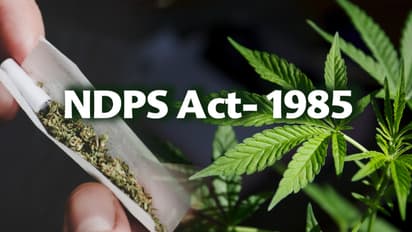
The Narcotic Drugs and Psychotropic Substances Act (NDPS Act 1985), enacted on November 11, 1985, replaced the outdated Opium Act 1957, Opium Act 1878, and Dangerous Drugs Act 1930. The NDPS Act defines narcotic drugs and psychotropic substances, including opiates, stimulants, hallucinogens, and depressants. A 2001 amendment listed 239 substances, categorized by small, intermediate, and commercial quantities. Section 9 and 9(A) empower the government to regulate these substances, including their production, manufacture, distribution, sale, import-export, purchase, and possession. Violations can result in up to 10 years imprisonment and a fine of up to ₹1 lakh.
Read More: Did you see? Did you hear the lyrics? How was it? Vedan asked about the new album
Section 8 prohibits cultivating, possessing, selling, buying, transporting, consuming, and importing-exporting narcotic plants. Aiding, abetting, or concealing such offenses is also punishable. Concealing drugs or their source, characteristics, or location is illegal, with penalties of up to 10 years imprisonment and a fine, with a minimum sentence of 3 years.
Commonly used drugs in India include cocaine, cannabis, black tar heroin, morphine, brown sugar, marijuana, charas, hashish, LSD, and MDMA. New drug combinations are rapidly emerging due to the fast-growing drug trade.
Penalties
Penalties vary based on the quantity possessed. For cannabis, the small quantity is 1 kg, the intermediate quantity is 1-20 kg, and the commercial quantity is above 20 kg. For cocaine, the small quantity is 2 grams and the commercial quantity is 10 grams. These quantities caused public confusion regarding station bail in recent arrests.
After the 2014 NDPS Act amendment, possession of a small quantity of any drug is punishable by up to 1 year imprisonment, a fine, or both. Intermediate quantity possession carries up to 10 years imprisonment and a fine up to ₹1 lakh. Commercial quantity possession leads to 10-20 years imprisonment and a fine of ₹1-2 lakh, which can exceed ₹2 lakh under certain circumstances.
Authority to File Cases
Sections 53(1) and 53(2) authorize specific officials from the central and state governments to file drug-related cases. Centrally authorized officials include those from Central Excise, Customs, Narcotics, Revenue Intelligence, paramilitary forces, and armed forces. State-authorized officials include police officers from Sub-Inspector and above, drug control officers, revenue officers, Excise Inspectors and above, and Forest Deputy Rangers and above.
Section 20 prohibits cultivating, possessing, selling, buying, transporting, and importing-exporting cannabis plants. Cultivation carries a penalty of up to 10 years imprisonment and a fine of ₹1 lakh. Possession penalties vary by quantity, but cultivation penalties don't consider quantity. Even cultivating a single plant can result in the maximum penalty.
Hybrid Cannabis
High-potency hybrid cannabis, grown hydroponically, is gaining popularity in Kerala. There's no evidence of local production; police believe it's imported. Section 12 requires central government permission to trade drugs or psychotropic substances imported from outside India. Violations are punishable by 10-20 years imprisonment and a fine of ₹1-2 lakh.
Section 25 penalizes allowing one's property, room, place, or vehicle to be used for drug offenses, directly or indirectly. The owner faces the same penalties as the offender. In the recent case involving directors arrested with hybrid cannabis in a flat, the absentee flat owner, another director, is being questioned under this section.
Section 29 penalizes anyone who incites or conspires in drug offenses, regardless of whether the offense occurs. A prominent actor was recently arrested under this section.
Comprehensive Solutions Needed
Police believe drug use contributes to the rise in murders and other crimes in Kerala. Drug use and availability, once controlled, are now widespread. Many have become addicted or involved in the drug trade due to various circumstances. The effectiveness of rehabilitation efforts is questionable. Government-run de-addiction centers have only recently expanded to all districts. The government must also address unscientific de-addiction centers. The large billboards of super-specialty de-addiction centers suggest a surge in such facilities, whose quality the government must ensure.
Current celebrity arrests and media frenzy obscure certain realities. Combating drugs requires more than superficial displays; it demands a vigilant society, professional interventions, and comprehensive government plans. Public, media, and social media engagement must become more professional.
Watch Asianet News Live on YouTube
Stay updated with the Breaking News Today and Latest News from across India and around the world. Get real-time updates, in-depth analysis, and comprehensive coverage of India News, World News, Indian Defence News, Kerala News, and Karnataka News. From politics to current affairs, follow every major story as it unfolds. Download the Asianet News Official App to stay informed anytime, anywhere.