Water from 142 Lakes in Bengaluru Not Fit for Drinking, Says KSPCB Report
Synopsis
A KSPCB report has found that water from 142 lakes in Bengaluru is not fit for drinking, even after treatment. All lakes fall under D and E categories, with pollution from sewage, waste and industrial discharge blamed for the poor water quality.
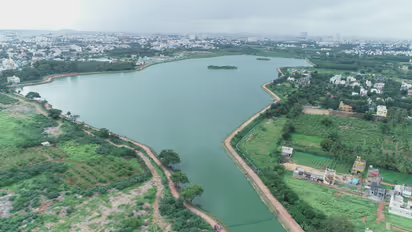
In a startling revelation, a recent report by the Karnataka State Pollution Control Board (KSPCB) has found that the water in 142 lakes across Bengaluru is of extremely poor quality and unfit for human consumption. The findings indicate that even after conventional treatment, the water from these lakes cannot be made potable. The report has raised serious concerns about environmental degradation and the long-term impact of pollution on the city’s water bodies.
According to the Board, water samples were collected every month between April and November 2025 for testing. The analysis revealed that none of the sampled lakes met the standards required for drinking water. In most cases, the water can only be used for industrial purposes. Only a handful of lakes were found suitable for supporting aquatic life and birds.
Sankey Tank Falls Under ‘D’ Category
Even the relatively well-maintained Sankey Tank in Malleshwaram has been classified under the ‘D’ category. This means the water may support fish and birds, but it is not fit for drinking, even after treatment.
The situation is reportedly worse in several other lakes, including Vishwaneedam, Machohalli, Andrahalli, Madhavara, Rayasandra, Mahadevapura-2, Chikkagubbi, Doddagubbi, Kannur, Yellamallappa Tank and Vengayyana Kere. The report states that water in these lakes falls under the lowest quality bracket and is not suitable even for aquatic life, limiting its use largely to industrial purposes.
No Lake Falls Under A, B Or C Categories
The Pollution Control Board classifies surface water quality into five categories: A, B, C, D and E. Water under categories A, B and C can be treated and made potable. However, all 142 lakes surveyed in Bengaluru fall under categories D and E.
This means that not a single lake in the city currently meets the higher standards required for drinking water, even after treatment.
Sewage, Solid Waste And Industrial Discharge Blamed
The report attributes the deteriorating water quality primarily to untreated sewage flowing directly into lakes, indiscriminate dumping of solid waste, and the discharge of untreated effluents from industrial areas. Officials believe that years of inadequate maintenance and weak enforcement have worsened the condition of these water bodies.
Environmentalists have repeatedly flagged concerns over encroachments, poor sewage infrastructure and insufficient restoration efforts, which continue to threaten Bengaluru’s lake ecosystem.
Government Response To the Report
Responding to the findings, Deputy Chief Minister DK Shivakumar clarified that the government has not advised citizens to drink or bathe in lake water.
“The government has not told anyone to drink or bathe in Bengaluru’s lake water. These lakes are meant to recharge groundwater. The Water Board is purifying the water of Thippagondanahalli Reservoir. Bengaluru’s lake water is not meant for drinking or bathing,” he said.
The report has once again highlighted the urgent need for comprehensive lake restoration and stricter pollution control measures to safeguard the city’s water resources.
Stay updated with the Breaking News Today and Latest News from across India and around the world. Get real-time updates, in-depth analysis, and comprehensive coverage of India News, World News, Indian Defence News, Kerala News, and Karnataka News. From politics to current affairs, follow every major story as it unfolds. Download the Asianet News Official App from the Android Play Store and iPhone App Store for accurate and timely news updates anytime, anywhere.