Bengaluru History: Why Is Anand Rao Circle Named After This Mysore Dewan?
Synopsis
Bengaluru's Anand Rao Circle near Majestic is named after Sir T. Ananda Rao, the former Mysore Dewan. Discover his role in the KRS Dam project, electricity and railway development, and the history behind this iconic city landmark.
Whether you are leaving Bengaluru for another town or arriving in the city from elsewhere, you may have heard a bus conductor loudly call out, “Who is getting off at Anand Rao Circle?” Located near Majestic, Anand Rao Circle is one of Bengaluru's well-known landmarks and a busy junction for private buses travelling to various parts of Karnataka and neighbouring states. Thousands of commuters pass through the area every day, often without knowing the story behind its name.
Who was Anand Rao, and why was this bustling junction named after him? The answer lies in the history of the erstwhile Mysore Kingdom and the contributions of a distinguished administrator who played an important role in the development of Bengaluru and Mysuru.
Who Was Sir T. Ananda Rao?
Anand Rao Circle is named after Sir T. Ananda Rao, also known as Tanjore Ananda Rao, who served as the 18th Dewan of the Princely State of Mysore from 1909 to 1912.
During the reign of Maharaja Krishnaraja Wadiyar IV, the Dewan headed the administration and played a crucial role in the governance and development of the state. Ananda Rao was an experienced administrator who held several important positions before becoming the Dewan.
Born in 1852 in Thiruvananthapuram, he received his education in Madras and Travancore. He later joined the Mysore administration and served in various capacities, including as Assistant Commissioner, Chief Secretary and Revenue Commissioner.
His tenure as Dewan witnessed several initiatives aimed at improving infrastructure, transportation, electricity and economic development across the Mysore Kingdom.
His Role In The KRS Dam Project
The mention of the Krishna Raja Sagara (KRS) Dam near Kannambadi often brings the name of Sir M Visvesvaraya to mind. However, Sir T Ananda Rao also played an important administrative role in the project.
During his tenure, the Mysore government initiated the KRS Dam project across the River Cauvery at Kannambadi. Ananda Rao invited Sir M Visvesvaraya to join the Mysore administration as Chief Engineer and Secretary to the Government in 1909.
The project was initiated in 1911-12, with Visvesvaraya playing a key role in its engineering and technical development. The dam later became one of Karnataka's most significant irrigation and water supply projects, supporting agriculture and contributing to the development of the Mysuru region.
Contributions To Electricity And Railway Development
Ananda Rao's tenure also witnessed important developments in electricity and railway infrastructure.
In 1910, a reservoir was constructed at Shivanasamudra for the power station, strengthening the electricity infrastructure serving the Mysore region. The development of electricity was particularly important for industrial growth and urban expansion in Bengaluru and Mysuru.
He also oversaw the extension of the Mysore-Hassan railway line, improving connectivity between different parts of the state. These initiatives contributed to the broader development of transportation and infrastructure in the erstwhile Mysore Kingdom.
Ananda Rao also supported educational and economic development initiatives during his tenure, helping strengthen the administrative and institutional foundations of the state.
A Man Remembered For His Simplicity
Despite holding one of the highest administrative positions in the Mysore Kingdom, Ananda Rao was remembered for his simple lifestyle.
The Maharaja of Mysore recognised his administrative abilities and conferred upon him the title of ‘Pradhana Shiromani’. The British government also honoured him with the title ‘Sir’.
After retiring as Dewan in 1912, Ananda Rao is said to have chosen to live in a modest residence on Seshadri Road, despite having access to a more spacious and well-appointed official residence.
He passed away in 1919. Stories about his humility and dedication to public service continue to feature in historical accounts of his life.
Anand Rao Circle And Its Changing Identity
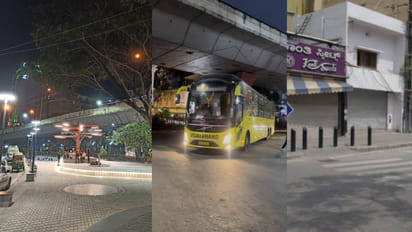
Anand Rao Circle is located in central Bengaluru, connecting important roads around Race Course Road, Seshadri Road and the Majestic area. Over the years, the junction has developed into a major transport hub, particularly for private buses arriving from other districts and states.
The original traffic circle has changed significantly following the construction of a flyover to ease congestion. Although the old roundabout is no longer visible in its original form, the name Anand Rao Circle continues to be widely used by commuters and bus operators.
The area also has an interesting connection with Bengaluru's electricity history. An electricity substation was established at Anand Rao Circle as the city's power infrastructure expanded during the early decades of the 20th century.
However, Bengaluru's first traffic signal was installed at N.R. Junction near the BBMP headquarters in 1963, not at Anand Rao Circle.
Why Anand Rao Circle Remains A Bengaluru Landmark?
Today, Anand Rao Circle is more than just a busy junction near Majestic. It serves as a reminder of the administrative and infrastructure developments that shaped Bengaluru and Mysuru during the early 20th century.
From playing an administrative role in the initiation of the KRS Dam project to inviting Sir M. Visvesvaraya to Mysore and overseeing railway and electricity developments, Sir T. Ananda Rao made important contributions to the region's growth.
The next time you pass through Anand Rao Circle, take a moment to remember the administrator whose name continues to be part of Bengaluru's everyday travel vocabulary.
Stay updated with the Breaking News Today and Latest News from across India and around the world. Get real-time updates, in-depth analysis, and comprehensive coverage of India News, World News, Indian Defence News, Kerala News, and Karnataka News. From politics to current affairs, follow every major story as it unfolds. Download the Asianet News Official App from the Android Play Store and iPhone App Store for accurate and timely news updates anytime, anywhere.