Breakthrough Study: This Indian Plant May Help Remove Microplastics from Drinking Water
Synopsis
Can a plant clean our water? A new study reveals Moringa oleifera seeds effectively remove microplastics, acting as a natural coagulant. Learn about this safe alternative.
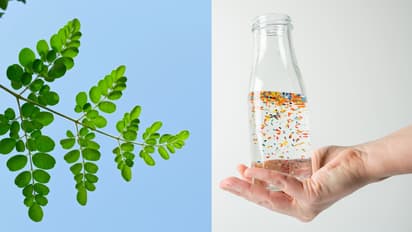
A recent study proposes that a common plant might help address the issue of microplastics in drinking water. Scientists from the Institute of Science and Technology at São Paulo State University in Brazil discovered that Moringa oleifera, also known as moringa or white acacia, could be effective in removing these tiny plastic particles. The findings were published in the journal ACS Omega.
Natural Benefits
Moringa originates from India and is frequently grown in tropical areas. Its leaves and seeds are already popular for consumption because of their high nutritional content. Scientists have studied its seeds for many years due to their natural ability to purify water, making them a promising eco-friendly solution.
Comparable Results
The study's lead author, Gabrielle Batista, explained that a salt-based extract from moringa seeds functioned similarly to aluminium sulphate, a chemical commonly used in water treatment facilities.
In water with higher alkalinity, the plant-based extract even performed better. The researchers mentioned that while aluminium sulphate can increase organic matter in water, moringa could provide a simpler and more affordable alternative, especially for rural or smaller communities.
Also read: Cardiorespiratory Fitness May Lower Depression Risk by 36%, Study Finds
How It Works
The method used is known as in-line filtration. Initially, a coagulant is introduced into the water, followed by passing it through a sand filter. Microplastics typically have a negative charge, which causes them to repel each other and stay suspended in the water.
Coagulants like moringa extract neutralize this charge, encouraging the particles to form larger clusters, which can then be more easily filtered out.
Lab Testing
To evaluate the method, researchers introduced tiny particles of polyvinyl chloride (PVC), a harmful type of plastic, into water. The plastic was exposed to ultraviolet light to simulate real-world conditions. The treated water was then examined using advanced imaging techniques, showing that moringa extract removed microplastics as effectively as chemical treatments.
The team is currently testing the method on water from the Paraíba do Sul River in Brazil. Early results are promising. Experts have raised concerns about chemical coagulants, as they are not biodegradable and may present health risks. This has sparked increased interest in safer, sustainable alternatives like moringa, particularly for communities with limited resources.
Also read: Intermittent Fasting May Help Manage PCOS Symptoms, Study Finds