What is Operation Olivia: Indian Coast Guard's mission to protect Olive Ridley Turtles
Synopsis
The ICG said it remains vigilant, but is in need for stronger policy measures and community involvement to ensure long-term survival. Operation Olivia is one of those measures.
Every year, from December to March, hundreds of thousands of Olive Ridley turtles emerge from the sea, crawling onto Odisha’s sandy shores to lay their eggs. This phenomenon is known as Arribada, meaning 'arrival by sea' in Spanish. While typically a nocturnal event, this year's nesting is unusually diurnal. Around three lakh turtles have already nested, and the number is expected to rise in the coming weeks. However, these ancient mariners face a relentless battle for survival against illegal fishing, habitat destruction, and climate change.
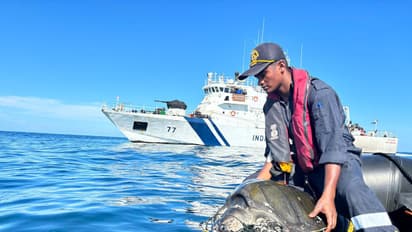
This is where the Indian Coast Guard’s (ICG) annual mission, called Operation Olivia, plays a significant role to protect these endangered turtles and ensure their nesting grounds remain safe. Since its inception, the operation has become a cornerstone of India’s marine conservation efforts, combining rigorous enforcement with community engagement to secure a future for these vulnerable creatures.
Why do Olive Ridley Turtles need protection?
The Olive Ridley, one of the smallest sea turtles, travels vast distances to nest along India’s eastern coast, particularly in Gahirmatha (Odisha), Rushikulya, and Devi River mouth. These sites are among the world’s largest nesting grounds, with over 800,000 turtles arriving annually.
Yet, their survival hangs in the balance due to: Illegal trawling, beach erosion and pollution, such as plastic waste and unchecked coastal development. Rising temperatures also add to the woes, skewing the sex ratios in hatchlings (warmer sands produce more females). Without intervention, scientists warn, the species could vanish from these shores.
How Operation Olivia works
Launched every year from November to May, Operation Olivia deploys a multi-pronged strategy, which includes:
- Aerial and Naval Surveillance
The ICG conducts helicopter sorties and ship patrols to monitor turtle movements and deter illegal fishing. Since the operation began, ICG has carried out 5,387 ship patrols and 1,768 aerial sorties.
2. Community support and crackdown on illegal fishing
Trawlers often violate fishing bans near nesting sites. The ICG has impounded 366 illegal boats, enforced mandatory Turtle Excluder Devices (TEDs) and roped in NGOs and fishermen to help in rescue and rehabilitation works. TEDs are special nets that allow the trapped turtles to escape. Due to these efforts, a record-breaking 698,718 Olive Ridleys nested at Rushikulya in February 2025, surpassing previous counts.

What are the challenges?
Issues such as weak enforcement in some coastal zones, plastic pollution choking marine life, and climate-induced habitat shifts still persist. The ICG said it remains vigilant, but is in need for stronger policy measures and community involvement to ensure long-term survival. A statement from ICG said that they are steadfast to its commitment to marine conservation, upholding the motto “Vayam Rakshamah” (We Protect).
Stay updated with the Breaking News Today and Latest News from across India and around the world. Get real-time updates, in-depth analysis, and comprehensive coverage of India News, World News, Indian Defence News, Kerala News, and Karnataka News. From politics to current affairs, follow every major story as it unfolds. IMD cities weather forecastsRain Cyclone Asianet News Official App