VP releases Constitution in Sindhi in Devanagari, Persian scripts
Asianet News Central | ANI
Published : Apr 10, 2026, 03:30 PM IST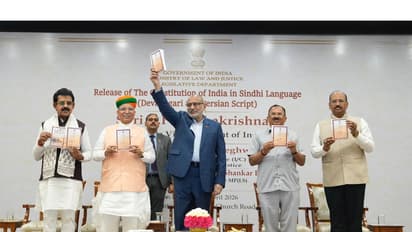
Synopsis
Vice-President CP Radhakrishnan released the Indian Constitution's latest version in Sindhi (Devanagari and Persian scripts) on Sindhi Bhasha Diwas, marking a milestone in linguistic inclusivity and strengthening democratic participation.
The Vice-President, CP Radhakrishnan, on Friday released the latest version of the Constitution of India in the Sindhi language, in both Devanagari and Persian scripts, at an event held at Uprashtrapati Bhawan.
A Milestone in Promoting Linguistic Inclusivity
According to an official release from the Vice President's Secretariat, the Vice President, while addressing the gathering, extended greetings to the Sindhi-speaking community on the occasion of Sindhi Bhasha Diwas. He described Sindhi as one of the oldest and most melodious languages, noting that its literary tradition reflects a unique confluence of Vedantic philosophy and Sufi thought, promoting universal values of oneness, love, and brotherhood.Highlighting the significance of the occasion, he stated that the release of the Constitution in Sindhi, particularly in the Devanagari script for the first time since Independence, marks an important milestone in promoting linguistic inclusivity. He emphasised that the Constitution is not merely a legal document but the living spirit of the nation, embodying its aspirations, safeguarding rights, and guiding democratic governance.Bridging Gap Between Citizens and Governance
The Vice-President appreciated the efforts of the Government under the leadership of Prime Minister Narendra Modi in making the Constitution accessible in multiple Indian languages. He noted that such initiatives help bridge the gap between citizens and governance by enabling people to understand the Constitution in their mother tongue, thereby strengthening democratic participation and trust, a release stated.He observed that India stands unique in making its Constitution available in a wide range of languages and recalled similar initiatives undertaken in recent years, including translations in Bodo, Dogri, Santhali, Tamil, Gujarati, and Nepali. These efforts, he said, celebrate India's linguistic diversity and reinforce democratic values.Sindhi: A Symbol of Resilience and Unity
Reflecting on the historical journey of the Sindhi community, the Vice-President noted that the language served as a symbol of resilience and unity during the difficult times following Partition. He recalled that Sindhi was included in the Eighth Schedule of the Constitution through the 21st Constitutional Amendment in 1967, recognising its cultural significance and ensuring its preservation for future generations.Emphasising the importance of respecting all languages, he said that while every individual holds their mother tongue dear, equal respect must be accorded to all languages. He underscored that India's strength lies in its diversity, and languages are vital carriers of culture, tradition, and identity, a release further read.Empowering Citizens, Strengthening the Nation
The Vice-President commended the efforts of the Ministry of Law and Justice, particularly the Regional Language Officers, for making the Constitution accessible in regional languages. He expressed confidence that such initiatives would contribute to empowering citizens and strengthening the vision of a Viksit Bharat by 2047.He concluded by urging citizens to celebrate their mother tongues as well as the collective linguistic heritage of the nation, reiterating the spirit of unity in diversity and the guiding principle of "Nation First - Rashtra Pratham."Among those present on the occasion were Union Minister of State for Law and Justice & Parliamentary Affairs, Arjun Ram Meghwal; Speaker, Rajasthan Legislative Assembly, Vasudev Devnani; Member of Parliament, Lok Sabha, Shankar Lalwani; and Secretary, Legislative Department, Rajiv Mani, along with other dignitaries, a release added. (ANI)(Except for the headline, this story has not been edited by Asianet Newsable English staff and is published from a syndicated feed.)Stay updated with the Breaking News Today and Latest News from across India and around the world. Get real-time updates, in-depth analysis, and comprehensive coverage of India News, World News, Indian Defence News, Kerala News, and Karnataka News. From politics to current affairs, follow every major story as it unfolds. IMD cities weather forecastsRain Cyclone Asianet News Official App
Read more