Syrups No Longer OTC: Govt Bans Counter Sales, Prescription Now Must
Synopsis
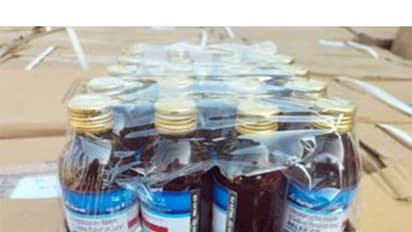
The Union Health Ministry has banned the over-the-counter sale of all syrup medicines. Consumers will now need a doctor's prescription. The move, welcomed by the IMA and IAP, aims to curb misuse and enhance child safety.
The Union Ministry of Health and Family Welfare on Tuesday issued a notification under which syrup medicines, including cough syrups, will no longer be available over the counter. Consumers will now require a doctor's prescription to purchase such medicines.
Medical Community Applauds Decision
On the government's decision to ban the over-the-counter sale of all 'Syrups', including cough syrups, Indian Medical Association (IMA) President Dr Anil Nayak has appreciated and said, "We welcome our government's decision. It's a good decision, because most syrups contain a little caffeine, so people use it for intoxication. But be careful, do not get a prescription from a quack doctor. It should be from an MBBS doctor or higher qualified.I also request the pharmaceutical industry, pharmaceutical stores, and the Pharmacy Council to tell their resellers and pharmacists that if there is no prescription involved, then the government will take action. There are even provisions for punishment."
Improved Child Safety
The Indian Academy of Paediatrics (IAP) also supported the decision. The president, Dr Neelam Mohan, said the amendment would significantly improve child safety, noting that syrups require precise dosing based on age and weight. "Today, I heartily congratulate the Ministry of Health and Family Welfare for this important Drug Amendment Act... the decision to remove syrups from the product category is a very welcome step for the safety of children. We all know that liquid medicines and syrups should be given to children in specific doses based on their age and weight. In recent years, we have unfortunately witnessed tragic incidents involving contaminated syrups, resulting in the deaths of many young children in Madhya Pradesh and Rajasthan. This led to the formation of the Block Consultative Committee to strengthen both the quality and regulation," Mohan told ANI.
Medical experts highlighted that unregulated access to syrups had, in some cases, led to severe health risks, including exposure to contaminated batches containing toxic substances such as diethylene glycol and ethylene glycol.
A 'Critical Firewall' Against Health Hazards
Dr Rahul Verma, Director of Paediatrics and Neonatology at Sir HN Reliance Foundation Hospital, said the prescription mandate would act as a "critical firewall" against pediatric health hazards and improve traceability in drug distribution. "Yes, profoundly it will benefit. While the logistical hurdles for the general public are real, from a clinical standpoint, removing these syrups from the over-the-counter (OTC) market provides a critical firewall against several major pediatric health hazards," Verma said.
He added, "The most immediate benefit is supply chain control. Recent clusters of pediatric Acute Kidney Injury (AKI) and mortality linked to diethylene glycol (DEG) and ethylene glycol (EG) contamination occurred primarily through unregulated OTC distribution. A prescription mandate forces these drugs through licensed, traceable dispensing channels, significantly limiting exposure to substandard batches and enabling faster recalls."
Curbing Addiction and Misuse
Dr (Prof) Mohsin Wali, Sr Consultant & Head of Preventive Cardiology at Pacific One Health and Former Physician to the President of India said, "Cough syrups and other similar syrups contain any cough suppressants like codeine sulfate and dexmethorphan (DXM), and solvents have recently been done. Some countries in the African subcontinent have reported deaths in children, and DGCA and other authorities have made detailed inquiries and found that industrial quality solvent like Dexmethorphan was detected, which caused kidney failure, severe metabolic acidosis and deaths in some cases. This also brought a bad name to our country and resulted in banning these products."
Wali further added, "In some cases, codeine-containing syrups were also used for non-medical uses by young adults due to morphine like pleasure, giving effects and resulting in severe addictions, which is a serious concern. Some ingredients in such syrup also have hallucinogenic effects and are misused."
A Call for Enforcement and Awareness
Dr Shandip Kumar Sinha, director of pediatric surgery and pediatric urology at Medanta - The Medicity in Gurugram, said, "As a paediatric surgeon, I would view this issue in the larger context of responsible medicine use rather than cough syrups alone. India has faced challenges with self-medication across several drug categories, particularly antibiotics. While regulations provide an important framework, their impact depends largely on effective enforcement at the dispensing level and awareness among the public. Strengthening prescription practices, pharmacist compliance, and patient education is likely to have a greater long-term effect than legislation alone. The goal should be to encourage rational use of medicines while ensuring that patients continue to have timely access to appropriate healthcare."
However, Senior Paediatric Specialist Dr Dhiren Gupta said that decisions would have been taken many years ago to avoid several incidents. "I think this decision should have been made many years ago. If we examine the details of the decision, it applies to all syrups, not just cough and cold syrups. In general, you shouldn't give any syrup to children. We talk about some medications that are addictive. For example, cough syrups, or syrups containing codeine, are. Gradually, it's becoming difficult to get codeine syrups over the counter. But in adolescence, those with addiction potential can buy them over the counter. One can use them for addiction. This rule is very good, and it should have been introduced many years ago. The problem is, who will enforce these rules? The problem is still the same. The most difficult point is how you will implement it in rural areas. Even today, implementing it at the ground level will be a difficult job," he said.
Paediatricians' Perspective
Dr. Meena J. Senior Consultant, Paediatrics & Neonatology, Aakash Healthcare, said, "The recent amendment to the Drugs Rules, 1945, is a significant step. Many syrup medicines, especially cough and cold syrups, are often purchased without proper medical advice. Children are not small adults, and the wrong medicine or dose can sometimes do more harm than good. Making syrups prescription-only will encourage parents to consult a doctor before giving medicines to their children. Sometimes it may mean an extra visit to the clinic, but the long-term benefit is safer and more appropriate treatment. This step can help reduce misuse, prevent medication errors, and improve child health safety across the country."
Dr. Jitendra Jain, Senior Consultant - Paediatric, Cocoon Hospital said that, "From a paediatric perspective, the removal of cough syrup exemption under Schedule K is a welcome and important step for child safety. Cough syrups are often perceived as routine medicines, but in children, especially infants and young children, they can cause serious concerns if used without proper medical advice. Wrong dosage, unnecessary combinations, sedating ingredients, self-medication and repeated use can lead to complications instead of relief. A cough is not a disease by itself; it may be a symptom of viral infection, allergy, asthma, pneumonia or other underlying conditions that require clinical evaluation. Making prescription mandatory can help ensure that children receive the right diagnosis, correct medicine and appropriate dosage based on age, weight and symptoms. Parents should avoid buying cough syrups over the counter and consult a paediatrician before giving any such medication to a child." (ANI)
(Except for the headline, this story has not been edited by Asianet Newsable English staff and is published from a syndicated feed.)Stay updated with the Breaking News Today and Latest News from across India and around the world. Get real-time updates, in-depth analysis, and comprehensive coverage of India News, World News, Indian Defence News, Kerala News, and Karnataka News. From politics to current affairs, follow every major story as it unfolds. IMD cities weather forecastsRain Cyclone Asianet News Official App