Delhi's Air Crisis: 17,200 Lives Lost, 15% of All Deaths Tied to Pollution in 2023
Synopsis
New Global Burden of Disease data shows that ambient particulate matter pollution caused nearly 17,200 deaths in Delhi in 2023, about 15% of all fatalities. The study also reports 4.9 lakh healthy years lost (DALYs).
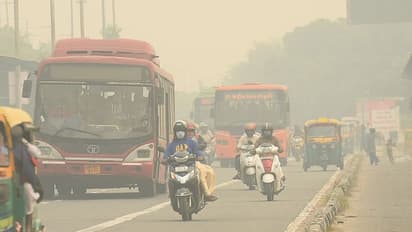
Latest Global Burden of Disease (GBD) data from the Institute for Health Metrics and Evaluation (IHME), released this month, shows a worrying trend for Delhi. The data, analysed by the Centre for Research on Energy and Clean Air (CREA), indicates that ambient particulate matter pollution was the single largest risk factor for deaths in Delhi in 2023. The analysis puts pollution-linked deaths at roughly 17,200, which is about 15% of all deaths in the city for the year, effectively one in seven.
This is a major public-health finding. It shows that poor air quality is not only an environmental problem. It now ranks above many other health risks in the city.
How the loss of healthy life was measured
CREA's analysis uses a standard health metric called DALYs, disability-adjusted life years. DALYs measure years of healthy life lost because of illness, injury or early death. For Delhi in 2023, about 4.9 lakh (490,000) DALYs were attributed to particulate pollution. This means many people in the city lost years of healthy life due to poor air.
The report also shows that 9.4% of Delhi’s total DALYs in 2023 were due to particulate pollution. This is the highest share among Indian cities.
Which diseases are linked to polluted air
Long-term exposure to fine particles (known as PM2.5) is linked to many serious illnesses. Doctors and experts point to the main conditions affected:
- Heart disease: Pollution can cause blood vessels to narrow and increase the risk of heart attacks.
- Stroke: Pollution raises the risk of accidental damage to the brain’s blood supply.
- Lung cancer: Long exposure increases risk over time.
- Chronic obstructive pulmonary disease (COPD): Long-term pollution injures the airways and lungs.
- Lower respiratory infections: Pollution can raise the risk, especially for children and older people.
Doctors explain that pollution rarely causes death instantly. Instead, it acts as a chronic stressor. That means it slowly damages the heart and lungs, and over years it makes other illnesses worse. This can shorten lives and raise death rates.
Other major risk factors in Delhi in 2023
While pollution was the top risk factor, the report also lists other leading causes of death for the city in 2023:
- High systolic blood pressure: 14,874 deaths (12.5%).
- High fasting plasma glucose (diabetes): 10,653 deaths (9%).
- High cholesterol: 7,267 deaths (6%).
- High body-mass index (obesity): 6,698 deaths (5.6%).
This shows that non-communicable diseases remain a big problem. But the scale of pollution-linked deaths places air quality among the most urgent issues.
What the health experts say
Medical experts and public-health specialists agree that the figures are worrying. They also point out limits in the way the numbers are calculated.
Dr Harshal Ramesh Salve (AIIMS) said the math used to estimate pollution-linked deaths depends on models. Those models use exposure-response functions to link particle exposure with disease risk. He noted that these functions are not always calibrated perfectly for the Indian population. That means the exact number may be debated. But he agreed that pollution kills many people and the trend is worrying.
Dr Nikhil Modi, a respiratory and critical care specialist, said the 15% figure is believable. He explained that air pollution makes chronic diseases worse, and so deaths rise over time when pollution stays high.
Dr Neetu Jain, a senior pulmonologist, stressed that even if exact numbers are hard to pin down, the evidence linking PM2.5 exposure with heart and lung disease is strong. She said the way pollution works is to increase risk over many years. This makes it hard to list a single death certificate as “due to pollution”. Still, the population-level effect is clear.
Air quality data for Delhi: How bad was it after Diwali?
The city saw very poor air quality soon after Diwali. On Saturday morning the overall AQI for Delhi was 245, a reading that falls in the ‘poor’ category. Several monitoring stations showed worse numbers:
- Anand Vihar: 298
- ITO: 275
- Jahangirpuri: 300
- Wazirpur: 328 (very poor)
- Bawana: 301 (very poor)
Other places were in ‘moderate’ range, but many spots were in 'poor' or ‘very poor’ ranges. This shows the regular pattern: after fireworks and when weather conditions change, pollution spikes and stays high for days.
Steps being taken by authorities
The Delhi government and agencies say they are acting. Environment Minister Manjinder Singh Sirsa inspected measures in Anand Vihar. Officials have identified 13 pollution hotspots in the city for extra action. The government said it is spending over Rs 400 crore on road renovation and dust control in these areas.
Actions announced include:
- Renovating damaged roads that create dust.
- Better traffic management to reduce congestion.
- Installing permanent water sprinklers or mist systems at hotspots to prevent dust.
- Focusing on stations with very high AQI for immediate action.
Sirsa said officials were told to tackle three main problems at hotspots: excessive traffic, poor traffic management and dust from broken roads. He added the city is working on charging stations and e-bus systems to switch to cleaner transport.
Cloud seeding and experimental measures
Delhi has also been part of experimental cloud seeding. IIT Kanpur carried out a second cloud-seeding trial. A Cessna plane released salt-based and silver iodide flares to try to induce rainfall. The trials aim to explore whether artificial rain can reduce pollution temporarily. Authorities said a third round of cloud seeding would be conducted after the second trial.
Cloud seeding is not a long-term solution. It could help in certain conditions, but experts warn it cannot replace strong policy action on emissions.
Why quick action alone is not enough
Short measures, like road sprinklers or cloud seeding, can help for a few days. But experts say the city needs long-term policies across many sectors:
- Transport: Move to electric public transport, improve vehicle emissions standards, reduce traffic congestion.
- Roads: Fix broken roads and control dust with paving, water sprays and trees.
- Industry: Enforce clean fuel and emission limits for factories near the city.
- Household: Reduce use of dirty fuels for cooking and heating.
- Farming: Work with neighbouring states to cut crop burning during winter months.
- Health: Strengthen hospitals and screening for pollution-related illnesses.
- Without multi-sector action, pollution will stay high and the health burden will rise.
Why the problem is hard to measure precisely
Estimating pollution-linked deaths is difficult because death certificates rarely list pollution as the main cause. Models use population exposure data, disease rates and scientific estimates of risk. Different models give somewhat different numbers. That is why doctors say figures should be read as estimates, not exact counts.
Yet estimates based on good data can still guide policy. Even if the exact number is debated, the scale is large. The message is clear: reducing PM2.5 levels can save many lives.
What citizens can do now
People living in Delhi can take steps to reduce risk:
- Avoid outdoor exercise when AQI is 'poor' or worse.
- Use masks that filter fine particles when pollution is high.
- Keep windows closed on very bad days.
- Support and use public transport when possible.
- Reduce burning of waste at home.
- Plant trees and support local green spaces.
These steps cannot solve the city-level problem alone. But they help protect individuals and vulnerable people like children, older adults and those with heart or lung disease.
The GBD-CREA finding that about 15% of deaths in Delhi in 2023 were linked to air pollution should be a clear warning. It shows that poor air quality matters for life expectancy and for everyday health. The report makes a strong case for urgent and sustained action across all sectors.
If Delhi wants to reduce disease add healthy years of life, and protect its citizens, it must combine immediate measures with long-term plans. Policies must reduce pollution at the source, protect public health, and improve city planning so that breathing clean air becomes the normal state, not an occasional hope.
Air pollution is now the top health risk in Delhi. The new figures show that the city is losing many lives and many years of healthy life to polluted air. While short-term steps can help during extreme events, the solution needs long-term changes in transport, roads, industry, farming and health care. The task is large, but the benefit is clear: cleaner air means healthier lives.
(With ANI inputs)
Stay updated with the Breaking News Today and Latest News from across India and around the world. Get real-time updates, in-depth analysis, and comprehensive coverage of India News, World News, Indian Defence News, Kerala News, and Karnataka News. From politics to current affairs, follow every major story as it unfolds. IMD cities weather forecastsRain Cyclone Asianet News Official App