'Stable, Predictable, Constructive Ties...': PM Modi Meets Wang Yi as India, China Push to Ease Tensions
Synopsis
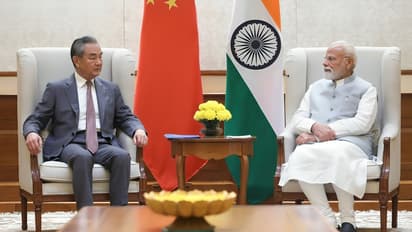
Prime Minister Narendra Modi met Chinese Foreign Minister Wang Yi in New Delhi to discuss boundary and bilateral issues. The meeting, amid Trump’s tariff move, signals efforts by India and China to ease tensions and improve ties.
Prime Minister Narendra Modi on Tuesday met Chinese Foreign Minister Wang Yi at his residence, 7 Lok Kalyan Marg, New Delhi. The meeting is part of efforts by India and China to reduce tensions and improve ties. After his meeting with Yi, PM Modi wrote on X, "Glad to meet Foreign Minister Wang Yi. Since my meeting with President Xi in Kazan last year, India-China relations have made steady progress guided by respect for each other's interests and sensitivities." The Prime Minister also confirmed his upcoming China visit as he added, "I look forward to our next meeting in Tianjin on the sidelines of the SCO Summit. Stable, predictable, constructive ties between India and China will contribute significantly to regional as well as global peace and prosperity."
Wang Yi is in India on a two-day visit at the invitation of National Security Advisor Ajit Doval to attend the 24th round of Special Representatives' Talks on the boundary issue. Earlier, he held talks with NSA Doval and met External Affairs Minister S. Jaishankar.
India-China talks ahead of SCO Summit
Chinese Foreign Minister Wang Yi, during his meeting with National Security Advisor Ajit Doval earlier in the day, stressed the importance of Prime Minister Narendra Modi's upcoming visit to China for the SCO Summit in Tianjin. He underlined that Beijing values India's contribution to ensuring a successful summit and expressed readiness to work with New Delhi to build consensus, set goals for boundary consultations and expand cooperation. Wang highlighted the need to follow the strategic guidance of leaders, strengthen trust through communication and broaden common interests. He appreciated the stability restored along the border and acknowledged the positive outcomes of the 23rd round of special representatives' talks last year. Ajit Doval, in his remarks, welcomed the improving momentum in ties, credited leadership-level engagements since the Kazan meeting, and noted peace along the borders as a foundation to further advance bilateral relations.
A cautious reset in India-China relations
The meeting between External Affairs Minister S. Jaishankar and Chinese Foreign Minister Wang Yi on Monday reflected a delicate attempt to recalibrate India-China relations after years of strain. Both leaders acknowledged the difficult phase triggered by the 2020 Ladakh standoff but emphasized the need for a constructive approach to move forward. Wang Yi highlighted the restoration of peace along border areas, the resumption of Indian pilgrimages to Tibet, and the broader importance of cooperation for Asia’s stability. Jaishankar stressed the principle of 'three mutuals': mutual respect, mutual sensitivity and mutual interest, as the foundation for progress. The tone from both sides suggested an intent to prevent differences from spiraling into disputes, with Jaishankar cautioning against competition turning into conflict. By covering a wide range of issues, from border trade and data-sharing to cultural exchanges, the dialogue sought to broaden engagement beyond the military lens that has dominated ties in recent years.
Strategic significance ahead of global summits
The timing of Wang Yi’s visit adds weight to the meeting’s outcomes, coming just before the BRICS Summit and Prime Minister Narendra Modi’s expected trip to China for the SCO Summit. Both nations appear keen to project stability and dialogue amid shifting global alignments. The agreement on new patrolling arrangements along the LAC in eastern Ladakh signals an effort to manage disputes pragmatically, though core differences remain unresolved. Wang framed China-India cooperation as a source of certainty for Asia and the world, while Jaishankar positioned India's approach as candid but cautious. This balancing act reflects mutual recognition of the strategic and economic stakes, two large neighbors cannot afford prolonged hostility. For India, deepening cooperation without compromising sovereignty is critical, while China sees improved ties as a way to counter regional volatility. Whether this marks a genuine thaw or a tactical pause will depend on consistent implementation of these confidence-building measures.
The meeting between PM Modi and Wang Yi comes amid changing global dynamics. US President Donald Trump’s recent decision to impose tariffs, including a 50% tariff on Indian goods, has reshaped trade and diplomatic equations. Interestingly, despite China’s support for Pakistan during Operation Sindoor after the Pahalgam terror attack, both New Delhi and Beijing appear to be softening their positions.
(With ANI inputs)
Stay updated with the Breaking News Today and Latest News from across India and around the world. Get real-time updates, in-depth analysis, and comprehensive coverage of India News, World News, Indian Defence News, Kerala News, and Karnataka News. From politics to current affairs, follow every major story as it unfolds. IMD cities weather forecastsRain Cyclone Asianet News Official App