PM Modi honours 'Punjab Kesari' Lala Lajpat Rai on birth anniversary
Synopsis
Prime Minister Narendra Modi paid tribute to 'Punjab Kesari' Lala Lajpat Rai on his birth anniversary, calling his life of sacrifice an inspiration. Born in 1865, Rai was a key figure in India's freedom struggle, known for his leadership and journalism.
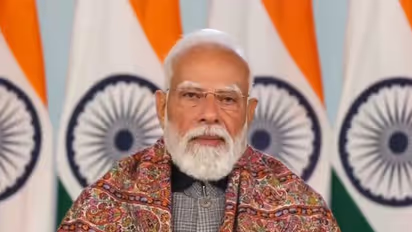
Prime Minister Narendra Modi on Wednesday paid tribute to "Punjab Kesari" Lala Lajpat Rai on his birth anniversary. In a post on X, PM Modi emphasised that Lala Lajpat Rai offered everything he had to liberate India from the chains of slavery, and his life of sacrifice will continue to remain a source of inspiration for every generation. "To the immortal son of the motherland, Punjab Kesari Lala Lajpat Rai, heartfelt and respectful tributes on his birth anniversary. He offered everything he had to liberate Mother Bharati from the chains of slavery. His life of sacrifice will continue to remain a source of inspiration for every generation of the country," PM Modi posted.
Early Life and Career
Lajpat Rai was born on 28 January 1865, in a Punjabi Hindu family, as a son of Urdu and Persian Government School teacher Munshi Radha Krishan and his wife Gulab Devi, in Dhudike. Since childhood, he had a desire to serve his country. In 1886, he moved to Hisar, began practising law, and became a founding member of the Bar Council of Hisar along with Babu Churamani. He also founded the Hisar district branch of the Indian National Congress and the reformist Arya Samaj.
To shape the political policy of India to gain independence, he also practised journalism and was a regular contributor to several newspapers, including The Tribune. In 1886, he helped Mahatma Hansraj establish the nationalistic Dayananda Anglo-Vedic School, Lahore. In 1914, he quit law practice to dedicate himself to the freedom of India.
Leadership and Social Reforms
He was elected President of the Indian National Congress in the Calcutta Special Session of 1920. In 1921, he founded the Servants of the People Society, a non-profit welfare organisation. He was of the view that Hindu society needed to fight its own battle with the caste system, the position of women, and untouchability. Lala Lajpat Rai believed that everyone should be allowed to read and learn from the Vedas, irrespective of one's caste or gender.
Protest Against Simon Commission and Death
When the Simon Commission visited Lahore on 30 October 1928, Lajpat Rai led a non-violent march in protest against it. The superintendent of police, James A. Scott, ordered the police to lathi (baton) charge the protesters and personally assaulted Rai. He did not fully recover from his injuries and died on 17 November 1928. (ANI)
Stay updated with the Breaking News Today and Latest News from across India and around the world. Get real-time updates, in-depth analysis, and comprehensive coverage of India News, World News, Indian Defence News, Kerala News, and Karnataka News. From politics to current affairs, follow every major story as it unfolds. IMD cities weather forecastsRain Cyclone Asianet News Official App