Cyclone Ditwah Chaos: How India’s Operation Sagar Bandhu Became a Lifeline Amid Sri Lanka Floods
Synopsis
India ramps up humanitarian aid in Sri Lanka after Cyclone Ditwah, deploying Navy, Air Force, and NDRF for rescues, relief supplies, and evacuation of stranded citizens.
New Delhi: India has expanded its humanitarian operation in Sri Lanka after Cyclone Ditwah left the island confronting one of its deadliest disasters in recent years. Under Operation Sagar Bandhu, the Indian Navy, Air Force and National Disaster Response Force have been deployed in a multi-layered relief effort that now includes aid delivery, rescue missions and the evacuation of stranded citizens.
Cyclone Ditwah swept across Sri Lanka late last week, releasing torrential rain that overwhelmed river systems and set off destructive landslides.
Entire stretches of the eastern and central highlands gave way as waterlogged slopes collapsed, burying homes and cutting access to interior settlements.
By Sunday, Sri Lankan authorities confirmed at least 334 deaths and hundreds still unaccounted for, a figure officials fear may rise as search teams reach isolated pockets.
Nearly 44,000 people have been affected, with thousands seeking shelter in public buildings after their homes were washed away.
Naval Relief: Ships Carrying Essential Supplies
India moved within hours of Colombo’s request for assistance. The first naval consignment reached the island on 28 November, delivered by INS Vikrant and INS Udaygiri, which had diverted to Colombo port.
The ships carried dry rations, fresh food supplies, dairy products, bakery items and basic necessities intended for emergency kitchens and relief shelters. The use of India’s aircraft carrier for humanitarian aid drew significant attention in Sri Lanka, where officials described the support as both timely and substantial.
Airlift and Rescue Missions
On the intervening night of 28-29 November, an Indian Air Force C-130J aircraft landed in Colombo with almost 12 tonnes of humanitarian material, including tents, tarpaulins, blankets, hygiene kits and ready-to-eat meals.
The airlift continued through the weekend, with additional loads flown in and specialist rescue teams from the NDRF transported to the island on IL-76 aircraft. These teams, trained for urban search-and-rescue, brought inflatable boats, breaching tools, communications equipment and canine units to assist Sri Lankan authorities on the ground.
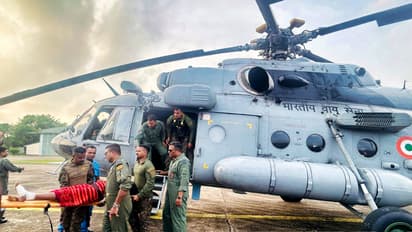
The most dramatic images from the mission have come from the mountains. Indian Air Force helicopters, operating in coordination with Sri Lanka’s disaster-management agency, carried out precision rescues in landslide-hit areas.
In one operation in Kotmale, rescuers winched stranded civilians from a slope where heavy mudslides had cut off access roads. The evacuees included children, senior citizens and several foreign nationals who had been trapped after a hillside settlement collapsed.
Repatriation of Indian Citizens
The evacuation of Indian citizens from Sri Lanka also moved swiftly. Over several flights, groups of stranded passengers were brought from Colombo to Thiruvananthapuram.
The final batch of 104 Indians stranded at Colombo’s Bandaranaike International Airport flew out early on 1 December, completing the repatriation phase of the mission. Civilian flight operations were disrupted and diverted due to the cyclone’s intensity.
India’s assistance is expected to continue as the country works to restore essential services and locate those still missing. The scale of the operation, and the speed with which it was mobilised, has reinforced India’s role as a dependable responder in the Indian Ocean region, particularly when natural disasters strike with little warning.
Sustained Support Under “Neighbourhood First”
New Delhi has framed the operation as an expression of its “Neighbourhood First” policy and its broader maritime approach under Vision MAHASAGAR.
Prime Minister Narendra Modi conveyed condolences to Sri Lankan President Anura Kumara Dissanayake, noting that India stood with its “closest maritime neighbour” at a moment of immense humanitarian strain. External Affairs Minister S. Jaishankar echoed the sentiment, saying further support would be coordinated as Sri Lanka continues rescue and rehabilitation work.
As Sri Lanka confronts the full extent of Cyclone Ditwah’s destruction, the next phase of the crisis will hinge on sustained relief and reconstruction.
As of now, New Delhi’s HADR operation stands as one of the most significant international responses to the catastrophe, offering lifelines at a moment when the island needs them most.
Operation Sagar Bandhu, meanwhile, remains active. With naval and air assets positioned in and around Sri Lanka.
Stay updated with the Breaking News Today and Latest News from across India and around the world. Get real-time updates, in-depth analysis, and comprehensive coverage of India News, World News, Indian Defence News, Kerala News, and Karnataka News. From politics to current affairs, follow every major story as it unfolds. IMD cities weather forecastsRain Cyclone Asianet News Official App