LG Sandhu urges Delhi universities to skill students for employability
Synopsis
Delhi LG Taranjit Singh Sandhu met university heads to discuss inter-linkages between academia and industry for graduate employability, and urged for students to be sensitised on key urban issues like pollution, traffic, and water conservation.
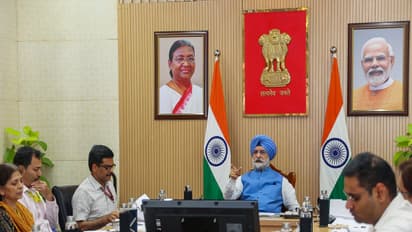
The Lieutenant Governor of Delhi, Taranjit Singh Sandhu, who recently chaired an interactive agenda setting meeting, with the Vice-Chancellors and Directors of Universities and Institutions of higher learning of the GNCTD, stressed on strong and seamless inter-linkages between the academia, society, government and the industry, that aimed at skilling and making graduates employable and entrepreneurs.
According to Officials of the Higher Education Department and Universities, the LG, who is also the Chancellor of these Universities and Institutions, at the outset advised that the students be sensitised towards the austerity measures required to be adopted vis-a-vis saving of fossil fuel, etc., by using public transport and car-pooling instead of private vehicles.
These, about three lakh students, could become ambassadors who could, apart from sensitising their families, also influence peer behaviour amongst their friends and social circles. The students should also be sensitised and gotten involved in issues like women's safety, Decongesting traffic, Green Delhi and Urban stability.
The students should also be sensitised and gotten involved in issues like Women's safety, Decongesting traffic, Green Delhi & Urban stability, Water Conservation and ground water recharge, Universities- Contribution to Society at large and Waste Management, according to the officials.
The LG underlined that Universities and Institutions could, and should, become vehicles of the 'Delhi Behavioural Change Mission'.
Apart from these, the main issues discussed and directions given thereto are listed below:
Air Quality & Environment
Delhi consistently records among the worst air quality globally. Universities must undertake collaborative research on pollution sources, mitigation technologies, green urban planning, and public health impacts of poor air quality.
Urban Water Supply & Sanitation
Research on equitable water distribution, groundwater depletion, Yamuna riverfront rejuvenation, and solid/liquid waste management for Delhi's rapidly growing urban population.
Traffic & Urban Mobility
Data-driven research on traffic decongestion, last-mile connectivity, electric vehicle adoption, and intelligent transport systems for Delhi's congested road network.
Mental Health & Well-being
Delhi's dense urban population faces growing mental health challenges. Universities with medical and psychology faculties must lead research and outreach on stress, addiction, and youth mental health.
Urban Poverty & Informal Economy
Research on livelihood opportunities, skill gaps, and social security for Delhi's large informal workforce, migrants, and slum populations.
Disaster Risk & Resilience
Given Delhi's seismic vulnerability and recurring flood events, universities should conduct risk assessments and develop community resilience frameworks.
Public Health & Disease Surveillance
Post-COVID, universities must build capacity for real-time disease surveillance, epidemic preparedness, and healthcare accessibility research in collaboration with Delhi health authorities. (ANI)
(Except for the headline, this story has not been edited by Asianet Newsable English staff and is published from a syndicated feed.)Stay updated with the Breaking News Today and Latest News from across India and around the world. Get real-time updates, in-depth analysis, and comprehensive coverage of India News, World News, Indian Defence News, Kerala News, and Karnataka News. From politics to current affairs, follow every major story as it unfolds. IMD cities weather forecastsRain Cyclone Asianet News Official App