ISRO PSLV C62 Failure: How ‘KID’ Survived Against All Odds - Explained
Synopsis
ISRO's PSLV-C62 mission failed on January 12, 2026, due to a third-stage anomaly, resulting in the loss of 16 satellites. The rocket deviated from its trajectory, preventing its payloads from reaching orbit.
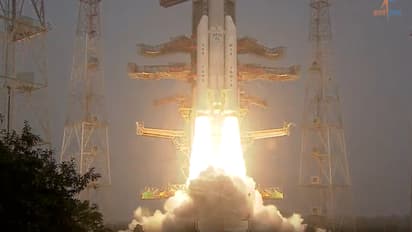
On January 12, 2026, the Indian Space Research Organisation’s (ISRO) PSLV‑C62 mission ended unfavourably when an anomaly struck during the rocket’s third stage, causing the vehicle to deviate from its intended trajectory and fail to place its payload into orbit. The mission carried 16 satellites, including India’s strategic earth‑observation satellite EOS‑N1 (Anvesha) and several co‑passenger payloads, but nearly all were lost.
However, amid this setback, a rare bright spot emerged: a tiny technology demonstrator known as KID (Kestrel Initial Demonstrator) survived the ordeal and managed to transmit data back to Earth. Built by the Spanish startup Orbital Paradigm, the KID capsule’s performance against all odds has become the standout story from the otherwise failed flight.
The PSLV‑C62, launched from the Satish Dhawan Space Centre in Sriharikota, lifted off successfully — with its early stages performing nominally. But as the rocket reached its third‑stage burn, disturbances appeared, and the vehicle veered off course. As a result, none of the primary satellites reached their intended orbits. ISRO Chairman V. Narayanan confirmed observations of “disturbances in the rocket and later deviation from the flight path,” and the mission’s objectives were not met.
Yet, the KID capsule separated from the rest of the spacecraft and did something remarkable: it switched on and transmitted data back to Earth for several minutes. According to Orbital Paradigm, the capsule not only detached from the failing launch vehicle but also survived the extreme conditions of atmospheric re‑entry, enduring peak heat and g‑loading that would destroy most payloads. Its brief but successful communication marks the only recorded telemetry from the mission.
Orbital Paradigm described KID’s performance as “near‑miraculous,” noting that the capsule was designed as a technology demonstrator for what the company hopes will become a reliable means of returning payloads from orbit to Earth — potentially carrying up to 120 kg of cargo in future iterations. The mission’s results reflect not just a survival story, but proof of concept for re‑entry technology that could one day support routine space‑to‑Earth logistics.
The other 15 satellites, however, were lost. These included Anvesha, a surveillance satellite developed by DRDO for strategic imaging and defence applications, as well as payloads from Indian startups, student projects, and international collaborators. The mission was meant to expand India’s and partners’ capabilities in orbit. Their loss highlights the high stakes of rocket launches and the importance of reliability in launch systems.
Despite the success of KID’s survival, the PSLV‑C62 failure delivers a significant setback for ISRO, particularly as this was its first mission of 2026 and followed another anomaly in a previous launch. The agency has initiated a detailed analysis to understand what went wrong during the third stage. This investigation will be vital for future missions, including those involving critical satellites and pilot projects such as Gaganyaan.
For Orbital Paradigm, the episode offers valuable off‑nominal flight data and a boost in validation for its technology. By surviving severe re‑entry conditions and transmitting data, KID has shown that small, robust return capsules could play a role in future space operations -- even when the primary mission fails.
In the midst of a broader discussion about PSLV’s reliability and next steps for India’s space programme, the story of KID’s survival stands out as a rare triumph: a small satellite that defied the odds and proved that innovation in space can sometimes come from the most unexpected places.
Stay updated with the Breaking News Today and Latest News from across India and around the world. Get real-time updates, in-depth analysis, and comprehensive coverage of India News, World News, Indian Defence News, Kerala News, and Karnataka News. From politics to current affairs, follow every major story as it unfolds. IMD cities weather forecastsRain Cyclone Asianet News Official App