Indian Vessel Shivalik With LPG Crosses Strait Of Hormuz Without Escort As Navy Warships Remain On Standby
Synopsis
An Indian-flagged LPG carrier, Shivalik, is crossing the Strait of Hormuz without a direct naval escort amid rising tensions in West Asia. Indian naval warships stationed nearby remain on standby as a precaution. Iranian authorities have allowed Indian vessels safe passage through the critical energy route.
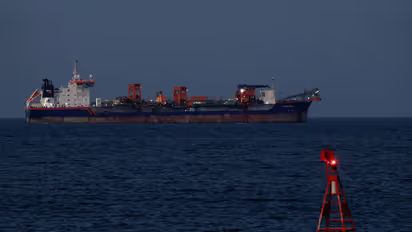
An Indian-flagged vessel carrying liquefied petroleum gas (LPG) is currently crossing one of the world’s most sensitive maritime routes without an escort. The ship, named Shivalik, is travelling through the Strait of Hormuz, a narrow but extremely important waterway that connects the Persian Gulf with the Gulf of Oman.
Officials said that while the vessel is not being escorted directly, Indian naval warships positioned in the region are on standby and closely monitoring the situation. The precaution comes at a time when tensions remain high in West Asia due to the ongoing conflict involving Iran, Israel, and the United States.
The movement of the vessel is being watched carefully because the Strait of Hormuz is a vital route for global energy shipments.
Iranian authorities' permission for safe passage for Indian vessels
Two Indian-flagged ships transporting LPG have reportedly been granted permission by Iranian authorities to pass through the strait. One of these vessels is Shivalik.
According to vessel tracking platform MarineTraffic, the ship was last reported to be in the Gulf of Oman and is expected to reach its destination by March 21.
The confirmation of safe transit came after diplomatic engagement between India and Iran. Iranian officials said ships bound for India would be allowed to pass through the strait despite the tense regional situation.
The Strait of Hormuz is a narrow sea route between Iran and Oman and carries a large share of the world’s oil and gas shipments every day. Any disruption in this route can affect global energy supplies and fuel prices.
Indian Navy warships on alert in nearby waters
Although the LPG carrier is not travelling with a direct naval escort, Indian naval warships stationed nearby are on standby to respond if needed. The decision to keep naval vessels nearby is part of precautionary measures to protect Indian ships and seafarers working in the region.
Officials from the Ministry of Ports, Shipping and Waterways said they are closely tracking all Indian vessels operating in the Persian Gulf region. According to the ministry, a total of 24 Indian-flagged ships with around 668 Indian sailors are currently operating in the Persian Gulf.
In addition, 76 Indian seafarers are aboard three vessels located east of the Strait of Hormuz. Authorities said continuous monitoring is taking place to ensure the safety of both vessels and crew members.
Control room monitoring Indian ships and sailors
India’s shipping regulator Directorate General of Shipping has activated a 24-hour control room to monitor developments in the region. Officials said the control centre has already handled more than 2,425 phone calls and over 4,441 emails from shipping companies, seafarers and their families seeking updates.
The ministry added that the authorities have also helped arrange the safe return of more than 223 Indian sailors who had been stranded due to the situation in the region.
Officials said coordination is ongoing with ship owners, recruitment agencies and Indian diplomatic missions to keep track of all vessels and crews.
Iran reassures India on shipping safety
Speaking about the situation, Iran's Ambassador to India Mohammad Fathali said Iran would allow safe passage for ships heading to India through the Strait of Hormuz. He emphasised the friendly ties between the two countries and said both nations share common interests.
According to the ambassador, Iran considers the safety of Indian vessels important because of the long relationship between the two countries. Another Iranian representative, Abdul Majid Hakeem Ilahi, said Iran has not officially closed the Strait of Hormuz.

However, he explained that the tense conditions in the region have made navigation difficult for some ships. He also said global leaders should work to end the conflict because rising tensions have increased oil prices and affected people around the world.
Regional conflict raises concern for global shipping
The current conflict in West Asia began on February 28 and has since led to a series of military confrontations involving Iran, Israel and the United States.
The situation escalated dramatically after the killing of Ayatollah Ali Khamenei in joint strikes carried out by the United States and Israel.
Iran responded with attacks on Israeli and American assets in several Gulf countries and inside Israel.
These developments have disrupted shipping activity and raised concerns about global energy supplies.
Because a large percentage of the world’s oil and gas passes through the Strait of Hormuz, even temporary disruption can affect international markets and economic stability.
Also Read: Woman Arrested After Road Rage Assault Following Minor Car Crash In UP's Jhansi
Focus remains on safe transit for Indian ships
For now, the safe passage of the LPG carrier Shivalik remains a key focus for Indian authorities.
The ship continues its journey through the sensitive maritime corridor while naval ships remain ready nearby.
Officials say they will continue monitoring the situation closely to ensure that Indian vessels and sailors remain safe during the ongoing regional tensions.
(With ANI inputs)
Stay updated with the Breaking News Today and Latest News from across India and around the world. Get real-time updates, in-depth analysis, and comprehensive coverage of India News, World News, Indian Defence News, Kerala News, and Karnataka News. From politics to current affairs, follow every major story as it unfolds. IMD cities weather forecastsRain Cyclone Asianet News Official App