Indian Agencies Track Anti-India Narrative Risks as Nepal Unrest Deepens amid Violent Gen Z Protests
Synopsis
India is closely monitoring violent Gen Z-led protests in Nepal after a social media ban. The unrest forced PM Oli to resign, raising fears of anti-India narratives and unrest spreading to India's youth.
The Indian government is keeping a close watch on the growing protests in Nepal, where young people led by Gen Z have turned violent, an India Today report quotes intelligence sources. The protests began after the Nepali government, led by Prime Minister KP Sharma Oli, banned major social media sites like Facebook, X and YouTube. The ban, claimed to be for tax and cybersecurity reasons, triggered massive unrest across Nepal and eventually forced Oli to resign and flee the country.
Social media ban sparks mass protests
The protests started on September 8 in major Nepalese cities such as Kathmandu, Pokhara, Butwal and Birgunj. Young people, frustrated by corruption, poor governance and a rising jobs crisis, came together demanding greater transparency, the removal of the social media ban, and an end to institutionalised corruption. Protesters believed the social media ban was an attempt to suppress free speech and control public opinion.
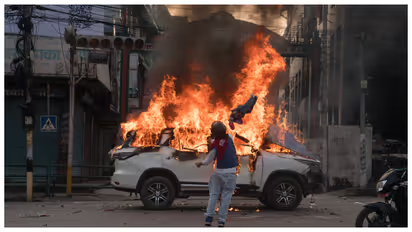
Over the next two days, protests intensified. Demonstrators clashed with security forces, leading to violence and destruction. At least 19 people were killed and over 500 injured during these clashes. To control the situation, the Nepali Army took charge of security from Tuesday night and imposed strict curfews in Kathmandu, Lalitpur, Bhaktapur and other cities.
Nepali army imposes curfew and prohibitory orders
In a statement, the Nepali Army said that lawless individuals and groups were using the protest as cover for criminal activities such as arson, looting, violent assaults and attempted rape. The Army warned that these dangerous acts continued despite efforts to restore order.
The Army imposed prohibitory orders until 5 pm on Wednesday, followed by a nationwide curfew starting at 6 am on Thursday, September 11. The curfew will remain in place until further notice, with decisions based on the developing situation. The Army also thanked citizens for their cooperation and expressed condolences for the lives lost and property damaged during the unrest.
President Ram Chandra Paudel Seeks peaceful solution
Amid rising tensions, President Ram Chandra Paudel stepped in to resolve the crisis peacefully. On Tuesday, he accepted the resignation of Prime Minister Oli. Two days later, the President announced his plan to meet protesting citizens in an effort to open dialogue.
The President emphasized that the protests should be resolved without further bloodshed or destruction. He urged all sides to remain calm, avoid harming the nation, and come together for talks.
In a statement quoted by The Himalayan Times, Paudel said, "In a democracy, the demands raised by citizens can be addressed through dialogue and negotiation."
India monitors situation closely
Indian intelligence agencies are closely tracking the situation in Nepal to prevent any anti-India narrative from gaining strength. Officials fear that the unrest in Nepal could inspire similar protests among India's youth. Intelligence sources reveal that social media and other communication channels are under strict surveillance to detect and neutralise any threats to India’s national interest.
Agencies are particularly focused on monitoring the activities of student groups, civil society organisations, and political entities that might exploit the unrest to spread anti-India sentiments. The concern is heightened by previous unrest in Bangladesh, which spiralled into anti-India narratives.
Nepal's jobs crisis adds fuel to the fire
One of the key reasons behind the protests is Nepal's ongoing jobs crisis. Every day, nearly 5,000 young Nepalese leave the country in search of work abroad. The lack of jobs within Nepal has increased frustration, especially among Gen Z, who see little hope for their future. Protesters are calling for urgent government reforms to fix the job market and promote transparent governance. They want clear answers on the reasons behind the social media ban, which many believe limits their right to free expression.
Growing international concern
The situation in Nepal has drawn attention from neighbouring countries and global observers. The government’s decision to ban major social media platforms was seen by many as an extreme step. Human rights organisations and democratic advocates have expressed concern about the government’s crackdown on free speech.
As of now, the Nepali Army remains in control, enforcing the curfew and prohibitory orders while trying to bring normalcy. President Paudel's plan to hold talks is seen as a hopeful step toward calming the nation.
The situation in Nepal remains tense and unpredictable. Intelligence agencies in India continue to monitor the developments closely, wary of any spillover effects. The protests represent a significant moment in Nepal’s history, led by a young generation demanding accountability and rights in governance.
In the coming days, the focus will be on whether the President’s call for dialogue will lead to a peaceful resolution or if the unrest will further escalate. Both the Nepali government and international observers remain alert, hoping for calm and a return to democracy in the region.
(With ANI inputs)
Stay updated with the Breaking News Today and Latest News from across India and around the world. Get real-time updates, in-depth analysis, and comprehensive coverage of India News, World News, Indian Defence News, Kerala News, and Karnataka News. From politics to current affairs, follow every major story as it unfolds. IMD cities weather forecastsRain Cyclone Asianet News Official App