India-UK FTA Finally Takes Effect: Which Items Will Cost You Less From Today?
Synopsis
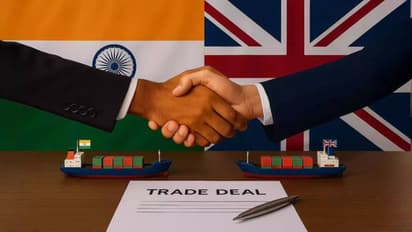
The India-UK Free Trade Agreement takes effect from July 15, slashing tariffs on Scotch whisky, luxury cars, and more. 99% of Indian goods will enter UK duty-free.
The India-UK Free Trade Agreement (CETA) officially came into effect from Wednesday, July 15, 2026, making cars, whisky, clothes, and footwear imported from the UK cheaper in India in a phased manner.
From Wednesday, 99% of Indian goods will be exported to the UK at zero tariff, while 99% of UK goods will be imported into India at an average tariff of 3%.
Negotiations for the agreement began on January 13, 2022, and were completed after nearly 3.5 years. After 14 rounds of negotiations, the agreement was signed on July 24, 2025, by Commerce Minister Piyush Goyal and British Trade Secretary Jonathan Reynolds in the presence of PM Narendra Modi and UK PM Keir Starmer.
Which Items Will Become Cheaper in India?
From day one, India will remove tariffs on around 64% of UK products, including salmon, lamb, aircraft parts, machinery, and electronics. The average tariff on goods imported from the UK will drop from 15% to 3%. Additionally, 85% of goods will become completely tariff-free over 10 years.
Whisky and Gin: India's tariff on Scotch whisky and gin will be slashed from 150% to 75%, further reduced to 40% by year ten. A bottle worth ₹5,000 will be available for ₹3,500.
Luxury Cars: Tariffs on UK cars (Jaguar Land Rover, Rolls-Royce) will drop from 100% to 10% under a quota system, making them 20% to 30% cheaper.
Food and Beverages: Tariffs on salmon, lamb, chocolates, biscuits, and soft drinks will be reduced.
Cosmetics and Medical Devices: Lower tariffs will drop from 15% to 3%.
Fashion and Clothing: Branded clothes, fashion products, homeware, furniture, and electronics will become cheaper.
Which Indian Sectors Will Benefit?
Textile Sector: Indian apparel and home textiles, previously facing 8% to 12% tax, will now be tax-free. Export hubs like Tiruppur, Surat, and Ludhiana could see up to 40% growth.
Jewellery and Leather Goods: No tax on jewellery and leather goods exported to the UK, benefiting MSMEs and luxury brands.
Engineering Goods and Auto Parts: UK has eliminated import taxes on Indian machinery, engineering tools, and auto parts.
Pharmaceuticals: Easier registration for generic medicines in the UK, smoother access to NHS.
Food, Tea, Spices, and Marine Products: UK tax on Basmati rice, shrimp, premium tea, and spices eliminated.
Chemicals: Reduced taxes on agrochemicals and specialty chemicals.
Green Energy: Joint ventures in solar, green hydrogen, and EV infrastructure.
How Will the Deal Benefit the Indian Economy?
India's exports to the UK are projected to reach $29 billion by 2030. New jobs will be created in labor-intensive sectors like textiles and leather. India's 6 crore MSMEs, contributing 40% of exports, will benefit significantly. UK companies will increase investments in IT, financial services, and green technology.
India-UK trade is expected to grow 15% annually until 2030, helping India achieve its $100 billion trade target.
Exceptions: India has protected dairy products, apples, cheese, oats, certain vegetable oils, plastics, diamonds, silver, smartphones, and optical-fibre products.
Types of Trade Agreements
Free trade agreements include PTA, RTA, and BTA. India has signed agreements with Sri Lanka, Bhutan, Thailand, Singapore, Malaysia, South Korea, Japan, Australia, UAE, Mauritius, ASEAN, and EFTA. India is now prioritising FTAs with the EU and the US.
Stay updated with the Breaking News Today and Latest News from across India and around the world. Get real-time updates, in-depth analysis, and comprehensive coverage of India News, World News, Indian Defence News, Kerala News, and Karnataka News. From politics to current affairs, follow every major story as it unfolds. IMD cities weather forecastsRain Cyclone Asianet News Official App