India must build tech capabilities for defence, secure supply chains
Synopsis
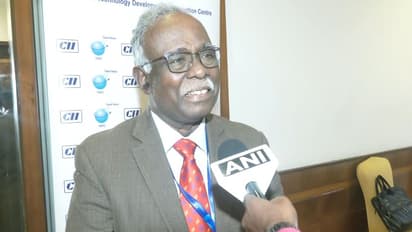
Air Marshal M Matheswaran (Retd) stressed the need for India to build technological capabilities and secure supply chains for rare elements critical to the defence industry, advocating for greater indigenisation and public-private collaboration.
Air Marshal M Matheswaran (AVSM VM PhD, Retd) emphasised the critical importance of building technological and industrial capabilities across the value chain, particularly in the defence sector. Speaking exclusively to ANI, on the significance of rare elements, he noted, "The rarer elements are a critical part of the defence industry in terms of their use in a variety of applications, whether it's radars, sensors, missiles, smart bombs, or display systems like multifunction displays. Actually, it's quite extensive."
The Need for Secure Supply Chains
He highlighted the necessity of securing supply chains, stating, "There is no option but to ensure the supply chain is always safe and secure. Ultimately, of course, the ideal situation is that we have everything made within the country, but that's not always possible economically and viable. But we should ensure the supply chain is in our control."
Challenges in Achieving Full Indigenisation
Despite ongoing efforts, Matheswaran acknowledged challenges in achieving full indigenous production. "We are doing a lot of research in that. A lot of tests have been done, but we are still not at a stage where it's indigenized fully," he said, pointing out issues with import dependency at Hindustan Aeronautics Limited (HAL). "HAL has problems with the supply chain because there is so much import dependency on multiple components. Much of it is indigenized in production, but even when it is produced within the country, the raw material still comes from outside. So there is always a supply chain connection to import supply chains. So that is something that needs to be addressed."
Matheswaran also discussed the integration of indigenous and imported technologies in defence applications. "Quite a lot of weapons that we've used are also indigenous weapons, but even indigenous weapons have imported components. And that is why, particularly when you use sensors and smart systems, they will have the rarest incorporation into it. That is one. Second, big weapons like fire from the rifle, the scalp and the hammer, long-range missiles, etc. They're all imported weapons. So they have their applications as well."
A Strategic Path Forward
He underscored the foundational role of mining and research institutions in developing domestic capabilities. "They are the foundational guys because they are the ones who will develop the mines,....mine the ores, and give it. So it's better late than never. The government has developed a strategic plan that incorporates many aspects of the private sector, utilising a hub-and-spoke model to connect research institutions and academic institutions. So a lot of research will go on, R&D, to be able to develop our own machinery, our own technologies, and replace or substitute the technologies on which we are dependent on machinery imports and permanent magnet imports. But all that is actually what they've done. The good thing is that they've allocated a significant amount of funds. It's almost five billion dollars over seven years. So that should make some results, give some results, but it needs to be done."
Advocating for Public-Private Collaboration
Matheswaran advocated for a collaborative approach between the public and private sectors. "I think we need to get out of this old, archaic idea of looking at PSUs as the only agency for the government, and others are not. The industrial ecosystem was combined with PSUs, which initially emerged due to the government's involvement, as the country was poor at that time, and only the state could create industries. Now they have the best infrastructure, but simultaneously, the private sector emerges. So now you need to have an equal playing field for both the public and private sectors to be able to address problems like this."
The Road Ahead: Building Capabilities and Partnerships
He stressed the urgency of enhancing capabilities, saying, "We need to create capabilities much more than what we have right now. There is, however, a very big mountain to climb. Let's focus on that first, rather than becoming a leader in rare earths later. We can see that later."
Regarding international partnerships, Matheswaran cautioned, "In terms of partnership, yes, we have to work with friends. Japan, Australia, Singapore, Korea, the US, and the UK. So these are all countries with whom we have industry and trade relations. But nobody gives you technology..... So remember that, whether friend or enemy, nobody will give you critical technology. They all do, it's business. So the only way to do that is while you take the technology from them in terms of buying components, focus on your education, research, and your own development."
(Except for the headline, this story has not been edited by Asianet Newsable English staff and is published from a syndicated feed.)
Stay updated with the Breaking News Today and Latest News from across India and around the world. Get real-time updates, in-depth analysis, and comprehensive coverage of India News, World News, Indian Defence News, Kerala News, and Karnataka News. From politics to current affairs, follow every major story as it unfolds. IMD cities weather forecastsRain Cyclone Asianet News Official App