India Conducts Massive War Drill Near Pakistan Border, Tests Integrated IACCS, Akashteer Networks
Synopsis
Exercise Josh 2 brought together the Indian Air Force’s western air command and three army commands to simulate joint combat operations, with a sharp focus on technology integration and reduced response times.
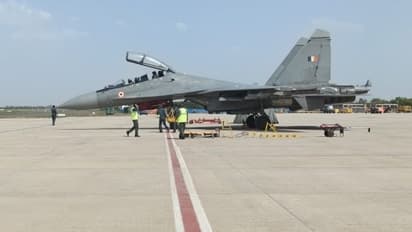
New Delhi: The Indian armed forces have recently conducted Exercise Josh 2, a joint air-land drill on the western front with Pakistan that tested their ability to plan and execute combat operations under a single integrated command framework. The exercise involved the Indian Air Force’s western air command alongside the army’s northern command, western command and south western command.
At the centre of the exercise was the Indian Air Force’s integrated air command and control system, known as IACCS, which the military says substantially cut the time between detecting a threat and directing firepower against it – what planners call the sensor-to-shooter cycle.
Defence officials said the system also demonstrated redundancy and data-linking capacity, both critical requirements in contested airspace where communication links can come under attack.
A notable element of Josh 2 was the integration of Akashteer, the army’s automated air defence control and reporting system, with the IAF’s IACCS network.
Akashteer, developed by Bharat Electronics Limited, is designed to give ground-based air defence units real-time situational awareness and automated engagement sequencing.
Its seamless plug-in with IACCS during the exercise points to a maturing interoperability between the two services.
The exercise also worked through the challenge of running military flight operations without disrupting civilian air traffic, a coordination problem that becomes acute during any large-scale mobilization along India’s western border, where commercial air corridors are dense.
Procedures for airspace de-confliction were rehearsed to allow military and civil aviation to operate simultaneously in overlapping zones.
In a sign of broadening the concept beyond strictly military assets, the drill incorporated joint user airfields – civil airports that can be pressed into military service during a conflict – as part of what the defence establishment describes as a “whole of nation” approach. The idea is to plan from the outset for using national infrastructure, not just dedicated military bases, to sustain high-intensity operations.
The western front has been the primary focus of India’s defence planning since tensions with Pakistan sharpened following the Pahalgam terror attack in April 2025 and the subsequent Operation Sindoor in May 2025, during which the IAF struck targets inside Pakistani territory.
India has been steadily pushing to close the operational gap between its air force and army through joint exercises, common communication protocols and shared command platforms.
The IACCS, which has been progressively expanded since the early 2010s, is the backbone of that effort. Its integration with systems such as Akashteer and its demonstrated data-linking across multiple commands during Josh 2 suggests the architecture is reaching a level of maturity that planners have long sought.
Stay updated with the Breaking News Today and Latest News from across India and around the world. Get real-time updates, in-depth analysis, and comprehensive coverage of India News, World News, Indian Defence News, Kerala News, and Karnataka News. From politics to current affairs, follow every major story as it unfolds. IMD cities weather forecastsRain Cyclone Asianet News Official App