Gujarat allocates Rs 1,147 crore for climate-resilient green roads
Synopsis
Gujarat has allocated Rs 1,147 crore to construct 20 climate-resilient roads using modern green technology. The initiative focuses on sustainable development by reusing old road materials to reduce costs, lower emissions, and increase durability.
Gujarat is advancing towards environmentally friendly and sustainable development through the modernisation of its road infrastructure. Aligning with Prime Minister Narendra Modi's vision for faster and large-scale development, the state government, under the leadership of Chief Minister Bhupendra Patel, has allocated Rs 1,147 crore in this year's budget for the construction of climate-resilient roads using modern technology, according to the release.
Key Road Projects Identified
Accordingly, work on 20 roads across various districts of the state will begin using green technology, with old road materials being reused to reduce costs and promote sustainability. The projects include Lanwa-Manund-Sander-Balisana Road and Radhanpur-Mashali-Madhapura Road in Patan district; Bhidiya Somnath Road in Gir Somnath; Santrampur-Jalod Road in Mahisagar; Dayadara-Nabipur-Janor Road and Ilav-Kosamba Road in Bharuch; Morbi-Nani Vavdi-Baghthala Road in Morbi; Surendranagar Bypass Road in Surendranagar; Dindoli-Karadwa-Iklera Road in Surat; Manglej-Nareshwar Road and Karjan-Amod Road in Vadodara; Kosindra-Bhakha Road in Chhota Udepur; Isarwada-Undel Road and Vadtal-Jol-Bakrol Road in Anand; Valam-Kadi Road and Peplu-Kapra Road in Mehsana; Luni-Gundala-Patri-Tappar-Babiya Road in Kutch; Talaja-Gopnath Road in Bhavnagar; Kalavad-Jamvanthali-Fala Road in Jamnagar; and Kothara Approach Road in Narmada district, the release stated.
The projects will include road widening, resurfacing, RCC gutter lines, protection works, four-laning, earthworks, side shoulders, rumble strips, road furniture, white topping and glass grid technology, based on the requirements of different roads.
Green Technology for Sustainable Construction
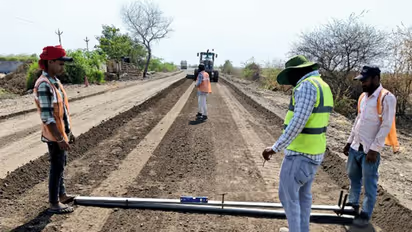
The roads will be developed using climate-resilient and environmentally friendly modern technology. The process involves reusing materials from existing roads during the reconstruction process. The road is excavated, treated with lime and stabilised through pulverising and rolling.
The old road material is then spread over the surface, followed by dry rolling, cement spreading and chemical stabilisation. Levelling and compaction are carried out using modern machinery. After seven days, a Stress Absorbing Membrane Interlayer (SAMI), a high-tech fibre sheet, is laid before asphalt application to prevent cracks, absorb vehicular pressure and increase the lifespan of the road.
Green technology promotes the reuse of materials such as old pavement, soil and metal, helping reduce construction costs while strengthening the road base. The technology improves the long-term durability of roads, increases their lifespan and reduces the need for frequent repairs. It also helps lower carbon emissions and conserve natural resources, the release said.
Jambusar-Tankali-Deola Road Project Highlight
Reconstruction work using green technology worth Rs 50 crore has been approved for the Jambusar-Tankali-Deola road in Bharuch district. The road connects the pharmaceutical bulk drug park near Jambusar and serves as a key link to the ONGC plant, salt farming areas near Deola and shrimp farming zones along the coast. It also connects Jambusar to Vadodara district, providing better access to railways, airports and expressways, thereby benefiting industrial units and economic activity in the region. (ANI)
Stay updated with the Breaking News Today and Latest News from across India and around the world. Get real-time updates, in-depth analysis, and comprehensive coverage of India News, World News, Indian Defence News, Kerala News, and Karnataka News. From politics to current affairs, follow every major story as it unfolds. IMD cities weather forecastsRain Cyclone Asianet News Official App