Can Mamata Banerjee Refuse to Resign? Rules Explained Amid Bengal Power Shift
Synopsis
Constitutionally, a Chief Minister is not automatically removed after an election loss and can remain in office until resigning or being dismissed. While democratic convention calls for immediate resignation, the Governor can intervene. The Governor may ask the CM to prove their majority through a floor test in the legislative assembly.
Can a Chief Minister Refuse to Resign After Losing Elections?
A major constitutional and political debate has emerged in West Bengal after Chief Minister Mamata Banerjee signalled that she would not immediately resign following her party’s defeat in the 2026 Assembly elections. With the Bharatiya Janata Party (BJP) securing a decisive mandate, the situation has raised an important question: can a sitting Chief Minister legally refuse to step down after losing an election?
The answer lies in understanding the distinction between constitutional law and democratic convention. Contrary to popular belief, a Chief Minister does not automatically vacate office once election results are declared. Under the Indian constitutional framework, the Chief Minister continues in office until they either resign voluntarily or are removed through due process.
This means that even after losing a majority, the incumbent government technically remains in power for a brief transitional period. During this time, the Chief Minister is expected to either step down or prove their majority in the legislative assembly. This expectation, however, is based more on convention than an enforceable legal requirement.
Governor’s Role and the Importance of a Floor Test
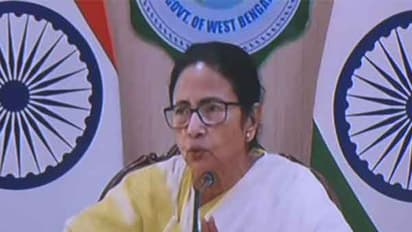
Mamata Banerjee’s position highlights this constitutional nuance. Reacting to the electoral outcome, she suggested she would not quit immediately, effectively setting the stage for a potential confrontation over procedure and precedent. Her stance has sparked sharp political reactions and intensified scrutiny of how transitions of power are handled in India’s parliamentary democracy.
The role of the Governor becomes crucial in such scenarios. The Governor acts as the constitutional authority responsible for ensuring that the state has a government that enjoys the confidence of the assembly. If there is doubt about the incumbent’s majority, the Governor can ask the Chief Minister to prove their strength through a floor test.
Also Read: Mamata Refuses to Resign After BJP's Landmark Victory in West Bengal
A floor test is widely regarded as the most reliable method to determine majority support. It requires the government to demonstrate that it has the backing of a majority of elected legislators. The importance of this mechanism has been repeatedly emphasised by the Supreme Court of India, which has ruled in multiple cases that legislative majority must be tested on the floor of the House, not decided through claims or public statements.
If the Chief Minister fails to prove a majority during such a test, they are constitutionally obligated to resign. In situations where the Chief Minister refuses to comply, the Governor has the authority to dismiss the government. However, this step is generally seen as a last resort due to its political sensitivity and potential for controversy.
Constitutional Morality vs Political Convention
Another important aspect is that until a new government is sworn in, the incumbent administration continues to function in a caretaker capacity. This ensures continuity of governance and prevents any administrative vacuum. However, such a caretaker government is expected to avoid major policy decisions or long-term commitments.
The current situation in West Bengal is not without precedent. Similar constitutional questions have arisen in other states, where incumbent governments delayed resignation or contested majority claims after election results. These instances underscore the delicate balance between legal permissibility and democratic norms.
Also Read: Bengal Power Shift: Mamata-Appointed Retired Officials Barred From Government Offices
While the Constitution allows a Chief Minister to remain in office temporarily, political convention strongly favours resignation once it becomes clear that the electorate has delivered a mandate against the incumbent government. This convention is rooted in the principle of respecting the will of the people and facilitating a smooth transition of power.
Mamata Banerjee’s refusal to step down immediately has therefore reignited a broader debate about constitutional morality. Legal experts point out that while her stance may be technically valid in the short term, it risks undermining established democratic practices if prolonged unnecessarily.
The BJP’s decisive victory in West Bengal marks a historic political shift, ending years of Trinamool Congress (TMC) dominance in the state. As preparations begin for the formation of a new government, administrative and political developments are unfolding rapidly.
The Governor is expected to play a decisive role in the coming days, particularly in determining the timeline for government formation and ensuring that constitutional procedures are followed. Whether through a voluntary resignation, a floor test, or direct intervention, the transition of power will ultimately have to align with both legal requirements and democratic expectations.
This episode serves as a reminder that India’s constitutional system is designed not just around written laws, but also around conventions that ensure stability and accountability. While the law provides flexibility during transitional moments, the smooth functioning of democracy depends on political actors adhering to both the letter and the spirit of the Constitution.
As West Bengal navigates this critical phase, the focus remains on how swiftly and smoothly the transfer of power takes place. The developments in the state will not only shape its immediate political future but may also influence how similar situations are handled across India in the years to come.
Stay updated with the Breaking News Today and Latest News from across India and around the world. Get real-time updates, in-depth analysis, and comprehensive coverage of India News, World News, Indian Defence News, Kerala News, and Karnataka News. From politics to current affairs, follow every major story as it unfolds. IMD cities weather forecastsRain Cyclone Asianet News Official App