Amid COVID, H1N1 spike in Uttarakhand, AIIMS says no need to panic
Synopsis
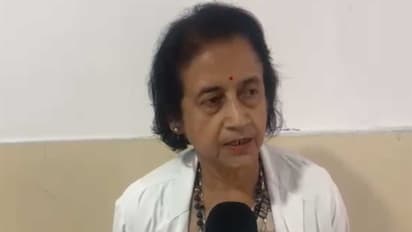
Amid a rise in COVID-19 and H1N1 cases in Uttarakhand, AIIMS Rishikesh Director Meenu Singh said there's 'no need to panic'. The hospital is prepared, has seen 20-25 COVID cases in a month, and has reactivated screening for both viruses.
No Need to Panic, Says AIIMS Director
Amid concern over a steady increase in COVID-19 and H1N1 (Swine Flu) cases in Uttarakhand, All India Institute of Medical Sciences (AIIMS) Rishikesh Director Meenu Singh on Monday said there is "no need to panic", while asserting that the hospital is fully prepared to deal with any situation.
Recent COVID-19 Cases and Outcomes
Speaking exclusively to ANI, Singh said around 20-25 patients tested positive for COVID-19 at AIIMS Rishikesh over the past month, with two severe cases requiring ICU admission. "Over the past month or so, around 20 to 25 patients tested positive for COVID-19. However, the two patients you are referring to were more severe cases, and both were admitted to the ICU," Singh said.
She said one of the ICU patients had diabetes and pneumonia but recovered after treatment and was discharged. "The first patient also had diabetes and pneumonia. As we've seen previously, patients with pre-existing conditions like diabetes, hypertension, or other illnesses tend to develop more severe COVID-19 symptoms. This patient was admitted, received treatment, recovered, and has been discharged," she said.
The second ICU patient also had underlying health issues but died, Singh said. "However, the second patient admitted to the ICU had underlying health issues as well, and unfortunately, that patient did not survive. So, out of the roughly 30 patients who came in, one passed away, and one required ICU admission. The remaining patients did not face any significant issues," Singh added.
Hospital's Enhanced Preparedness
Singh said the hospital has taken additional precautions following government alerts and reports of co-infections involving COVID-19 and H1N1, commonly known as swine flu. "Since the government has issued alerts, and we are seeing co-infections of COVID-19 and H1N1 (Swine Flu) in some individuals--which can lead to more severe conditions--we are taking precautions," she said.
She said the hospital has reactivated its screening OPD, where patients presenting with fever or cough will be tested for both COVID-19 and swine flu. "Until now, swine flu testing was not being conducted for all patients. We have now reactivated the screening OPD, just like during the peak of COVID-19. Anyone presenting with a fever or cough will be tested for COVID-19, as well as via viral PCR for Swine Flu," Singh said.
On treatment, she said specific medication is available for swine flu, while COVID-19 is primarily managed through supportive care. "Since there is a specific treatment available for Swine Flu--like the medication Oseltamivir (Tamiflu)--we can administer that. For COVID-19, as you know, there isn't a single specific cure, so supportive care is primarily provided," she said.
Reassurance on Current Outbreak
Singh said the present situation does not indicate a major resurgence of the pandemic, describing the cases as sporadic and small outbreaks. "At present, there isn't a huge surge in patients, so there is no need to panic about a major pandemic resurgence. We are seeing sporadic, small outbreaks, similar to earlier reports from Odisha and Andhra Pradesh," she said.
"We are fully prepared to handle whatever situation arises. We have the necessary resources, systems, and protocols in place to provide effective treatment," she added.
Precautions Advised for the Public
Urging people to take precautions, Singh advised those with underlying health conditions to wear masks when visiting crowded places. "My main message is that there is no need to panic. However, if you are visiting crowded places and have underlying health conditions--such as uncontrolled diabetes, high blood pressure, kidney disease, an organ transplant, or ongoing cancer treatment--it is strongly recommended that you wear a mask," she said.
"Masks offer significant protection, and practising regular handwashing is equally important," Singh added.
She further advised people experiencing fever, cough or worsening symptoms to visit a hospital for testing and treatment. "If you develop a fever, cough, or worsening symptoms, please visit the hospital. You will be tested, and any necessary treatment or medication will be provided," Singh said.
IMA Issues Advisory on H1N1
Meanwhile, the Indian Medical Association (IMA) on August 26 issued a public health advisory on the seasonal surge in Influenza A (H1N1), or swine flu, during the monsoon, urging people not to self-medicate with antibiotics and antivirals and advising immediate medical attention in case of severe symptoms.
The IMA said India is witnessing a seasonal increase in H1N1 cases, with metropolitan centres such as Delhi recording more than 1,770 laboratory-confirmed cases, alongside cases reported in Maharashtra, Karnataka and West Bengal. The advisory said surveillance by the Indian Council of Medical Research (ICMR) has confirmed that the circulating virus remains seasonal influenza A (H1N1), with no novel genetic mutations detected. (ANI)
(Except for the headline, this story has not been edited by Asianet Newsable English staff and is published from a syndicated feed.)Stay updated with the Breaking News Today and Latest News from across India and around the world. Get real-time updates, in-depth analysis, and comprehensive coverage of India News, World News, Indian Defence News, Kerala News, and Karnataka News. From politics to current affairs, follow every major story as it unfolds. IMD cities weather forecastsRain Cyclone Asianet News Official App