Did a Software Bug Cause the Air India Crash? Inside Alarming Fuel Cut-Off and Engine Failure Clues
Synopsis
Investigators suspect software or electrical issues may have caused un-commanded fuel switch actions before the June 12 Air India crash. Prior system warnings and sensor faults are under scrutiny to determine if these triggered engine failure.
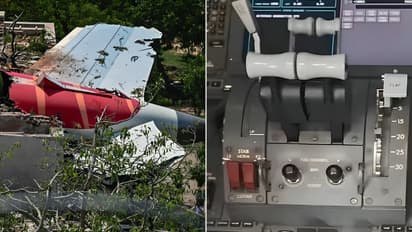
The investigation into the June 12 crash of Air India flight AI-171 from Ahmedabad to London Gatwick is focusing on possible electrical and software faults in the aircraft. Officials believe these faults may have triggered actions that the pilots did not command.
A look at the main suspicion
Officials said they are checking if the aircraft's fuel control switches moved to the 'cut-off' position by themselves, just seconds after take-off. This is called an 'un-commanded transition'. If that happened, it would have cut off fuel to the engines, possibly causing the crash.
A senior official told The Indian Express that investigators are also checking whether a key system in the aircraft misread data and sent wrong signals. This could have led to the engines shutting down without the pilots doing anything wrong.
Warning signs before the crash
The same aircraft had shown problems earlier. Just hours before the crash, a pilot flying the plane from Delhi to Ahmedabad had noted a defect in a sensor called the Stabilizer Position Transducer. This sensor helps control the nose-up and nose-down movement of the aircraft. It sends electrical signals to the flight system to help it respond correctly to pilot commands.
Though engineers followed Boeing's process to fix it, officials reportedly say the defect could have led to confusion in the flight system.
There were also at least two other incidents in the weeks before the crash. One involved an electrical problem that forced flight cancellation. Another reportedly showed a false warning related to the fuel system on the cockpit screen.
What happened during the flight
On June 12, the AI-171 pilots followed standard procedures for take-off. The aircraft lifted off the runway and began to climb after reaching Vr speed (rotation speed), the safe take-off speed. At that point, the aircraft sensors changed to 'air' mode, as they should have.
But soon after, something went wrong. There was a loud bang, the fuel switches shifted to cut-off mode, and the plane's emergency system called the RAT (Ram Air Turbine) deployed. RATs are used to generate power during major failures. Despite the pilots trying hard to restart the engine by switching the fuel supply back on, the plane could not gain enough height. It crashed just about 40 seconds after take-off.
What systems are under scrutiny
The Full Authority Digital Engine Control (FADEC) system is now under close investigation. It is like the brain of the aircraft's engines. If the microprocessor inside FADEC got confused by wrong signals, it could have triggered actions the pilots never wanted, like cutting fuel or shutting off the engine.
Officials also said the Flight Data Recorder (FDR) does not show the exact physical position of switches or levers. It only records the electric signals that sensors send. So, it becomes harder to know what exactly happened inside the cockpit at each second.
What the lone survivor saw
The only surviving passenger, Viswashkumar Ramesh, who was sitting in seat 11A, told investigators that he heard a loud bang right after take-off. He saw green and white cabin lights flickering and felt the aircraft slowing down as if the pilots were trying to push for more power. His description matches what the data shows, a loss of thrust and failed attempt to regain control.
Could a higher climb have saved the plane?
Experts earlier told The Indian Express that if the aircraft had reached 3,600-4,900 feet, it could have made an emergency landing using the power from the RAT. But the plane had only climbed to 625 feet when it came down.
Medical reports of pilots clear
Investigators also confirmed that there was nothing wrong with the health of either pilot. Both had followed procedures correctly and tried to recover engine thrust when power was lost. They switched the fuel control back to 'run' mode and waited for the RAT to generate power but the plane was too low by then for recovery.
As investigators piece together technical data, sensor records, and eyewitness accounts, they are trying to answer one key question: Did a hidden software or electrical problem inside the aircraft cause a disaster that even skilled pilots couldn't stop?
Stay updated with the Breaking News Today and Latest News from across India and around the world. Get real-time updates, in-depth analysis, and comprehensive coverage of India News, World News, Indian Defence News, Kerala News, and Karnataka News. From politics to current affairs, follow every major story as it unfolds. IMD cities weather forecastsRain Cyclone Asianet News Official App