Published : Jul 28, 2025, 04:33 PM ISTUpdated : Jul 28, 2025, 04:45 PM IST
ENG vs IND, 4th Test: India’s spirited fightback at Old Trafford saw a record-breaking draw, with Shubman Gill’s heroics, Ravindra Jadeja’s all-round brilliance, and multiple batting milestones keeping the series alive.
Records Galore as India Keep Series Alive with Hard-Fought Draw at Old Trafford
The fifth day of the gripping Old Trafford Test turned into a celebration of numbers, records, and resilience. India, battered early in the series, fought back with bat and grit to deny England, keeping the series alive in dramatic fashion. For statisticians, the game was a goldmine; for fans, it was a testament to the spirit of Test cricket.
210
McCullum’s England See Rare Draw
Brendon McCullum’s reign as England coach has been synonymous with aggressive, result-driven cricket. Yet, in 40 Tests under his watch, only two have ended without a victor. The last such occasion? The rain-hit Ashes Test at Old Trafford in 2023. Sunday’s stalemate, again at the same venue, was a reminder that even "Bazball" can be tamed.
310
India’s Batting Bonanza: Seven 350-Plus Totals
If there was ever a series that underlined India’s batting depth, it’s this one. With seven scores over 350 in just four matches, India set a new world record for most 350-plus totals in a single Test series. No team had ever crossed that mark more than six times before—Australia had done it thrice, in 1920-21, 1948 and 1989.
This also marked the first time India breached the 300-run mark on seven separate occasions in a series. The all-time record stands at eight—suddenly within reach.
Captains choosing to bowl first at Old Trafford continue to regret the decision. History records no wins for teams electing to chase the game here. In 12 such Tests, three were lost and nine ended in draws. 141 years, 86 Tests, and still no side has managed to win after bowling first at Old Trafford — the streak lives on.
India’s own winless streak at this ground extended to ten matches, the longest for them at any overseas venue.
510
Gill’s Golden Summer: Runs, Records and Rare Feats
Shubman Gill’s form has been the heartbeat of India’s revival. His fourth century of the series, a gritty knock under immense pressure, etched his name alongside Sunil Gavaskar and Virat Kohli for most hundreds by an Indian in a Test series.
Globally, only Don Bradman has done the same as captain in England, way back in 1930. Gill’s series tally now stands at a staggering 722 runs—second only to Gavaskar’s iconic 774 against the West Indies in 1970.
In partnership with KL Rahul, Gill also rewrote the record books, adding 188 runs for the third wicket after India had been reduced to 0/2. It is the highest third-wicket stand in Test history after such a disastrous start. The previous record stood at 105, set by Mohinder Amarnath and GR Viswanath against Australia in Melbourne back in 1977.
610
KL Rahul: Consistency Personified
If Gill was the headline act, Rahul provided the perfect foil. With 511 runs, he became the first visiting opener since Graeme Smith in 2003 to cross the 500-run mark in an English series. Only Gavaskar (542 in 1979) has scored more as an Indian opener on these shores.
710
Jadeja’s All-Round Brilliance
Ravindra Jadeja continued to cement his reputation as India’s premier all-rounder. His 50-plus score in the second innings was his ninth such in England while batting at No. 6 or lower, drawing him level with West Indian legend Garry Sobers.
Jadeja’s England numbers now include 1,000-plus runs and 34 wickets, putting him in rare company—only Wilfred Rhodes and Sobers have managed to combine such batting and bowling returns in a single country.
810
Three Centurions in Second Innings: Historic First
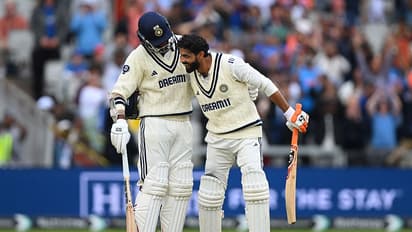
The second innings saw a rare batting flourish, with Gill, Jadeja, and Washington Sundar all notching centuries. It was the first time in history that three Indian batters reached triple figures in the same second innings.
910
Left-Handed Surge: A Rare Sight
India’s left-handers had a series to remember. In the Old Trafford Test alone, five southpaws—Yashasvi Jaiswal, B Sai Sudharsan, and Rishabh Pant in the first innings, along with Sundar and Jadeja in the second—scored 50 or more.
Adding Ben Duckett and Ben Stokes, seven left-handers in total crossed the 50-mark, the most in any Test at this venue. Across both sides, 12 batters posted 50-plus scores, equalling the second-highest tally in Test history.
Additionally, India’s survival instinct was on full display as they batted out five sessions without losing a wicket, soaking up over 20 overs in each. Since 2014, only Pakistan’s stonewalling effort against Australia in Rawalpindi (2022) has seen more—six such sessions.
1010
Century Count Reaches Rare Heights
This marathon series has produced 18 centuries so far, the third-most in the annals of Test cricket. Twelve different batters have reached triple figures, equalling the record for most centurions in a series. India alone have 11 hundreds, matching their highest haul in any Test series, previously set in the 1978-79 home rubber against West Indies.
As the sun set over Old Trafford, the scoreboard told only part of the story. Behind the draw lay tales of defiance, milestones, and historical feats. For India, it was another chapter in a series of resilience; for England, a reminder that dominance comes at a cost. Above all, the fifth day reaffirmed what makes Test cricket special: in a game where time runs out before hope does, sometimes a draw feels like victory.