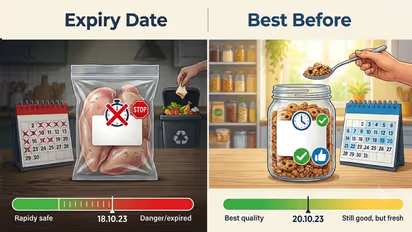
We always check the price, offers, and weight when we buy groceries. But we often ignore the dates printed on the packet. Many people do not know that 'Expiry Date' and 'Best Before' mean two completely different things.
You must check these labels before you buy milk, biscuits, bread, cooking oil, or packaged foods.
Some expired items cause health risks, while throwing away perfectly good food causes unnecessary waste.
The Food Safety and Standards Authority of India (FSSAI) shares clear guidelines to help every household understand these dates. Let us look at what these labels actually mean.
The expiry date tells you the exact deadline to consume a food item safely under given storage conditions.
You must never eat the food after this date crosses. The food might look, smell, and feel completely normal, but it can still contain harmful microbes.
For example, if a milk packet shows 'Expiry Date: 25/10/2026', you should not use it after that day.
You must also follow the instructions about how many days the product lasts after you open the seal. Always read the storage instructions along with the expiry date before you buy any food item.
You will often see 'Best Before' printed on biscuits, chocolates, and snacks. But many people confuse this with the expiry date.
This date simply indicates the best quality period of the food item. The product retains its original taste, texture, and aroma until this specific date.
The food does not spoil immediately after the best before date ends. You can still eat it, but it might lose its original crunch or flavor.
For example, if a biscuit packet says 'Best Before: October 2026', it stays in top quality till that month. You can eat it later, but the brand does not guarantee the exact same taste.
Note: You should throw the food away if its color or smell changes after the best before date. You must strictly follow safety instructions for perishable items.
Expiry Date: Do not eat or sell the food after this date.
Best Before: Taste and aroma might drop after this date. You must check if it is safe before eating.
You should look beyond the price tag while shopping.
Manufacturing Date (MFG): Check when the company made or packed the item.
Expiry Date: Verify the final date and never buy outdated products.
Best Before: Understand how long the item stays in peak quality.
Packet Condition: Never buy torn, leaking, swollen, or broken seal packets.
Storage Instructions: Read if the item needs refrigeration or quick consumption after opening.
Discounted Items: Do not buy items blindly just because they are cheap. You must ensure you can finish them before they expire.
FSSAI's Eat Right India guidelines strongly recommend all these checks.
Which items need extra attention?
You need to pay extra attention while buying milk, curd, bread, cakes, biscuits, chips, meat, fish, frozen foods, cooking oil, spices, and baby foods.
Where can you find these dates?
Companies print these dates in different places on the packaging. You can find them on the back, at the bottom, near the bottle cap, on the seal, or along the packet edges.
MFG / MFD: Manufacturing Date
PKD: Packing Date
EXP: Expiry Date
USE BY: Final date to consume safely
BEST BEFORE: Deadline for top quality
Some packets display the label 'Best Before 6 Months from Packaging'. You must calculate six months from the printed packing date in such cases.
You always check the price, weight, and offers while shopping. But you must also understand the clear difference between expiry date and best before labels. This simple habit improves your family's food safety and prevents unnecessary food wastage at home.
Explore the latest Lifestyle NewsFood and RecipesHealth NewsAsianet News Official App