Published : Aug 20, 2026, 02:36 PM ISTUpdated : Aug 20, 2026, 02:39 PM IST
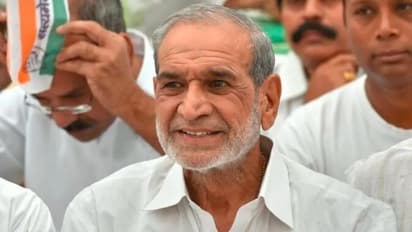
Former Congress MP Sajjan Kumar, convicted in cases linked to the 1984 anti-Sikh riots, died aged 80 in Delhi on Thursday. Once a powerful Congress leader from Delhi, Kumar was serving life imprisonment in Tihar Jail.
Who Was Sajjan Kumar Congress Leader Convicted in 1984 Sikh Riots Cases
Former Congress MP Sajjan Kumar, who was serving life imprisonment in connection with cases arising from the 1984 anti-Sikh riots, died aged 80 at a Delhi hospital on Thursday.
Kumar, once a prominent political figure in Delhi and a three-time Lok Sabha MP, was lodged in Tihar Jail when he reportedly developed health complications. He was taken to Safdarjung Hospital, where doctors declared him brought dead.
His death has brought renewed attention to his long and controversial political career, as well as the decades-long legal battle surrounding his alleged role in the violence that followed the assassination of then Prime Minister Indira Gandhi.
27
From bakery owner to Congress politician
Born on September 23, 1945, Sajjan Kumar entered public life after initially working as a bakery owner. He became a Delhi councillor in 1977 and gradually rose through the ranks of the Congress.
Kumar was considered close to Sanjay Gandhi and later became a significant political face in Delhi. He was first elected to the Lok Sabha from Outer Delhi in 1980. He returned to Parliament in 1991 and won the seat again in 2004 with a massive margin.
#WATCH | Delhi | Jag Parvesh Kumar (in a kurta), son of the late Congress leader and former MP Sajjan Kumar, arrives at Safdarjung Hospital pic.twitter.com/bb5KBMkqZd
— ANI (@ANI) August 20, 2026
For years, he remained one of the most influential Congress leaders in the national capital.
37
His name linked to the 1984 anti-Sikh riots
Kumar's political career was overshadowed by allegations connected to the anti-Sikh violence that erupted after Indira Gandhi was assassinated by her Sikh bodyguards on October 31, 1984.
Thousands of Sikhs were killed, particularly in Delhi, during the violence that followed. Kumar faced allegations that he incited mobs and was involved in attacks on members of the Sikh community.
The cases against him continued through the courts for decades, with survivors and witnesses pursuing justice long after the riots.
In December 2018, the Delhi High Court sentenced Kumar to life imprisonment in a case linked to the killing of five people in Delhi's Raj Nagar area during the 1984 riots.
Although he challenged the conviction, he remained behind bars.
In February 2025, a Delhi court convicted Kumar in another case concerning the killings of Jaswant Singh and his son Tarundeep Singh on November 1, 1984. He was sentenced to life imprisonment again.
At the time of his death, Kumar was serving his sentence in Tihar Jail.
57
Education and politics
Kumar’s formal education was limited. The official Lok Sabha record lists his educational qualification as matriculation, while his 2004 election affidavit states that he studied privately at home.
Publicly available biographical accounts also describe his early life as financially difficult, with reports saying he worked to help support his family before entering business and, eventually, politics. He later became a bakery owner and trader before beginning his political career in Delhi.
67
Sajjan Kumar's family background
Sajjan Kumar was born in Delhi on September 23, 1945, to Raghunath Singh and Mee Kaur. According to the official Lok Sabha biography, he was married to Ram Kaur and had one son and two daughters.
His son, Jag Parvesh, also entered politics. Kumar’s brother Ramesh Kumar was also involved in politics, having served as a Delhi MLA and later contested a Lok Sabha election
77
A career remembered alongside a long legal battle
Sajjan Kumar's life reflected two sharply different chapters: a rise from local politics to the Lok Sabha, followed by years of criminal proceedings over one of India's darkest episodes of communal violence.
His death closes the chapter on a political career that remained deeply controversial, but the memories and legal legacy of the 1984 anti-Sikh riots continue to shape public discussion decades later.