Krishna River: Why Does It Flow 1400 Kms To Drain In Bay of Bengal Instead of Arabian Sea

Published : Oct 07, 2026, 05:24 PM IST

The Krishna River originates in the Western Ghats just a short distance from the Arabian Sea. But the river ignores the nearby coast and travels thousands of kilometers east to join the Bay of Bengal. Read on to find out why this happens
PREV
14
A Very Special River Journey

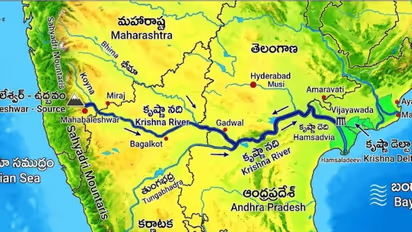
We usually expect a river to flow into the nearest sea. The Krishna River tells a completely different story. The river originates just 64 kilometers away from the Arabian Sea. But the water never flows west. The river travels more than 1,400 kilometers east and finally joins the Bay of Bengal. The geographical structure of our country causes this massive detour.

Where does the river originate?

The Krishna River takes birth in the Western Ghats. The origin point sits north of Mahabaleshwar in the Satara district of Maharashtra. The river starts its journey at an altitude of about 1,337 meters. The Arabian Sea lies just 64 kilometers away from this exact spot. But the river water flows towards the east.

The river starts in Maharashtra and flows through Karnataka and Telangana before entering Andhra Pradesh. The water finally merges into the Bay of Bengal downstream of Vijayawada. The Krishna River covers roughly 1,400 kilometers during this entire journey.

24
Why The River Ignores The Arabian Sea

Rivers always flow from higher elevations to lower areas. Gravity pulls the water down the slope. The distance to the sea never decides the flow direction.

The Krishna River originates in the Western Ghats. This mountain range sits very close to the west coast. But the Deccan Plateau spreads out on the eastern side. This plateau slopes downwards towards the east. The entire catchment area of the Krishna River tilts eastward. Rainwater and small streams naturally flow down this eastern slope. They join the main river and move east.

Geographers call this concept a 'water divide'. The Western Ghats act as a massive water divide for the Indian peninsula. Rain falling on the western side of these mountains flows into the Arabian Sea. Rain falling on the eastern side joins the east-flowing river systems. The Krishna River stands as one of the major east-flowing peninsular rivers. This explains why it never meets the Arabian Sea.

34
A Journey Across Four States

The Krishna River touches Maharashtra, Karnataka, Telangana, and Andhra Pradesh during its long journey. The river basin covers a massive area. Central Water Commission data shows that the Krishna basin spreads across roughly 2.59 lakh square kilometers. The river water plays a crucial role in agriculture, drinking water supply, power generation, and industries across this region. The Krishna basin remains one of the most important river systems in South India.

Does the river have many tributaries?

The Krishna River does not build this massive water system alone. Many tributaries join the main river along the way. The Bhima, Tungabhadra, Ghataprabha, Malaprabha, Musi, and Munneru rivers act as its main tributaries. The Bhima and Tungabhadra rivers hold special importance in this network. The Tunga and Bhadra rivers merge to form the Tungabhadra before joining the Krishna. The Bhima river also originates in the Western Ghats, crosses a vast area of South India, and finally meets the Krishna River.

44
Monsoons Drive The River Flow

The southwest monsoons provide the main rainfall for the Krishna River basin. Central Water Commission data indicates that the basin receives its major rainfall between June and October. The region records significant rainfall especially during July, August, and September. The monsoons heavily influence the water flow in the Krishna River. The basin often faces flood situations during years of heavy rainfall.

Massive projects on the river

The Krishna River acts as a lifeline for the economy and agriculture of South India. The river basin hosts many massive irrigation and hydroelectric projects. The Koyna, Almatti, Narayanpur, Srisailam, Nagarjunasagar, Pulichintala, and Prakasam Barrage stand as key projects on this river. Authorities use the Krishna waters through these projects to meet irrigation, drinking water, and power generation needs.

A long journey despite the nearby sea

The Krishna River teaches us an interesting geography lesson. The land slope, mountains, and terrain decide a river's journey. The river takes birth just 64 kilometers from the Arabian Sea. But it crosses the Deccan Plateau and travels east. The river gathers many tributaries, waters thousands of villages and farms, and finally ends its journey in the Bay of Bengal.

Stay updated with the Breaking News Today and Latest News from across India and around the world. Get real-time updates, in-depth analysis, and comprehensive coverage of India News, World News, Indian Defence News, Kerala News, and Karnataka News. From politics to current affairs, follow every major story as it unfolds. IMD cities weather forecastsRain Cyclone Asianet News Official App

Read more
Read more Photos on

Recommended Stories