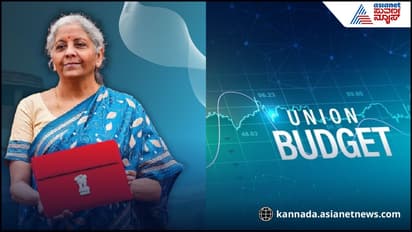
Budget History: Here are some interesting and rare facts about the Union Budget, set to be presented on February 1. Finance Minister Nirmala Sitharaman will be presenting this year's Union Budget on February 1.
Under British rule, the budget was presented at 5 PM to match London's morning. This tradition lasted until 1999. In 2001, the time was changed to 11 AM.
210
The Budget Bunker Tradition
Before 1950, the budget was printed at Rashtrapati Bhavan but leaked. Now, it's printed in a secret North Block bunker. About 100 staff are isolated there for 10 days.
310
Halwa Ceremony
It's an Indian tradition to start auspicious events with a sweet dish. Before budget printing, the Finance Ministry makes halwa, which the Finance Minister serves to the team.
The shortest budget speech was just 800 words, delivered by Hirubhai M. Patel in 1977. In contrast, the longest was by Nirmala Sitharaman in 2020, lasting 2 hours and 42 minutes.
510
Unique Taxes
After independence, India had odd taxes on things like crossword winnings and gifts. While some are gone, taxes on gifts and large expenses still exist in some form today.
610
British Rules Existed Until 2018
Until 2018, the budget was carried in a briefcase, a British tradition. In 2019, FM Nirmala Sitharaman replaced it with a traditional 'bahi-khata' or red ledger.
710
Budget Presented by an Englishman
India's first budget was presented on April 7, 1860, by James Wilson. Its goal was to boost the British treasury after the 1857 revolt by introducing taxes on Indians.
810
Muslim Leader Who Presented India's Budget
Before independence, Liaquat Ali Khan presented the 'Poor Man's Budget,' which taxed the rich. After the partition, he went on to become the Prime Minister of Pakistan.
910
Prime Minister Who Presented the Budget
Three times in India's history, a Prime Minister presented the budget instead of the Finance Minister: Jawaharlal Nehru (1958), Indira Gandhi (1970), and Rajiv Gandhi.
1010
End of the Railway Budget
The 92-year-old tradition of a separate Railway Budget, started in 1924, ended in 2017. Then-Finance Minister Arun Jaitley merged it with the General Budget.