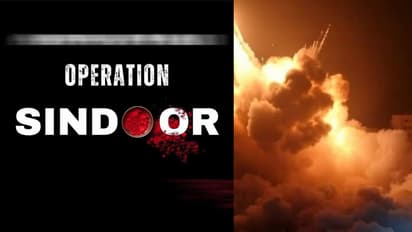
In a powerful and precise military response to the recent Pahalgam terror attack that killed 26 people, mostly tourists, India launched Operation Sindoor, a deep-strike mission targeting terror infrastructure inside Pakistan and Pakistan-occupied Jammu and Kashmir (PoJK).
This time, India’s armed forces came prepared with upgraded capabilities. Unlike the 2019 Balakot strike where Mirage 2000 jets were used, Operation Sindoor was powered by the advanced Rafale fighter jets, armed with two of the most sophisticated European weapons: the Scalp cruise missile and the HAMMER precision-guided bomb.
In the early hours after midnight, Indian missiles struck nine terror camps located across Pakistan, including Bahawalpur, the base of Jaish-e-Mohammed, and Muridke, home to Lashkar-e-Taiba. These groups have long been responsible for attacks on Indian soil, including the Pulwama attack in 2019 and the latest strike in Pahalgam.
The targets were chosen carefully to destroy terror training camps while ensuring minimal civilian harm.
The Scalp, also known as Storm Shadow, is a long-range, air-launched cruise missile with a range of around 450 km.
It can operate in all weather and during night, making it ideal for surprise strikes.
The missile uses advanced navigation systems like GPS, INS (Inertial Navigation System), and terrain matching, ensuring it hits exactly where intended.
It flies low to avoid radar detection and carries a 450 kg warhead, powerful enough to penetrate heavily protected bunkers.
Before impact, the missile uses an infrared image of the target, previously fed into its system, to guarantee precision.
The same missile was used by Ukraine in 2023 to hit targets inside Russia, proving its battlefield reliability.
HAMMER stands for Highly Agile Modular Munition Extended Range. It is a glide bomb designed to hit fortified targets.
It has a range of up to 70 km and can be fitted to standard bombs of various weights (250, 500, or 1,000 kg).
Made by Safran (France), the bomb is resistant to jamming and can be launched even from low altitudes over rough terrain.
Its high precision makes it perfect for striking terror bunkers without harming nearby structures or civilians.
While the Indian Air Force led the missile and airstrikes, the Army and Navy also played supporting roles. It was a coordinated tri-service response, designed not only to punish but to send a clear message: India will hit back hard at terror.
India's strikes were carefully calibrated—meant to avoid escalation with Pakistan’s military but still deliver a strong deterrent message. According to Foreign Secretary Vikram Misri, the action was measured, proportionate, and responsible, focusing only on terror camps, not military or civilian areas.
The precision of the Rafale’s modern weapons allowed India to achieve high impact with minimal risk—a major difference from previous operations.
Operation Sindoor has showcased a new level of Indian military capability—modern, precise, and strategic. By using cutting-edge European weaponry with highly trained Rafale squadrons, India has drawn a firm line against cross-border terrorism.
As tensions continue, this operation underlines India’s ability to respond forcefully, yet responsibly, when civilian lives are targeted.