Markets Surge, Oil Plunges: US-Iran Ceasefire Sparks Global Relief Rally

Published : Apr 08, 2026, 08:06 PM IST

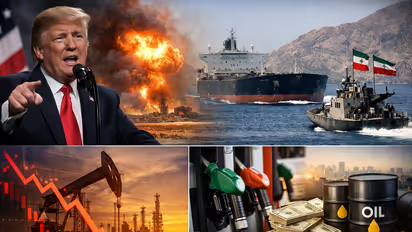
Global markets surged while oil prices plunged after US and Iran agreed to a temporary ceasefire. Crude fell over 15% as hopes grew for reopening Strait of Hormuz. Stocks rose sharply worldwide with airlines gaining and oil companies falling.
PREV
16
Markets react to ceasefire news

Global financial markets saw a strong reaction after the United States and Iran agreed to a temporary ceasefire.

The deal, which is expected to reopen the Strait of Hormuz, led to a sharp fall in oil prices and a big rise in stock markets around the world.

Investors welcomed the news, as it reduced fears of a wider war that could damage the global economy.

Oil prices fall sharply

Oil prices dropped heavily on Wednesday. The most widely traded crude contracts fell by more than 15 percent, slipping to just above $90 per barrel.

Brent crude was down 16.7 percent at $91.05 a barrel, while US West Texas Intermediate fell 18.0 percent to $92.45.

The fall came after a month of conflict that had pushed oil prices up and created pressure on economies worldwide.

The ceasefire raised hopes that oil supplies will return to normal, especially with the reopening of the Strait of Hormuz, a key route for global energy trade.

26
Stock markets rise worldwide

Stock markets across the world moved higher after the news.

On Dow Jones Industrial Average, shares rose around 3.0 percent in early trading. The S&P 500 gained about 2.5 percent, while the Nasdaq Composite jumped 3.2 percent.

In Europe, markets also saw strong gains. London’s FTSE 100 rose 2.6 percent, while Paris’ CAC 40 climbed 4.7 percent and Frankfurt’s DAX increased 4.8 percent.

Asian markets followed the same trend. Tokyo’s Nikkei 225 closed up 5.4 percent, Hong Kong’s Hang Seng Index gained 3.1 percent, and Shanghai’s Shanghai Composite rose 2.7 percent.

Airlines rise, oil companies fall

Different sectors reacted in different ways.

Airline companies were among the biggest gainers, with shares rising more than 10 percent in some cases. Lower oil prices mean lower fuel costs, which helps airline profits.

At the same time, oil companies saw their shares fall. Firms such as Shell, BP, and TotalEnergies dropped between five and seven percent.

In the United States, major oil firms like ExxonMobil and Chevron also declined by more than five percent.

36
Dollar weakens as investors take risks

The US dollar, which is usually seen as a safe option during uncertain times, fell against other major currencies.

It dropped against the euro, Japanese yen, and British pound. This happened as investors moved back to riskier assets like stocks after the ceasefire reduced global tensions.

Relief but not full confidence

Experts say the market reaction shows relief, but also caution.

Susannah Streeter of Wealth Club said that fears of a major war had been replaced by hope after the ceasefire.

However, analysts warned that the situation is still uncertain. John Plassard of Cite Gestion said markets are reacting to a short pause, not a permanent peace.

He explained that the next two weeks will be very important. If talks fail, oil prices could rise again.

46
Strait of Hormuz begins reopening

The Strait of Hormuz is one of the world’s most important shipping routes. A large share of global oil, gas, and fertiliser passes through it.

After the ceasefire, ships have slowly started moving again. MarineTraffic reported that at least two vessels have already passed through the waterway.

However, experts say it is still too early for normal operations. Around 800 ships were earlier stuck due to the conflict, according to Lloyd’s List.

A major German shipping company said it is waiting before sending its vessels back into the area.

56
Impact on fuel supply and airlines

The International Air Transport Association said it could take months for jet fuel supply and prices to stabilise.

Even though oil prices have dropped, the damage to infrastructure in the Gulf region may keep energy costs higher than before the war.

Kathleen Brooks from XTB said that prices may not return to earlier levels quickly because key facilities were targeted during the conflict.

66
Ceasefire terms and uncertainty

The ceasefire between the US and Iran is temporary and will last for two weeks.

It includes an agreement to reopen the Strait of Hormuz, but major issues remain unresolved. These include control over the waterway, nuclear activity, and economic sanctions.

Market expert Steve Sosnick described the reaction as “somewhat euphoric” but warned that many questions remain unanswered.

He stressed that this is only a pause in conflict, not a final solution.

The global market rally shows how closely financial systems are linked to geopolitical events.

While the ceasefire has brought short-term relief, the future remains uncertain.

Investors will now watch closely to see whether this pause leads to lasting peace or if tensions rise again.

(With AFP inputs)

Stay updated with all the latest Business News, including market trends, Share Market News, stock updates, taxation, IPOs, banking, finance, real estate, savings, and investments. Track daily Gold Price changes, updates on DA Hike, and the latest developments on the 8th Pay Commission. Get in-depth analysis, expert opinions, and real-time updates to make informed financial decisions. Download the Asianet News Official App from the Android Play Store and iPhone App Store to stay ahead in business.


Read more Photos on

Recommended Stories