
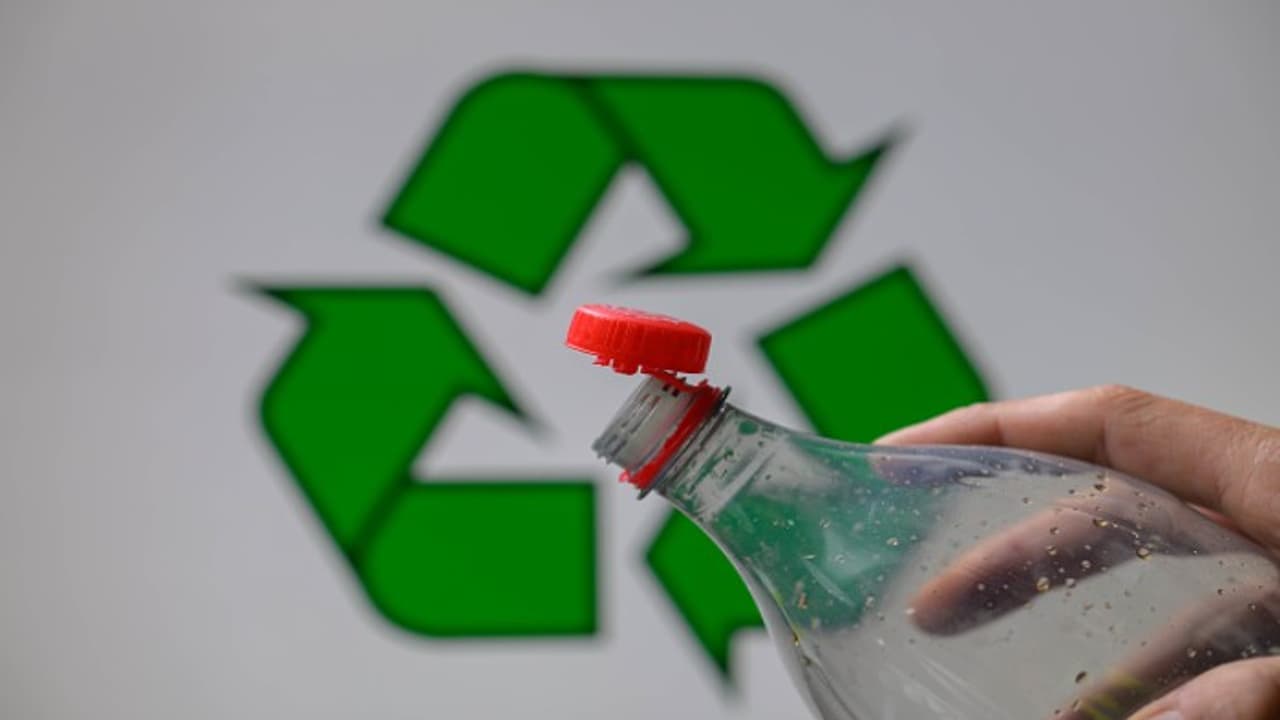
Scientists have revealed alarming reasons why consumers should never re-use single-use plastic water bottles and takeout containers.
Scientists have revealed alarming reasons why consumers should never re-use single-use plastic water bottles and takeout containers. These seemingly harmless actions could be exposing millions to toxic chemicals and microscopic nanoplastics.
Research found that adding more water to and heating up 'single-use' plastics causes them to shed nanoplastics and toxic chemicals directly into your food and liquids. Unlike durable materials such as Tupperware, these lightweight plastics are engineered for one-time use and degrade more readily, increasing the release of hazardous substances.
Chemicals released is styrene, commonly found in synthetic rubber and plastics, which has been linked to heightened risks of esophageal and pancreatic cancers.
According to DailyMail, Sherri Mason, a professor and director of sustainability at Penn State Behrend, said, “We know at this point that our skin is constantly shedding,” she explained. “And this is what these plastic items are doing—they’re just constantly shedding.”
Also read: Do men find female genitalia attractive? Here’s what the research says
The Environmental Protection Agency (EPA) has identified over 16,000 chemicals in plastics, with 4,200 categorized as “highly hazardous.” Yet, the real danger may lie in nanoplastics—particles so tiny they can infiltrate the bloodstream, liver, and even the brain.
“Normal humans looking at a sample of water—if there’s visible plastic in it, they’ll be turned off,” Mason noted. “But they don’t realize that it’s actually the invisible plastics present that are the biggest concern.”
These particles, small enough to cross cellular membranes, accumulate in human tissues, increasing chemical toxicity. While no direct cancer cases have been conclusively linked to nanoplastics, the health risks include developmental defects in children and other serious conditions.
A study from Columbia University earlier this year uncovered that the average bottle of water contains a staggering 240,000 plastic particles, dispelling the myth that bottled water is safer than tap.
“You still have a lot of people that, because of marketing, are convinced that bottled water is better,” Mason told The Washington Post. “But this is what you’re drinking in addition to that H2O.”
The dangers of plastics are magnified when exposed to heat, whether in a microwave or under the sun. Heating plastics causes their molecular structure to break down, accelerating the release of harmful chemicals.
Dr. Rob Danoff, an osteopathic family physician in Philadelphia, warned that high-fat foods like meats and cheeses, when microwaved in plastic containers, can cause the plastic to warp and release toxins into the food.
“The important thing is to always read the labels of your plastic containers carefully before you put them in the microwave,” Dr. Danoff advised. “If you are unsure, then it’s best to heat your food in a microwave-safe container made of a different material, such as glass or ceramic.”
For beverages, experts recommend switching to reusable water bottles made from stainless steel or glass to mitigate exposure to harmful particles.
