Will the US Ever Target Putin? Trump’s ‘Very Disappointed’ Comment
Synopsis
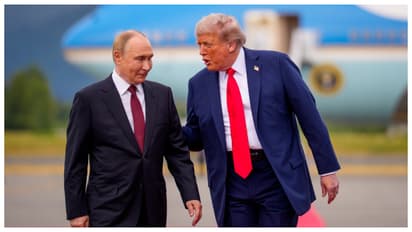
After the US captured Venezuela’s president, speculation grew about a similar move against Russia's Putin. However, US President Trump called such action unnecessary, despite his frustration over the Ukraine war.
In the wake of the United States’ high-profile military operation that resulted in the surprise capture of Venezuelan President Nicolás Maduro, global attention has shifted to questions over whether the US might pursue a similar action against Russian President Vladimir Putin.
However, US President Donald Trump has since made clear that such a move is neither imminent nor necessary, even as he voiced deep frustration with Putin over the ongoing war in Ukraine.
The speculation began after Maduro’s capture by US forces in Caracas, an operation that stunned governments and pundits around the world and marked a dramatic moment in US foreign policy. In the aftermath, Ukrainian President Volodymyr Zelenskyy hinted cryptically that if dictators could be treated in this fashion, the United States “knows what to do next,” widely interpreted as a nudge toward Putin.
When reporters later asked Trump whether he would ever authorise a mission to capture Putin, his response was unequivocal in tone: “I don’t think it’s going to be necessary.” He emphasised that he and Putin had “always had a great relationship” even as he confessed to being “very disappointed” that the Russia-Ukraine war had not been resolved sooner.
Trump’s comments were delivered as he met with oil and gas executives, during which he also lamented the human cost of the Ukraine conflict. He noted that Russia’s military losses had been substantial and suggested the economy was struggling, but reiterated that capturing Putin was not on the table.
The question of capturing Putin also taps into legal complexities. The Russian leader faces an arrest warrant from the International Criminal Court (ICC) over alleged war crimes in Ukraine, yet Russia does not recognise the court’s authority, making any such move practically implausible.
What analysts say?
Analysts say Trump’s remarks reflect broader geopolitical realities: while the US can project military power as seen in Venezuela -- it faces significant constraints when it comes to directly confronting the head of a nuclear-armed rival like Russia. Moscow has strongly criticised the Maduro operation, and Russian officials have accused Washington of destabilising global norms.
The contrasting treatment of the Venezuelan and Russian leaders underscores the limits of US interventionist ambitions. While Maduro’s capture sent shockwaves through Latin America and beyond, Trump’s rejection of a similar strategy for Putin signals a cautious approach to Russia that balances international pressure with the risks of direct confrontation.
The debate is likely to continue, especially as the Ukraine war drags on and global alliances shift — but for now, the US appears focused on diplomatic and economic tools rather than extrajudicial actions against world leaders like Putin.