Why Has Dubai Become Iran’s Prime Target? – Unpacking US Military Ties and Elite Structures
Synopsis
Iran’s missile barrage shook Dubai’s landmarks. This analysis unpacks why the city is being targeted, from US military ties to its role as a global symbol of wealth.
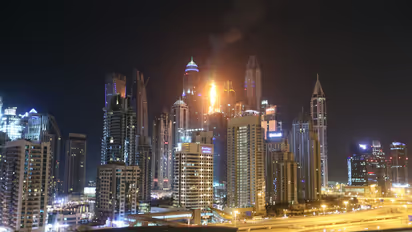
Explosions hit Dubai on February 28, 2026, after Iran launched waves of missiles and drones at the city. The Palm Jumeirah, Burj Al Arab, Dubai International Airport, and Jebel Ali port were all struck, leaving injuries, damage, and a shaken sense of security in one of the world’s busiest hubs.
Authorities said 137 missiles and 209 drones were fired, most intercepted, but debris still caused fires. Four people were injured on the Palm Jumeirah, while a blaze scorched the facade of the Burj Al Arab. At Dubai airport, four staff were wounded, and in Abu Dhabi one person was killed. Jebel Ali port, which hosts US warships, also suffered damage.
Why Dubai is being targeted
Iran’s choice of Dubai is deliberate. The city is a showcase of global wealth and a hub for Western military presence. By striking Dubai, Tehran is sending a message to both the United States and its Gulf allies.
Dubai’s airport and seaport generate about 60% of the emirate’s revenues. They are vital arteries for trade and travel, making them high‑value targets. At the same time, landmarks like the Palm Jumeirah and Burj Al Arab symbolize luxury and global elite lifestyles. Attacking them undermines Dubai’s carefully built image of glamour and stability.
US bases and military assets
The UAE hosts major US military assets, including airbases and Jebel Ali port, which can handle aircraft carriers. These facilities are central to Washington’s regional strategy. By hitting areas near US warships and bases, Iran is retaliating against the joint US‑Israeli bombardment of Tehran.
The strikes are meant to show that American assets in the Gulf are vulnerable, even in countries seen as safe havens. For Iran, Dubai is not just a city of commerce but also a frontline in its confrontation with Washington.
Dubai’s landmarks carry symbolic weight. The Burj Al Arab, often called the world’s first seven‑star hotel, represents opulence. The Palm Jumeirah, a man‑made island shaped like a palm tree, reflects ambition and wealth.
By targeting these sites, Iran is attacking symbols of global privilege. The message is clear: even the most secure and glamorous structures can be shaken. For Tehran, this is a way of undermining the perception of invulnerability enjoyed by Gulf states aligned with the West.
Regional escalation fears
Iran confirmed through state media that it struck Bahrain, Kuwait, Qatar, and the UAE, sparing only Oman, which has acted as a mediator in US‑Iran talks. The scale of the assault raises fears of a wider regional conflict.
Dubai’s population is 90% foreign, making it a global crossroads. Strikes on such a hub reverberate far beyond the Gulf, disrupting international travel, trade, and investor confidence. The UAE now faces the challenge of protecting its economic lifelines while remaining a magnet for global business.