Who Will Succeed Elon Musk And Mark Zuckerberg? Nvidia Row Raises Succession Questions
Synopsis
The departure of Nvidia CEO Jensen Huang has brought an important question into focus for some of the world's biggest technology companies: Who takes over when a powerful founder steps aside? The development has drawn attention to succession planning at Tesla, SpaceX and Meta.
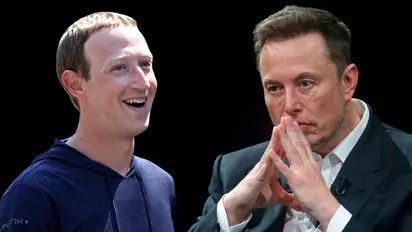
The departure of Nvidia CEO Jensen Huang has brought an important question into focus for some of the world's biggest technology companies: Who takes over when a powerful founder steps aside? The development has drawn attention to succession planning at Tesla, SpaceX and Meta, where Elon Musk and Mark Zuckerberg continue to play central roles in shaping their companies' strategies and long-term ambitions.
Investors have increasingly started questioning whether these businesses have suitable successors who can maintain their growth and leadership if their founders are suddenly unavailable. Huang's exit has highlighted the risks of building companies around individuals whose vision, influence and decision-making are deeply connected to the business.
According to a report by The Washington Post, Ross Gerber, an investor in SpaceX who has previously raised concerns about Tesla's succession planning, believes the Nvidia development could be particularly concerning for Musk. "This Jensen thing is probably the biggest fear that Elon has," Gerber said.
Why Elon Musk's Companies Depend So Heavily On Him
Musk is closely associated with the direction and technological ambitions of both Tesla and SpaceX. At Tesla, his vision extends beyond electric vehicles to autonomous driving technology and humanoid robots. SpaceX, meanwhile, is working on reusable rockets, its Starlink satellite internet network and ambitions to take humans to Mars.
This close association between the founder and the companies' long-term plans raises questions about whether their momentum can continue without his involvement.
SpaceX has acknowledged this risk in its regulatory filings ahead of its planned public listing. The company warned that losing Musk because of death, disability or other circumstances could disrupt its management structure and affect its ability to execute its business strategy.
It also cautioned that finding someone with Musk's combination of skills and experience could be difficult and time-consuming. The company acknowledged that there was no guarantee it would find a suitable successor, either in time or at all.
Tesla has also discussed succession planning in its financial disclosures. However, the company has not publicly presented a clear succession framework, according to The Washington Post report.
Tesla's $1 Trillion Pay Package Has A Succession Clause
Interestingly, Musk's massive compensation package at Tesla includes a succession-related requirement. The potentially $1 trillion pay package requires him to develop a succession planning framework to qualify for the final two award tranches.
The arrangement is designed to keep Musk involved with Tesla through the middle of the next decade. However, the requirement does not necessarily mean the company already has a replacement ready to take over.
For investors, the distinction is important. Having a succession framework is not the same as identifying and preparing a candidate who can independently lead the company. The absence of a publicly outlined transition plan continues to leave questions about Tesla's leadership continuity.
Mark Zuckerberg And Meta Face A Similar Challenge
Meta, led by Mark Zuckerberg, faces a comparable succession concern. The company's financial disclosures acknowledge that his unavailability could have a materially adverse impact on its operations.
Zuckerberg also holds a majority of Meta's voting power, giving him considerable influence over shareholder decisions, including the appointment of directors.
Meta's filings do not disclose a succession plan for the chief executive position. His significant voting control could also make a leadership transition more complicated than simply appointing another senior executive.
The issue is particularly important because Tesla, Meta and Nvidia collectively employ at least 200,000 people and account for nearly 10% of the S&P 500's market value. SpaceX, which remains privately held, is valued at nearly $1.9 trillion.
Can Technology Companies Survive Without Their Founders?
However, a founder's departure does not necessarily mean a company's growth will come to an end. Apple provides an example of a technology giant successfully navigating such a transition.
Following Steve Jobs' death in 2011, Tim Cook took over as CEO and continued leading the company through a period of substantial growth. Microsoft, Amazon and Alphabet have also demonstrated that businesses can evolve beyond their founders as chief executives.
Dipal Dutta, CEO at RedoQ, told NDTV that technology companies must ensure their success does not depend entirely on one individual.
"Technology companies are often driven by the vision of their founders. For long-term success, this inspiration must be sustainable. If the business is highly driven by the identity of individuals and therefore its valuation is heavily dependent, succession must be carefully thought about," Dutta said.
Also Read: US Launches Criminal Probe Into Megaspeed Over Nvidia Chip Exports
He further explained the importance of developing leadership strength across an organisation.
"Having depth in your leadership will allow you to spread decisions across your company and create structures that will allow innovation to continue despite changes in leadership. Whilst having a strong founder can lead to a successful company, having a strong business allows you to sustain that success."
The debate following Huang's departure is therefore not just about identifying the next CEO at Nvidia. It has also highlighted a wider corporate governance challenge for founder-led technology companies.
For Tesla, SpaceX and Meta, the question is whether their businesses have developed enough leadership depth to continue growing without the people who built them. For investors, a strong succession strategy could prove just as important as innovation, revenue growth and market leadership.