Tibetan Admin Commemorates Monk's Self-Immolation Protest Anniversary
Synopsis
The Central Tibetan Administration commemorates monk Sonam Dhargyal, who self-immolated on March 17, 2012. The act highlights ongoing Tibetan concerns over religious freedom and cultural identity under Chinese government policies.
The Central Tibetan Administration has commemorated Tibetan monk Sonam Dhargyal on the anniversary of his self-immolation protest, highlighting ongoing concerns among Tibetans over religious freedom and the preservation of their cultural identity.
A Tribute to Defiance
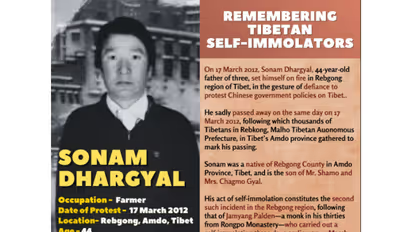
In a post shared on social media platform X, the Tibetan government-in-exile paid tribute to those who carried out self-immolation protests against Chinese government policies in Tibet. The post recalled that on March 17, 2012, Sonam Dhargyal, a 44-year-old father of three, set himself on fire in the Rebgong region of Tibet as an act of defiance. He succumbed to his injuries the same day.
Following his death, thousands of Tibetans gathered in Rebgong, located in the Malho Tibetan Autonomous Prefecture in Amdo province, to mourn and mark his passing.
According to the statement, Sonam Dhargyal was a farmer and a native of Rebgong County. He was the son of Shamo Dhargyal and Chagmo Gyal.
Heightened Tensions in Rebgong
The Central Tibetan Administration noted that his self-immolation was the second such incident in the Rebgong region within days. Earlier, on March 14, 2012, Jamyang Palden, a monk in his thirties, had self-immolated near Rongpo Monastery.
The statement further highlighted that the region witnessed a heavy security presence at the time, with reports indicating that Tibetans participating in prayer vigils or protests faced a heightened risk of detention and retaliation by security forces.
Self-Immolation as a Form of Dissent
The commemoration underscores continued calls from Tibetans in exile and within the region for greater religious freedom and the protection of their cultural identity.
Self-immolation is a drastic form of protest in which individuals set themselves on fire to convey deep political or religious dissent. In Tibet, this form of demonstration began to rise in 2009, involving monks, nuns, and ordinary Tibetans who say they are opposing limits placed on religious practices, cultural identity, and language under Chinese governance. Many of these protesters have also demanded the return of Tenzin Gyatso, the 14th Dalai Lama, who has been living in exile in Dharamshala, India, since fleeing after the 1959 Tibetan Uprising. (ANI)