Red Sea Realignment: Will Somaliland Become Israel's New Strategic Ally?
Synopsis
Israel's recognition of Somaliland aligns with the country's new strategy toward its rivals, especially Iran, by granting Israelis unparalleled access to the Red Sea and the Gulf of Aden.
Israel's recognition of the breakaway region of Somaliland last week came as a surprise to the international community. The controversial move aligns with the country's new strategy toward its rivals, especially Iran, by granting Israelis unparalleled access to the Red Sea and the Gulf of Aden.
The move could help Israel militarily against Tehran's so-called axis of resistance in the Middle East, while making the Horn of Africa a new battleground for its rivalries, experts say.
‘Change the game’
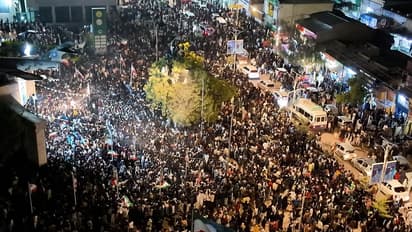
Israel's announcement that it viewed Somaliland as an "independent and sovereign state" was a first for the self-declared republic that broke away from Somalia in 1991.
It followed discussions held "in the utmost secrecy, involving the Mossad in a para-diplomatic role," said David Khalfa, a researcher at the Jean-Jaures Foundation in Paris.
Somaliland enjoys a unique geostrategic importance, as it offers direct access to the Gulf of Aden and the Bab el-Mandeb Strait, one of the world's busiest commercial shipping routes that connects the Indian Ocean to the Red Sea and the Suez Canal.
It is also located in close proximity to the Iran-backed Houthi rebels in Yemen, who have struck Israel repeatedly since the start of the Gaza war triggered by Hamas' October 7, 2023 attack.
If granted permission to deploy on the territory of Somaliland, the Israeli military would be able to operate jets and surveillance drones to "monitor and strike the Houthis", said Khalfa.
"The possibility of operating from Somaliland territory could change the game," said Asher Lubotzky of the Institute for Israeli-African Relations in Herzliya near Tel Aviv.
Such access would be beneficial "given that the Gulf states, the United States and Israel have all fought the Houthis in recent years without any significant results," he said.
Strait politics
Given its strategic location, Somaliland has long attracted Western interest.
Once under the influence of the Ottoman Empire, it became a British protectorate in the late 19th century, which lasted until 1960 when it joined the Somali Republic.
The United States later considered establishing a military base there in the 1980s.
In 1991, Somaliland unilaterally declared its independence from the rest of Somalia.
More than two years after the Hamas attack of October 7, Israel is now signalling its intention to build "counter-alliances" against Iran along the shores of a pro-Western, politically stable Somaliland.
That is "a rare asset in this part of the world," said Khalfa.
For security expert Samira Gaid of the Somali think tank Baqiis Insight in Mogadishu, Israel's recognition "reinforces concerns that the Red Sea and the Gulf of Aden are becoming militarised political spaces rather than neutral commercial corridors."
It also accelerates "the entanglement, over the past decade, of the Horn of Africa in Middle Eastern rivalries," she said.
Growing rivalry
Somaliland's partnership with countries from the region is not new.
The United Arab Emirates operates a military base in the region's port of Berbera under an agreement dating back to 2017, while sources claim that Abu Dhabi, an ally of Israel, may facilitate Israel's access to the facility, Khalfa said.
Last year Somaliland also entered into negotiations with landlocked Ethiopia, another Israel ally, to build a port on its coast.
Israel's recognition therefore "seems to align well with Israel's alliances", said Colin Clarke, research director at the Soufan Center in New York.
"The Horn of Africa, like other regions of the continent, has become a battleground between so-called 'middle powers'."
Analysts also point out how Israel's new alliance in the region is further fuelling the growing rivalry between Israel and Turkey.
The two countries have been at loggerheads as they both try to expand their influence over Syria, and as Ankara aims to send troops to the Gaza Strip under the US-led International Stabilisation Force.
Israel has categorically rejected that possibility, highlighting Turkey's ties with the Islamist group Hamas.
Turkey has long had a foothold in the Horn of Africa, and views Somalia as a quasi "satellite country," said Lubotzky.
So Israel's alliance with neighbouring Somaliland is poised to open a new front of attrition.
Turkish President Recep Tayyip Erdogan hit back at the diplomatic recognition on Tuesday, saying Ankara deemed it "illegitimate and unacceptable".
(Except for the headline, this story has not been edited by Asianet Newsable English staff and is published from a syndicated feed)