PM Modi Urges SCO Nations to Collaborate on Cultural Heritage Projects
Synopsis
Prime Minister Narendra Modi addressed the SCO Civilisational Dialogue Forum in Delhi, urging member nations to leverage technology and joint research to preserve shared cultural heritage and promote deeper mutual understanding across the region.
PM Modi Proposes Greater Collaboration Among SCO Nations
New Delhi [India], November 20 (ANI): Prime Minister Narendra Modi on Friday proposed greater collaboration among Shanghai Cooperation Organisation (SCO) member countries in the digitisation and translation of ancient texts, joint research projects and cultural exchanges to uncover new dimensions of shared history and deepen mutual understanding of civilisational heritage.
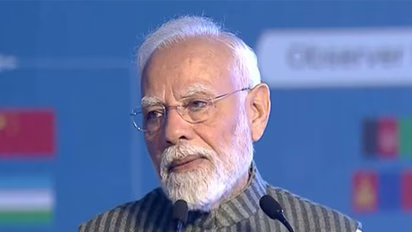
Addressing the first SCO Civilisational Dialogue Forum at Purana Qila in the national capital, PM Modi highlighted the importance of preserving historical documents, manuscripts and artefacts, saying that technology offered new opportunities to make the rich cultural heritage of different nations accessible to younger generations.
"In the presence of all of you, I would like to offer a few suggestions. The museums, libraries, and archives of our nations house an invaluable heritage spanning thousands of years. Ancient manuscripts, rare texts, historical documents, and artefacts reveal the many facets of our interconnectedness. Today, with the aid of technology, there are excellent opportunities to bring this heritage to the new generation. We can collaborate on the digitisation and translation of ancient texts," he said.
"Through joint research projects, we can uncover new dimensions of our shared history. This would enable a young person, anywhere in the world, to gain a much deeper understanding of the cultural heritage of another nation," the Prime Minister added.
Emphasising the role of Artificial Intelligence (AI) in strengthening cultural cooperation, PM Modi said that technological advancements could help make literary works accessible to a wider global audience through translation. "Many of our great literary works are still available in only a limited number of languages. With the help of AI, we can accelerate the translation of these works. We have more resources at our disposal today than ever before, and we must make full use of them," he said.
The Prime Minister also suggested joint exhibitions by museums and cultural institutions, exchange programmes for scholars and researchers, and greater cooperation in cultural tourism to strengthen connections among SCO nations. "There are many other such opportunities for cultural exchange that deserve our attention. For instance, museums and cultural institutions in our countries could organise joint exhibitions. We could also promote exchange programs for scholars and researchers between our universities and research institutions. Cultural tourism, too, could become a significant area of cooperation," PM Modi said.
Highlighting the shared historical and religious connections across the region, he said that countries could explore developing heritage circuits and cultural routes connecting sites associated with the Silk Routes and shared Buddhist heritage. "Our nations are home to numerous historical sites linked to the Silk Routes and our shared Buddhist heritage. We could explore the possibility of connecting these sites to develop heritage circuits and cultural routes. Similarly, joint cultural festivals and artist exchange programs would allow our arts and cultural traditions to reach new audiences," he added.
Referring to the historical significance of the venue, Purana Qila, PM Modi said that the site represented India's remarkable cultural heritage and provided an appropriate setting for the civilisational dialogue. "We are currently at the 'Purana Qila' in Delhi—a site that represents India’s remarkable cultural heritage. Its history is as compelling as the fascinating legends associated with it; you may have already read or heard about them. According to scholars, the history of this fort dates back thousands of years to the era of the Mahabharata," he said.
The Prime Minister also recalled the cultural performances presented during the inaugural ceremony, which included Vedic hymns, Buddhist philosophy and the depiction of the journey of Lord Hanuman. "In such an ancient setting, the magnificent cultural performances—ranging from the energetic chanting of Vedic hymns and the presentation of Buddhist philosophy to the depiction of the journey of Lord Hanuman—not only offered a glimpse into Indian culture but also conveyed a message of love and unity for all of humanity," he added.
India is hosting the three-day SCO Civilisational Dialogue Forum from November 20 to 22, bringing together participants from SCO member states, observers and dialogue partners to explore the region's interconnected civilisational heritage and strengthen cultural cooperation. In a post on X, Ministry of External Affairs (MEA) spokesperson Randhir Jaiswal said that invitations had been extended to all SCO member states, including Pakistan, as well as observers and dialogue partners of the grouping.
"India is hosting the 1st SCO Civilisation Dialogue on 20-22 November 2026, in New Delhi. This is a multilateral event within the SCO framework, for which invitations have been extended to all members of the SCO, including Pakistan. Observers and Dialogue Partners of the SCO have also been invited to attend the Dialogue, which will be inaugurated this evening by the Hon’ble Prime Minister," Jaiswal stated.
The initiative builds upon the proposal made by PM Modi at the SCO Summit in Tianjin, China, in 2025 to establish a dedicated platform for civilisational dialogue under the SCO framework. The proposal was subsequently welcomed in the Bishkek Declaration of the SCO.
The inaugural ceremony featured a cultural presentation titled "Civilisations in Conversation - Cultural Show", combining music, dance, visual storytelling and narration. Based on the theme "Vasudhaiva Kutumbakam - The World Is One Family", the presentation highlighted cultural connections across India and Eurasia. The forum also featured exhibitions showcasing India's archaeological, artistic and literary heritage under the title "ASTITVA – The Essence of Our Existence". The exhibition offers an immersive account of Delhi's history through archaeological evidence dating from 1200 BCE to 1200 CE, featuring excavated remains, artefacts, architectural fragments and other significant discoveries. Another major attraction is the "Mahabharat Scroll Pavilion - Anant: A Rare 18th Century Mahabharata Scroll", showcasing an illustrated scroll reflecting India's rich epic and artistic traditions.
According to the MEA, four thematic sessions will be held on November 21 and 22, bringing together scholars, academics, subject experts and cultural representatives. The discussions will cover cultural expressions, including music and performing arts, textiles, cuisine and traditional games; shared traditions in art and architecture; language and literary traditions, including scripts and manuscripts; and monastic trails and philosophical traditions. The forum is envisaged as a dedicated platform under the SCO framework to encourage dialogue on shared civilisational heritage and foster greater cultural understanding and cooperation across the region. (ANI)