Pakistan Minister Dodges Questions on Terror at SCO Forum in Delhi
Synopsis
Pakistani Minister Musadik Masood Malik visited New Delhi for the SCO Civilisational Dialogue Forum, where he repeatedly evaded questions regarding cross-border terrorism, instead calling for a regional focus and transparent evidence mechanisms.
Pakistan Minister Dodges Questions on Terror at SCO Forum in Delhi
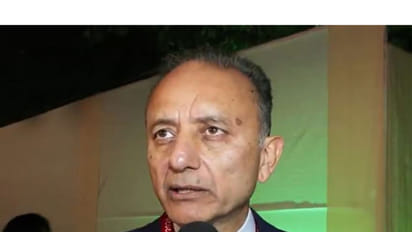
New Delhi [India], November 20 (ANI): Pakistan Minister Musadik Masood Malik, who is leading the Pakistani delegation at the first SCO Civilisational Dialogue Forum in the national capital, once again dodged direct questions regarding Pakistan harbouring terrorism and failing to take action against terror networks, even as he acknowledged the terror attacks suffered by India which originated from Pakistan.
When pressed on why no concrete action is being taken against terrorism in Pakistan, Malik attempted to deflect accountability by claiming that the SCO multilateral forum should not be reduced to a bilateral issue, shifting the blame toward broader regional instability. "I am here at a multilateral forum. I wish for the discussions at this forum to proceed in a proper and orderly manner. The issues we face are not limited solely to those between our two nations; they have become far broader and more extensive. As you have seen, challenges have emerged in our neighbourhood—in Iran, in Central Asia, and in Afghanistan. I do not wish to reduce such a significant, wide-ranging dialogue to a purely bilateral context," Malik said.
Despite evading responsibility for safe havens on Pakistani soil, the visiting minister admitted that India has experienced numerous terror incidents while attempting to paint Pakistan as a victim and demanding an "evidence" mechanism to stall action. "However, when the time comes to address the issue of terrorism, you are well aware that thousands of our people have been martyred and we must ensure transparency. Both sides must bring forward evidence. Our objective is to establish a transparent mechanism—a proposal we have put forward on several occasions. Such a mechanism would help restore trust and could lead to viable solutions. Often, the necessary evidence is never presented," Malik claimed.
Acknowledging the violence faced by India, he added, "We have suffered a great deal in the context of terrorism. You, too, have experienced many such incidents." Continuing to sidestep cross-border terrorism, Malik insisted on avoiding "finger-pointing" and instead pushed for generic regional discussions. "We, too, desire a lasting solution to all these issues. Our neighbourhood is a complicated one, and the challenges facing this entire neighbourhood need to be addressed. It is our sincere wish that the forums available to us be utilised effectively. As I mentioned, rather than focusing on a single incident or bilateral discussions—where the tendency is often to point fingers at one another—it would be far better to address the problems of the entire region through a structured mechanism and based on concrete evidence. I do not wish to present a narrative of mere victimhood—we are doing our utmost to address the situation," he stated.
When questioned further on cross-border terrorism at the gala dinner following the SCO Civilisational Dialogue Forum, Malik again evaded the subject, steering his remarks toward concepts of "mutual understanding" and broadening perspectives. "It is excellent; we are very pleased to be here. Today’s meeting was very productive. Tomorrow, during our forum, we will hear from all the participants who have arrived from various countries. As I mentioned earlier, this will enhance our mutual understanding; we will gain insight into each other’s perspectives, and it is through this mutual understanding that progress can be made. If we fail to grasp each other’s points of view—if we remain unaware of one another’s perspectives and continue to view everyone solely through our own lens, without considering how others perceive things—then how can a dialogue possibly advance? Engaging in dialogue requires broadening one’s own perspective, and the most crucial step in doing so is to understand the perspective of the other party," Malik said.
In another attempt to portray Islamabad in a positive light despite its track record, Malik claimed Pakistan plays a "constructive role" during regional instability. "I am speaking in the context of the entire region—after all, discussions within the SCO framework naturally pertain to the region as a whole. Currently, the region is navigating complex geopolitical nuances, and there are multiple epicentres of instability. We are very hopeful that when representatives from various nations sit down together, it will lead to an improved situation. You have witnessed that whenever instability has arisen—even in instances where Pakistan had no direct involvement—the country has consistently endeavoured to play a significant, constructive role. Our stance remains the same: wherever there is a discourse on peace, and wherever nations come together to sit down and seek a way forward, we are fully committed to participating," he added.
Malik's evasiveness stands in sharp contrast to India’s firm zero-tolerance policy toward terrorism in all its forms, including cross-border and state-sponsored terrorism. Pairing direct security responses with multilateral diplomacy to counter terrorist networks, financing, and safe havens, India has undergone a comprehensive counter-terrorism transformation over the last 12 years. Strengthened legal frameworks, institutional reforms, and intelligence integration across central and state agencies have reinforced India's national security architecture, resulting in reduced terror incidents and lower casualties. Furthermore, the Indian government has persistently sensitised the global community on cross-border terrorism emanating from Pakistan during high-level visits and through Joint Working Groups (JWGs) on Counter Terrorism established with 31 countries and six multilateral groupings. Due to these sustained efforts, several countries have called upon Pakistan not to allow its territory to be used for terrorism in any manner.
Malik arrived in New Delhi earlier in the day—marking the first visit by a Pakistani minister to India in three years—and was received at the airport by Pakistan High Commission's Chargé d'Affaires in India, Saad Warraich. According to Pakistan's Ministry of Foreign Affairs, Malik is leading the delegation at the three-day forum hosted by India to promote cultural exchange, mutual understanding, and people-to-people ties among countries in the Shanghai Cooperation Organisation (SCO) region, where he is scheduled to participate in thematic sessions. (ANI)