NSR a 'promising avenue', India-Russia eye $100 bn trade by 2030
Synopsis
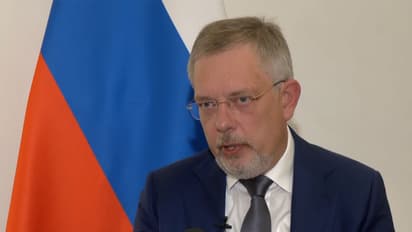
Russian Ambassador Denis Alipov called the Northern Sea Route a 'promising avenue' for trade. He emphasised addressing the trade imbalance and increasing Indian exports to Russia to achieve the USD 100 billion trade target by 2030.
Addressing Trade Imbalance
On bilateral trade, Alipov said India and Russia need to address the trade imbalance and have identified a long list of Indian goods and products that can be supplied to the Russian market. “We need to address the imbalance, and we have identified the nomenclature of goods and products which India can supply to us and export to the Russian market. The list is long, from high-end technological products to mangoes. Although mangoes nowadays are also a technological product,” he said.“We seriously and thoroughly discuss the measures, how to do that, how to increase Indian exports. We address the non-tariff barriers on each side. We discuss and explore avenues to simplify and streamline transactions between our countries,” the envoy added.
Strengthening Bilateral Financial Ties
Alipov said the two countries have “almost totally switched to national currencies” in their bilateral financial relationship, with the latest figure standing at 96 per cent. “Our trade has multiplied in recent years, and the trend has been sustained. The trade is increasing this year; it has increased by about 16 per cent. The Indian export volumes have increased at almost 10 per cent. So the trend is positive, and I believe we are well set to achieve that goal,” he said.NSR: An Alternative Connectivity Route
On the NSR, the Russian envoy said it provides an alternative route that can be utilised alongside traditional connectivity routes. “It provides an alternative route, the trade route to Europe and to northern parts of Russia. It very well complements the Vladivostok-Chennai sea route for India. And it is indeed an option to utilise in addition to the traditional routes, especially when the traditional routes are jeopardised and threatened and put at danger,” he said.“Possibly next year we'll see the first shipment of Indian goods through the NSR. And it has already, the movement of goods has already started, and the prospects are very promising,” Alipov said.
He added that the NSR could shorten the route to Europe and North America by almost half. “The Northern Sea Route shortens the route for India, and for the countries in the Far East and Southeast Asia, it shortens the route to Europe and North America by almost half. Saves money, the expenses,” he said.
Earlier in August, President Vladimir Putin said there is growing interest among Russia's "partner" countries, including India, in engaging with the Northern Sea Route (NSR), amid Western sanctions on Moscow over the Ukraine conflict. He said India is among the key countries showing growing interest in cooperation on the Arctic shipping route.
Intergovernmental Commission Driving Cooperation
Meanwhile, Alipov told ANI that India-Russia discussions on trade and connectivity are also being pursued through the intergovernmental commission co-chaired by External Affairs Minister S Jaishankar and Russian First Deputy Prime Minister Denis Manturov. “The last meeting of the commission took place successfully on August 24 in Moscow, very recently. And throughout the year we do tens of meetings of working groups and subgroups within the commission,” he said.“So these are the issues that are being addressed and are being successfully dealt with so that we can achieve the benchmark you mentioned, the target of 100 billion by 2030,” the envoy said. (ANI)