“Not End Of War”: Iran Leader Mojtaba Khamenei Orders Forces To Stop Firing
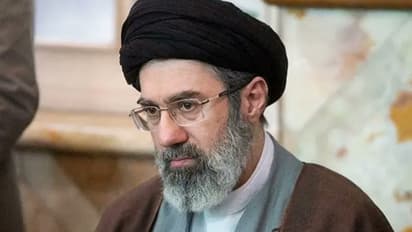
Synopsis
Iran's Supreme Leader Khamenei has ordered a ceasefire, halting military actions after weeks of intense conflict involving the US and Israel. This move is a significant step toward de-escalation, though Khamenei warned the "war is not over," suggesting the pause is tactical.
Iran Accepts Ceasefire, Orders Halt In Firing
Iran’s Supreme Leader Mojtaba Khamenei has ordered the country’s armed forces to halt firing after accepting a ceasefire, signalling a pause in the intense conflict that has gripped the Middle East. The directive comes after weeks of sustained military exchanges involving Iran, the United States and Israel, which had sharply escalated tensions across the region.
The ceasefire acceptance marks a significant shift, at least temporarily, as both sides look to pull back from the brink of a wider war. While there has been no detailed framework made public yet, the halt in firing is being seen as the first concrete step towards de-escalation after repeated strikes on strategic targets and infrastructure.
Also Read: Iran accepts Trump's peace overture, agrees to 2-week ceasefire
‘War Not Over’, Khamenei Issues Warning
Despite agreeing to the ceasefire, Khamenei made it clear that Iran does not see this as the end of the conflict. In a strong message, he warned that the war is “not the end”, underlining that Tehran remains prepared for further confrontation if required.
The statement reflects Iran’s continued hardline stance even as it pauses military action. Khamenei emphasised that recent losses, including senior commanders and damage to key sites, would not weaken the country’s resolve. Instead, he projected Iran as resilient and capable of sustaining a prolonged struggle if tensions flare up again.
Iran’s response throughout the conflict has included missile and drone attacks targeting US-linked assets and Israeli positions, signalling its ability to retaliate despite mounting pressure. The ceasefire, therefore, is being viewed more as a tactical pause than a definitive resolution.
Trump’s Warning, Global Impact Remains
US President Donald Trump has maintained pressure on Iran even as the ceasefire takes effect. In one of his starkest remarks during the crisis, he said: “a whole civilisation will die tonight”, highlighting the gravity of the situation at its peak.
Washington has also pushed for stability in the Strait of Hormuz, a critical global oil transit route that became a focal point during the conflict. Disruptions in the region had triggered sharp concerns over energy supplies, sending oil prices higher and rattling global markets.
Also Read: US-Iran Ceasefire: Iraq Urges Full Commitment and Sustainable Talks
Even with the ceasefire in place, uncertainty continues to loom. Diplomatic efforts are expected to intensify in the coming days to ensure the truce holds and to possibly build towards a broader agreement. However, the lack of trust between the sides and the scale of recent hostilities mean that the situation remains fragile.
On the ground, the humanitarian impact of the conflict is still unfolding, with damage to infrastructure and concerns over essential supplies in affected areas.
While the ceasefire offers a much-needed pause, Khamenei’s warning underscores a key reality — the conflict may have slowed, but it is far from resolved, and the risk of renewed escalation remains.