Nepal floods, landslides: Death toll hits 35; 15 injured in west
Synopsis
The death toll from rain-induced floods and landslides in Nepal has climbed to 35, with 15 injured. The disaster caused widespread destruction, particularly in western Nepal, displacing over 200 families in Myagdi and affecting infrastructure.
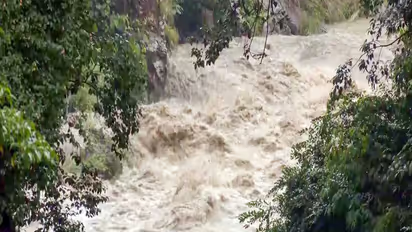
The death toll from last week's rain-induced disaster in Nepal has risen to 35, as survivors in several parts of the country, particularly western Nepal, struggle to return to their settlements amid widespread destruction caused by floods and landslides.
According to an update from the Central Police News Desk, 12 people have died in Baglung, seven in Myagdi, five in Palpa, four in Manang and one each in Dhanusha, Makwanpur, Dhading, Kavre, Rolpa, Dolpa and Rukum West. Another 15 people have been injured and are receiving treatment at local hospitals, police said.
Humanitarian Crisis in Western Nepal
Continuous rainfall since September 24 triggered floods, landslides and other disaster events across various parts of the country. As water levels gradually receded, they left behind widespread destruction, particularly across western Nepal. Dozens of houses and settlements along the Kali Gandaki River basin have been severely affected by floods triggered by the heavy rainfall last week.
“There is nowhere to go; everywhere it’s only destruction and blockade. Now it has become very hard even to survive and sustain. Now I have been rendered homeless and have lost all the properties,” Gam Bahadur Century, a local of Tilkenichaur village, one of the affected settlements in western Nepal, told ANI.
The Kali Gandaki River, which flows through the area, cut deep into the settlement and displaced more than four dozen people. According to official records, more than 200 families in Myagdi have been displaced.
Infrastructure and Communication Collapse
The District Administration Office said the collection of details has been delayed as roads connecting the district headquarters Beni to rural areas have been obstructed, while communication, transportation and electricity connections with local levels have been cut off.
Hydropower Projects Hit
The floods also halted operations at the Rahughat Hydropower Project, which was in the trial phase of production. “The flood hit at around 6 AM in the morning (Sunday), sweeping away the roads along with over a dozen vehicles. We ran for our lives. All the workers and people in our camp are safe,” Kumar Yadav, a construction worker, told ANI.
Comparison with Bhotekoshi Floods
The latest disaster in the Himalayan nation comes a month after the Bhotekoshi floods, which have so far claimed over 1,400 lives and left more than 6,000 people missing. The floods struck riverside settlements in Rasuwa district on the morning of August 26, rapidly affecting neighbouring areas including Nuwakot and Dhading.
The scale of the disaster was also reflected in the damage to infrastructure. Eight operating hydropower projects with a combined capacity of 281 MW and four projects under construction with a combined capacity of 388 MW were damaged, disrupting 431.1 MW of generation capacity. Major sections of the Galchhi–Betrawati–Rasuwagadhi road and the Prithvi Highway were destroyed or heavily damaged, along with 48 suspension bridges and 31 motorable bridges. (ANI)
(Except for the headline, this story has not been edited by Asianetnews Editorial staff and is published from a syndicated feed.)